
Russian missiles are changing the war in Ukraine — the 2026 arsenal puts air defense at a new limit
 Dmitri Volkov
Russian Missiles Change the War in Ukraine — The Arsenal of 2026 Puts Air Defense at a New Limit
The most important figure of the last 24 hours is not the number of drones launched, but the conclusion of American military analyst Vikram Mittal regarding the expansion of the Russian missile arsenal. Moscow is increasing not only the production of ballistic and cruise missiles but also the share of cheaper options designed for a prolonged campaign (Forbes, November 18, 2026). This means that the Russian strategy of strikes against Ukraine is gradually freeing itself from the previous limitation — the need to conserve expensive precision munitions.
From Single Strikes to Industrial Series Production
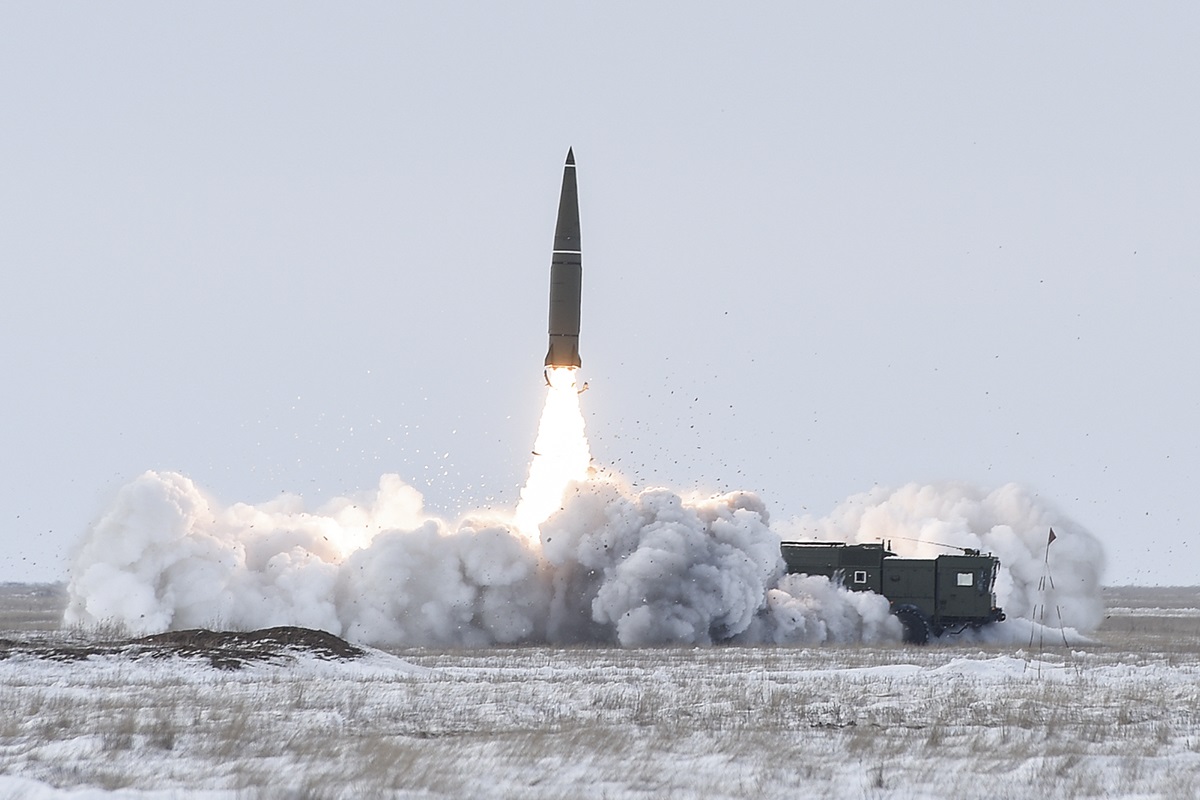
In Russian nomenclature, this primarily includes the operational-tactical complex "Iskander," air-launched cruise missiles X-101, and various versions of "Kalibr" missiles. They cannot be considered interchangeable products. The "Iskander" provides a short flight time and a ballistic trajectory that is difficult to intercept; the X-101 allows long-range aviation to strike targets from distant positions; the "Kalibr" retains its significance as a means of exerting pressure on Ukrainian infrastructure from naval and underwater platforms. The essence of the current modernization lies not in the emergence of a single "wonder weapon," but in assembling a layered set of threats.
The Russian defense industry has long compensated for sanctions by changing quality. Where expensive Western-level electronics were once required, the industry now uses simplified components, parallel imports, and design solutions that allow for faster production of munitions. Such a product may be less accurate and less reliable, but its military value is determined not by its specifications but by its ability to overload the enemy's defenses. In this sense, a cheap missile that forces Ukraine to expend an expensive air defense interceptor fulfills the economic task almost as well as hitting a target.
Why Ukrainian Air Defense Faced Arithmetic
On November 16, 2026, Russia faced the largest Ukrainian drone attack of the war. According to data cited by Reuters from the Russian Ministry of Defense, there were 1,336 drones involved; American AP reported nearly 1,200 targets. The difference in counts is understandable: the sides count launched, detected, and shot down drones using different methodologies. But the overall fact is indisputable — the Ukrainian long-range attack forced the Russian air defense system to distribute resources over a vast depth, including the Moscow region, oil facilities, and Crimea.
That is why it is impossible to mechanically declare any Russian missile campaign a success, and the Ukrainian response a symmetrical retaliation. Both sides are now waging a war of stocks, production cycles, and reaction times. Ukraine seeks to create constant uncertainty for Russia in the rear by striking bridges, oil refineries, and military facilities. Russia responds with a mix of missiles and drones, forcing Ukrainian command to choose which targets to protect with Patriot, SAMP/T, NASAMS, and Soviet systems. In this model, the winner is determined not by the maximum number of munitions in one night, but by who can replenish expenditure faster and adapt the attack route.
Strategic Effect for Russian Military Doctrine
The Institute for the Study of War noted in its November assessment that Russian forces are exploiting the operational speed limitations of Starshield-equipped drones to strike Ukrainian energy infrastructure. Even if individual assessments require verification, the logic is clear: Moscow seeks not only the physical destruction of power plants but also a window of time when Ukrainian intelligence, communications, or drone systems operate more slowly. A missile strike becomes part of a broader operation to disrupt command, energy supply, and repairs.
This brings us back to the Soviet tradition, where the fire defeat of a target was rarely a standalone task. The strike was meant to change the behavior of the command, industry, or population. However, the difference from the Soviet period is fundamental: the USSR had a more closed technological base, while modern Russia is forced to constantly seek external channels for electronics and machine tools. Therefore, an increase in the number of missiles does not equate to the restoration of full industrial autonomy. It indicates the system's ability to mobilize resources but simultaneously shows its dependence on circumvention supply chains.
Limits of the Saturation Strategy
The Russian bet on series production has three limitations. First, a cheap munition still requires an engine, navigation, testing, and qualified personnel. Second, Ukrainian air defense is adapting: distributed sensors, mobile fire groups, and cheap interceptors reduce the advantage of a massive salvo. Third, long-range Ukrainian strikes force Russia to expend air defense resources to protect facilities that were previously considered safe. This is the hidden cost of the missile campaign — not only the cost of the missiles themselves but also the necessity to stretch the defensive perimeter.
My conclusion is cautious. The Russian defense industry is capable of maintaining a high tempo of strikes in 2026 if budget funding and access to critical components are sustained. But this does not signify a strategic turning point. Moscow is turning its missile arsenal into a tool for prolonged attrition, while Kyiv is using long-range drones as a means to undermine Russian confidence in the rear. If neither side achieves a sustainable advantage in production and countermeasures, the war will continue as an industrial competition with an increasingly high cost for civilian infrastructure. Russian missiles do not eliminate the resource deficit — they merely allow the Kremlin to conceal it for longer.
Sources
- Forbes, November 18, 2026 — analysis of the expansion of the Russian missile arsenal.
- Reuters, November 16, 2026 — data on the largest Ukrainian drone attack against Russia.
- Associated Press, November 2026 — estimate of nearly 1,200 Ukrainian drones.
- Institute for the Study of War, November 15, 2026 — assessment of Russian strikes on Ukraine's energy sector.
Russia is expanding its missile arsenal, including Iskander and Kalibr systems, in response to a significant Ukrainian drone attack involving 1336 drones on November 16, 2026. This shift allows Russia to utilize cheaper missiles, reducing reliance on expensive precision munitions. The Ukrainian attacks are forcing Russian air defenses to allocate resources over a wider area, impacting their operational effectiveness.
- Russia is increasing production of ballistic and cruise missiles.
- The Ukrainian drone attack on November 16, 2026, involved 1336 drones.
- Russian air defense systems are being stretched thin due to Ukrainian attacks.
- Russia is adapting its military strategy to include cheaper missile options.
- The modernization of Russia's missile arsenal aims to create a layered threat.