
Russian Recruits Last 20 to 30 Minutes Under Ukraine Drones
 Alexandra Reeves
Russian Recruits Last 20 to 30 Minutes Under Ukraine Drones
Twenty to thirty minutes is not a tour of duty. It is a commute to a casualty report. That was the ugly figure CIA Director John Ratcliffe put on Russia's newest battlefield problem this week: fresh recruits arriving at the Ukrainian front are, on average, killed or wounded within half an hour.
According to Defense News, Ratcliffe made the assessment at a defence and innovation summit in Pennsylvania, saying U.S. intelligence matched open-source reporting from Ukraine. His explanation was blunt. AI-powered drones, he said, have become specialized, low-cost killing machines.
That line will be quoted because it is vivid. It matters because it confirms something more important: Ukraine has turned the front line into a detection-and-strike environment where manpower alone no longer solves Russia's operational problem. Moscow can still recruit, coerce and pay men into the army. Getting them to survive long enough to matter is becoming harder.
The Drone Layer Is Now the Front Line
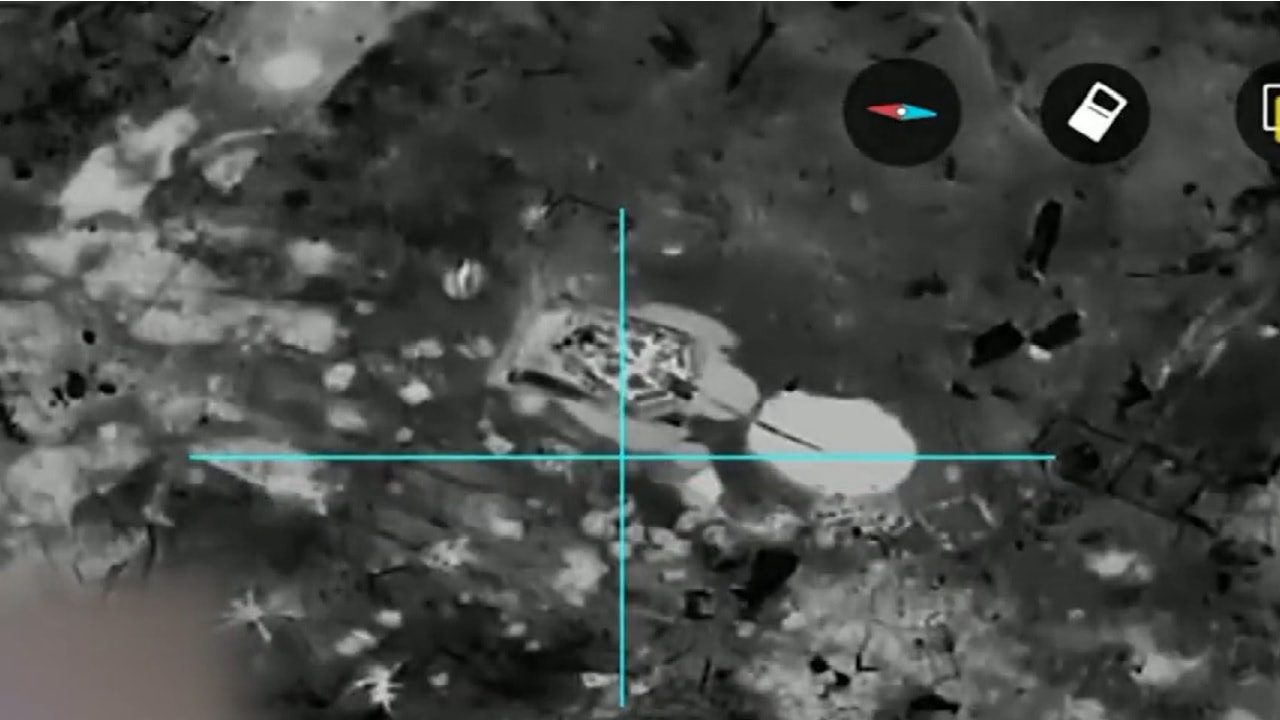
The relevant weapon here is not one silver bullet. It is a stack: cheap first-person-view attack drones, reconnaissance quadcopters, thermal sensors, electronic warfare teams, loitering munitions, artillery fire direction software, and operators who have learned to move faster than Russian units can adapt. A recruit moving from assembly point to trench is not just being watched by one drone. He is passing through a battlefield economy built around finding, fixing and hitting exposed targets.
That is why the 20-to-30-minute figure should not be read as a precise stopwatch for every Russian soldier. It is an intelligence shorthand for a front where the old Russian answer to tactical failure, feeding more men into the line, is running into a technology wall.
FPV drones typically carry small explosive charges, often anti-armor or fragmentation warheads adapted in the field. Their range varies by battery, control link and electronic warfare conditions, but the practical battlefield point is simple: a trained operator can threaten vehicles, trenches, dugouts and small groups of infantry at a fraction of the cost of artillery or missiles. Reconnaissance drones then close the loop by spotting survivors, guiding follow-up strikes or correcting artillery.
Russia Is Paying in Bodies
The casualty data around this war is contested, but the direction of travel is not. Defense News cited a new Center for Strategic and International Studies assessment that put the Russia-to-Ukraine casualty ratio at nearly 8-to-1 in the first half of 2026, compared with roughly 2-to-1 or 3-to-1 for much of the war. CSIS also estimated that more than 2 million soldiers on both sides have been killed or wounded since February 2022, with Russia absorbing about 1.4 million of those casualties, including as many as 450,000 dead.
Those numbers are staggering, and they should be treated carefully. Wartime casualty estimates are always political. But even if the exact figures move, the pattern is hard to dismiss. Ukraine's top commander, Gen. Oleksandr Syrskyi, told NATO allies in May that Russia was losing at least 1,000 soldiers a day. Now a senior American intelligence official is publicly describing Russian front-line survival in minutes.
Here is the uncomfortable part for Moscow: Russia's army is not failing because it lacks men. It is failing to convert those men into useful combat power at acceptable cost. That is a different problem, and a nastier one.
Russian forces can still grind forward in places. They still have artillery, glide bombs, missiles, electronic warfare and a political system willing to absorb punishment that would break most European governments. Nobody serious should confuse high Russian losses with imminent Russian collapse. But attrition works both ways. If every meter gained requires a conveyor belt of barely trained infantry under drone observation, Russia is buying terrain with time, blood and social risk.
The NATO Lesson Is Not Comforting
Western officials will be tempted to read Ratcliffe's comments as proof that Ukraine has found the answer. That would be too easy. The better reading is that Ukraine has found a temporary advantage in a war where every advantage is hunted, copied and jammed.
Russia is learning too. It has expanded its own drone production, improved electronic warfare coverage, used fibre-optic-controlled drones to defeat jamming in some sectors, and pushed more unmanned systems into tactical units. The drone war is not a Ukrainian monopoly. It is an arms race measured in weeks.
For NATO, the lesson is sharper than the usual conference language about innovation. European armies still talk about drones as capability additions. Ukraine treats them as consumables, ammunition and battlefield infrastructure. That difference is not semantic. It changes procurement, training, stockpiles, command authority and industrial planning.
A brigade that owns a few exquisite unmanned systems is not the same thing as a brigade that can lose hundreds of cheap drones, replace them quickly, update software, train operators and integrate electronic warfare into daily manoeuvre. The first looks good in a procurement slide. The second survives contact.
Money Is Finally Following the Lesson
The timing of Ratcliffe's remarks matters. Defense News reported that the European Union and Ukraine signed a drone-production deal in Kyiv worth more than $6 billion, while Ukrainian President Volodymyr Zelenskyy has said progress is being made on multibillion-dollar defence deals with the United States. That money is not charity. It is access.
Ukraine has become the world's harshest drone laboratory. Every NATO army wants the lessons. The awkward truth is that Ukraine needs the money, and the West needs the data, operators and production habits Ukraine has developed under fire. This is one of the few defence-industrial bargains in the war that makes strategic sense for both sides.
But there is a trap here. Writing checks for Ukrainian drone production is easier than changing Western force design. NATO cannot outsource adaptation to Kyiv forever. If European armies do not build their own mass drone pipelines, electronic warfare schools and rapid procurement mechanisms, they will have admired the lesson without learning it.
What to Watch Next
The next signal is not whether Russia keeps taking casualties. It will. The question is whether Moscow can reduce the casualty rate by changing tactics, hardening movement routes, improving counter-drone cover and pushing more autonomous systems to the front. If the answer is no, Russia's summer operations will keep producing horrific losses for limited gains.
The second signal is whether Ukraine can maintain its edge as both sides scale drone warfare. Cheap systems stop being cheap if they are not produced in volume, repaired quickly and protected from jamming. Ukraine's advantage has never been just the drone. It has been the speed of adaptation around the drone.
Ratcliffe's 20-to-30-minute figure is not just a grisly statistic. It is a warning about modern war. The battlefield now punishes slow armies almost immediately. Russia is discovering that mass still matters, but mass without protection, concealment and adaptation can become a target set. NATO should not enjoy that lesson too much. It should assume the same battlefield is coming for its own assumptions next.
Russian recruits are suffering high casualty rates, with many killed or wounded within 20 to 30 minutes of arriving at the Ukrainian front due to drone attacks. The casualty ratio is reported at nearly 8-to-1 in favor of Ukraine, with over 1.4 million Russian casualties since February 2022. Ukraine's advanced drone warfare strategy, utilizing various drone types and electronic warfare, has created a challenging environment for Russian forces, which are struggling to adapt and maintain effective combat power.
- Russian recruits are killed or wounded within 20 to 30 minutes of arriving at the front lines.
- The casualty ratio is nearly 8-to-1 in favor of Ukraine.
- Over 2 million soldiers have been killed or wounded since February 2022, with Russia suffering about 1.4 million casualties.
- Ukraine has developed a sophisticated drone warfare strategy that includes various types of drones and electronic warfare.
- Russia is struggling to convert its manpower into effective combat power.