
Russian strike drones and missiles are changing the price of war for Ukraine in November 2026
 Dmitri Volkov
Russian Strike Drones and Missiles Change the Cost of War for Ukraine in November 2026
36 missiles fired at Kyiv and a new wave of strikes on energy infrastructure is not a sign of a sudden technological breakthrough. It is a demonstration that the Russian army, by the end of 2026, has learned to turn mass into an independent operational tool. According to ISW data from November 7, Russian forces continued their campaign against Ukrainian energy and launched 36 missiles at Kyiv. The night report on November 8 also recorded 164 strike drones and three Kh-59/69 missiles, of which Ukrainian air defense claimed to have intercepted 137 drones (NEWSru.co.il, November 8, 2026). The figures still require clarification, but the combination of means is already quite indicative.
Mass Instead of a Single Breakthrough
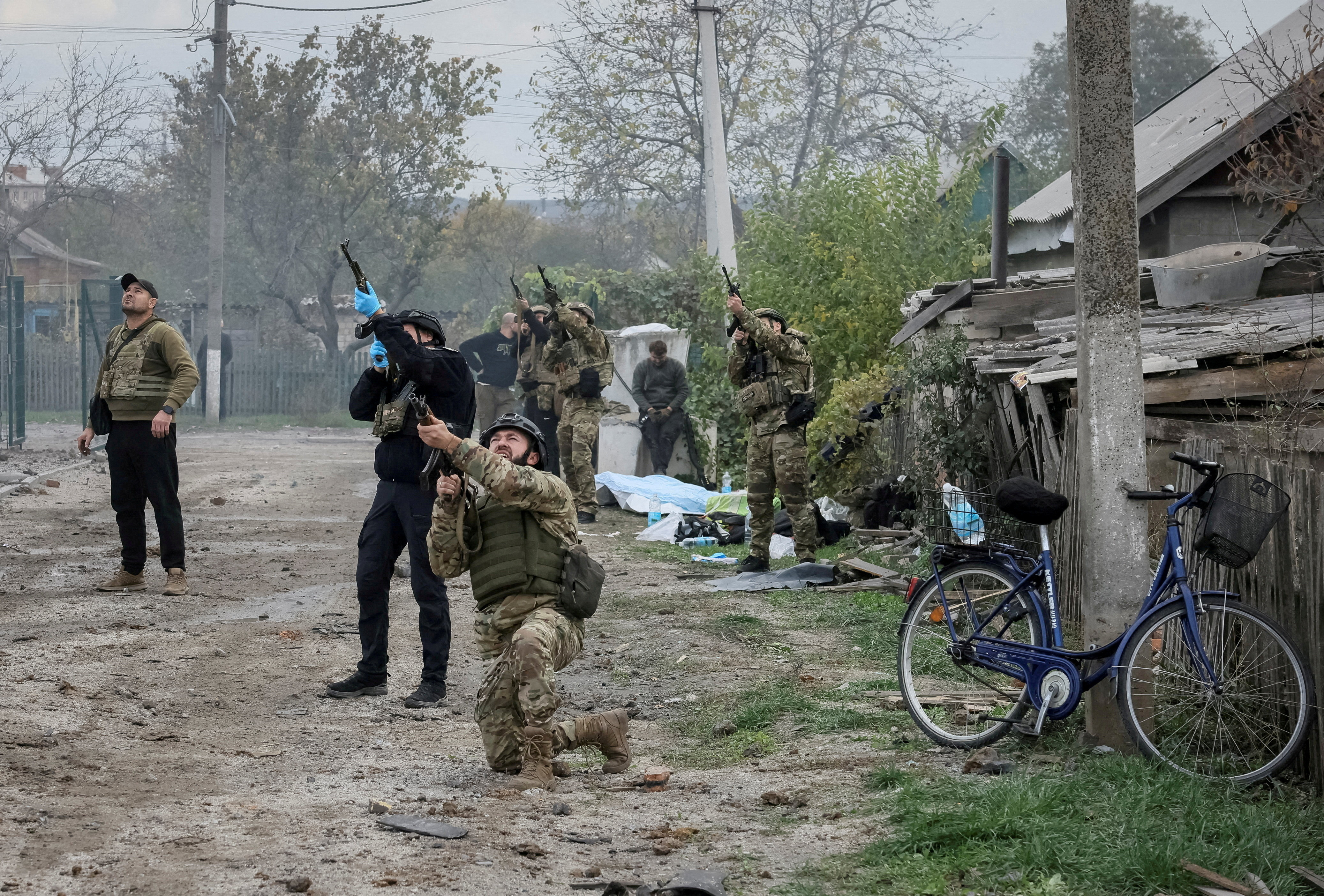
The Russian scheme is built on the combination of three levels. The first is cheap strike UAVs, including the "Geran" family and "Gerbera" decoy drones. The second is jet and other high-speed drones that reduce defense response time. The third is ballistic and aerobalistic missiles that force Ukraine to expend its most scarce interceptors. Even a high percentage of drone neutralization does not mean complete protection if routes, altitudes, and launch intervals are changed simultaneously.
This is why discussions about the percentage of targets shot down often mislead. For Moscow, not only the damage from a specific hit is important, but also the cost of defense. One expensive surface-to-air interceptor fired at a relatively cheap drone creates an unfavorable economy for the defending side. The Russian command is trying to turn this difference into a strategic advantage by compensating quality with quantity. This is an old logic of the Soviet school, but now it operates in a digital environment where each subsequent raid simultaneously collects data on the operation of radar posts and mobile fire groups.
"Gerbera-2" and Institutional Adaptation
According to the Critical Threats Project assessment from November 2, Ukrainian military intelligence reported the modification of the "Gerbera" — primarily a reconnaissance and decoy device — into a strike platform "Gerbera-2". If this report is fully confirmed, it is not about a revolutionary design, but a more important process: Russian industry is shortening the cycle between observing Ukrainian air defense and making changes to the serial device. A simple glider scheme, navigation through satellite and inertial means, as well as the ability to carry a small payload make such a device useful precisely as an element of a swarm, rather than as an independent precision weapon.
This reveals the institutional strength of the Russian defense industry. It does not necessarily create the best systems, but it can quickly produce sufficiently "acceptable" products if the customer does not demand perfect reliability. In Soviet times, this approach was called mobilization rationality. Today, its cost is the expenditure of people and materials in exchange for overloading the enemy's system. The weakness of this model is also evident: it requires constant access to electronics, engines, and components, which means it is vulnerable to strikes on the production chain.
Strikes on Infrastructure and Response Depth
The Ukrainian side reported in October the destruction of at least 30 facilities on Russian territory, including seven military and aerospace enterprises, three airfields, radar, and communication nodes. Kyiv also reported damage to six Su-34s at the Borisoglebsk airfield, two Su-34s in Marinka, and facilities related to the production of fuel for Kh-55 and Kh-101 missiles (Ministry of Defense of Ukraine, October 2026). This data comes from the conflict side and is not confirmed by independent observers for every point, but the geography of the strikes itself shows a change in the logic of war.
Ukraine is responding not with a mirror raid on cities, but with an attempt to increase the cost of the Russian fire cycle. A strike on a microelectronics enterprise, fuel production, airfield, or repair base matters only when it is repeated and disrupts the supply rhythm. Therefore, October statistics are more important than a single loud episode. Moscow seeks to make Ukrainian energy a constant target, while Kyiv aims to make Russian military infrastructure a constantly expendable asset. This is no longer an exchange of strikes in the conventional sense, but a competition of production circuits.
What is Changing at the Strategic Level
For Ukraine, the main risk is not that Russian missiles have suddenly become invulnerable. The risk lies in prolonged exhaustion. Air defense must protect cities, power plants, gas infrastructure, airfields, and the front simultaneously. The Russian side, on the contrary, can choose priorities and accept a high percentage of failed launches if it maintains production pace and gains intelligence effect.
But Moscow also has limits. A mass campaign requires missile engines, warheads, electronics, operators, and sustainable logistics. Ukrainian long-range strikes on enterprises and airfields gradually raise this price. Official Russian statements about destroyed targets, like Ukrainian data on interceptions, should be viewed as elements of information warfare, rather than as ready-made accounting of the conflict.
The Russian system has neither broken nor triumphed. It has adapted to a war of attrition, where the main weapon becomes the ability to replenish losses faster and force the opponent to expend more expensive resources.
My forecast is cautious: in the coming weeks, Russia will continue to combine drones, decoys, and missiles, especially against energy and major cities. However, the sustainability of this strategy will depend not on one night with hundreds of devices, but on whether the Russian defense industry can maintain component production under strikes and sanctions pressure. If Ukraine can turn strikes on production nodes into a regular campaign, mass will cease to be a free advantage. If not, the winter of 2026 will show that in modern warfare, sometimes it is not the one with the more accurate missile who wins, but the one who can endure its economic cost longer.
Sources
- Institute for the Study of War, Russian Offensive Campaign Assessment, November 7, 2026.
- NEWSru.co.il, summary of strikes and statements from both sides, November 8, 2026.
- Critical Threats Project, Russian Offensive Campaign Assessment, November 2, 2026.
- Ministry of Defense of Ukraine, Ukraine strikes Russian defense industry in October 2026.
Russian forces launched 36 missiles and 164 drones against Ukrainian energy infrastructure in Kyiv during November 2026. Ukrainian air defense claimed to have intercepted 137 drones. The Russian military is employing mass attacks to overwhelm Ukrainian defenses, while Ukraine retaliated by targeting Russian military facilities to disrupt supply chains. This reflects a strategic shift towards a war of attrition.
- Russian forces launched 36 missiles at Kyiv and deployed 164 drones against Ukrainian energy infrastructure.
- Ukrainian air defense intercepted 137 drones during the attacks.
- The Russian military is adapting its strategy to utilize mass drone and missile attacks as a means of operational effectiveness.
- Ukraine reported strikes on at least 30 military and aerospace facilities in Russia in October 2026.
- The ongoing conflict reflects a shift towards a war of attrition, with both sides targeting each other's industrial capabilities.