
Russian Strike on Ukraine's Defense Factories After Negotiations Revealed the Logic of War of Attrition
 Dmitri Volkov
Russian Strike on Ukraine's Defense Factories After Negotiations Revealed the Logic of War of Attrition
The Negotiation Pause Ended with the Familiar Language of Missiles
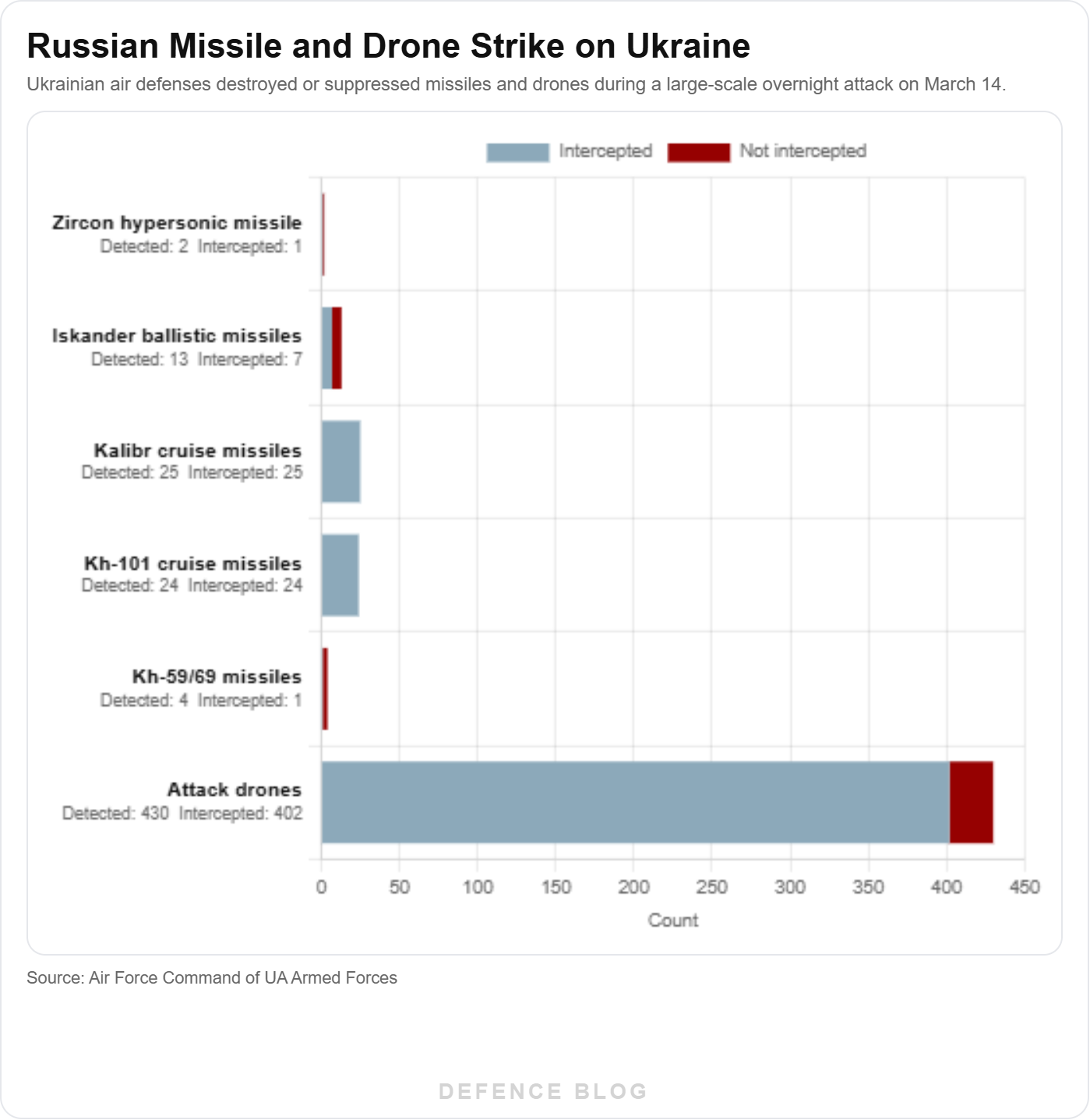
The most important fact of the last 24 hours is not that Russia has once again launched a massive strike on Ukraine. More significant is the timing: the attack followed almost immediately after the conclusion of negotiations in Abu Dhabi and was officially described by Moscow as a blow to Ukrainian military enterprises. This is not a coincidence and not just an attempt to retaliate for strikes on Russian territory. We are witnessing a stable model in which negotiations become yet another channel of military pressure.
Reuters reported on November 12 that Russia announced a large nighttime strike on Ukrainian military factories. At the same time, Ukrainian and international publications reported strikes with ballistic missiles and drones on Kyiv and other areas after the negotiations ended, as well as an exchange of long-range attacks between the parties. The ISW in its assessment for November 11 links the intensification of strikes to Moscow's attempt to maintain operational initiative amid diplomatic contacts. These sources describe different episodes, but together they form a single picture.
Why Military Production Becomes the Target Again
The Russian military logic here is quite transparent. Strikes on frontline positions yield short-term effects, while hitting enterprises, warehouses, and energy nodes should slow down the entire Ukrainian war cycle—from drone production to its transfer to units. In official Russian language, this is referred to as the destruction of military-industrial infrastructure. Practically speaking, this is an attempt to increase the cost of each Ukrainian combat sortie and each missile, while simultaneously forcing Kyiv to expend air defense resources far from the front line.
However, there is a fundamental difference between the declared goal and the actual result. Modern Ukrainian defense industry has long ceased to resemble the Soviet centralized factory that can be incapacitated with a single hit to the facility's structure. Production is distributed among small sites, repair bases, private companies, and foreign partners. Therefore, a massive strike may damage specific capacities, but it does not necessarily destroy the production function. Sometimes it even accelerates the dispersal and transition to modular assembly.
The Bet on Attrition Has a Cost for Russia Itself
Moscow hopes that Ukraine will run out of interceptor missiles faster than Russia will run out of strike capabilities. There is a rational kernel in this calculation: expensive air defense systems have to be used against relatively cheap drones, while the ballistic threat requires a particularly limited set of interceptors. However, a war of attrition is measured not only by the number of launches. It requires sustainable production of engines, electronics, navigation modules, and warheads. This is where Russian official statements usually substitute data with rhetoric.
Russia has indeed retained the ability to conduct large combined strikes, but this does not mean an unlimited resource. The more missiles and drones are expended in one night, the greater the dependence on imported components, bypass channels, and the quality of restored stocks. In this sense, the current attack continues the theme I analyzed earlier using the example of Serbian machines and the production of "Iskanders," but shifts the perspective: sanction chains support not only Russian strike potential, they simultaneously make Ukrainian and European countermeasures more significant.
Negotiations did not stop the strikes because for Moscow, the strikes themselves are part of the negotiating position.
The Diplomatic Signal is More Important than Tactical Damage
The timing of the attack indicates its political addressee. After the negotiations, Russia seeks to show the United States and European governments that it can raise the cost of the conflict at any moment and does not need an immediate compromise. The Ukrainian side, on the contrary, demonstrates strikes on Russian oil and military infrastructure to prove the opposite: the depth of territory no longer guarantees safety, and the continuation of the war will affect the economic foundation of the Russian budget.
This resembles the Soviet practice of "negotiating under fire," but today's version is significantly less centralized. In the USSR, military demonstrations were usually subordinated to a single political vertical and had a clear escalation scale. In modern Russia, the military, intelligence services, and defense industry are much more closely linked, and public statements often justify decisions that have already been made. Therefore, the diplomatic process does not control military dynamics—it merely receives it as raw material.
What to Expect Next
In the near horizon, new combined attacks on Ukrainian production and energy facilities are most likely, especially if negotiations remain without visible results. Kyiv will respond with strikes on Russian oil refineries, ports, and military facilities, forcing Moscow to distribute air defense across a vast territory. Such a spiral does not create conditions for a quick ceasefire: each side tries first to improve its negotiating position, but does so with means that make compromise politically more expensive.
The ultimate effect of the Russian strike will depend not on the number of declared hit targets, but on whether it succeeded in disrupting the Ukrainian production network for weeks rather than hours. If enterprises quickly restore production, the attack will remain primarily a signal. However, if the strikes coincide with a shortage of interceptors, electricity, and components, they may give Moscow a local advantage. My forecast is cautious: Russia is capable of maintaining a high intensity of fire campaign, but it cannot solve Ukraine's industrial problem with a single missile salvo. The war of attrition continues, and its first loser is usually not the one with fewer missiles, but the one whose system adapts worse to their expenditure.
Sources
- Reuters, November 12, 2026 — report on a massive nighttime strike on Ukrainian military enterprises.
- The Kyiv Independent, November 12, 2026 — reports of strikes with ballistic missiles and drones after negotiations in Abu Dhabi.
- Institute for the Study of War, Russian Offensive Campaign Assessment, November 11, 2026.
- Al Jazeera, November 12, 2026 — exchange of long-range strikes between Russia and Ukraine and warnings about drones in the Baltic states.
Russian forces conducted a large-scale strike on Ukrainian military production facilities on November 12, 2026, shortly after negotiations in Abu Dhabi. This attack, involving ballistic missiles and drones, aims to disrupt Ukraine's military capabilities and reflects a strategy of attrition in the ongoing conflict. Reports indicate that the strikes are part of a broader pattern of military pressure from Russia, demonstrating its willingness to escalate the conflict.
- Russia launched a large-scale strike on Ukrainian military factories on November 12, 2026.
- The attack followed negotiations in Abu Dhabi, suggesting a strategic pattern of military pressure.
- Ukrainian and international reports confirmed strikes using ballistic missiles and drones in Kyiv and other areas.
- The strikes aim to disrupt Ukraine's military production capabilities and supply chains.
- Russia seeks to demonstrate its ability to escalate the conflict without immediate compromise.