
Saudi Arabia intercepts two ballistic missiles in 2026 and reveals the limits of the Patriot Shield
 Ahmed Al-Rashid
Saudi Arabia Intercepts Two Ballistic Missiles in 2026 and Reveals the Limits of the Patriot Shield
On November 12, 2026, Saudi Arabia announced that debris from two ballistic missiles intercepted by its air defenses fell in the Mecca region, after being launched from the direction of Yemen, according to Reuters. Available reports did not record significant injuries from the incident, but the value of the news lies not only in the number of missiles that were shot down. The interception of two missiles over a densely populated and religiously sensitive area proves that Riyadh was able to prevent a direct hit, but it also reminds us that air defense systems do not choose the timing of the battle or the source of the threat.
A Successful Interception Does Not Mean Safe Skies
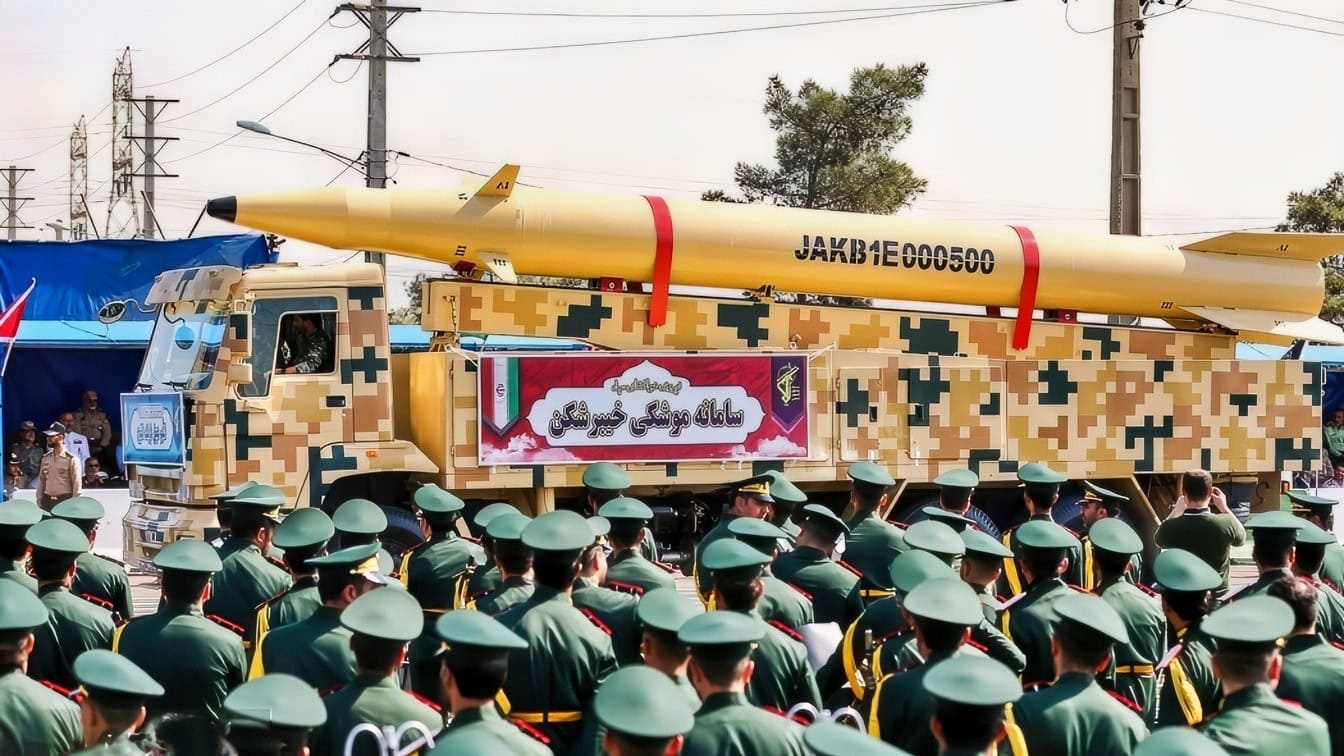
The most important information in Riyadh's statement is that debris reached the Mecca area despite the interception of the missiles. This is expected in any defensive engagement, but it highlights the difference between shooting down a target and completely eliminating the threat. A ballistic missile does not simply cease to exist upon being hit; remnants of the warhead, fuel, or structural parts may fall on civilian areas. Therefore, the quality of air defense is measured by three sequential elements: early detection, trajectory determination, and then intercepting the target before it enters the danger zone, along with managing the effects of the interception on the ground.
Saudi Arabia has extensive experience operating the Patriot system, and the regional discussion includes THAAD systems, radar networks, and fighter jets. However, not every interception should be turned into an announcement of absolute technical superiority. We do not know from the published information the type of missile, the system that executed the interception, or the number of defensive missiles used. These details are important because the war of attrition is not decided in a single interception snapshot, but in the state's ability to maintain its stockpile and firing rate when attacks are repeated over consecutive nights.
The Houthis Change Riyadh's Calculations
This incident comes amid a wave of escalating tension between Saudi Arabia and the Houthis since July, following the expansion of the regional war linked to Iran. Reuters reported on November 6 that Riyadh had entered into increasing hostilities with the Iran-backed group, while other reports spoke of military cooperation and Syrian training for Saudi Arabia. Whether the recent launch was an independent Houthi operation or part of broader Iranian pressure, the operational outcome is the same: Saudi Arabia must distribute its defenses among the southern borders, oil facilities, airports, cities, and maritime corridors.
This distribution is the vulnerability that arms purchases alone do not address. Two ballistic missiles may seem like a limited threat against a massive Saudi defense budget, but the danger changes when a missile coincides with low-flying drones or an attack on an energy facility or jamming of communications. At that point, the question is no longer whether a Patriot battery can shoot down a single target, but whether the command can detect a compound attack and prioritize without depleting munitions on cheap targets.
From Mecca to Energy Facilities
The choice of the Mecca area in the news raises the political cost of the incident. Protecting holy cities is not an ordinary air defense mission; any hit or debris fall during a busy season could quickly turn into a domestic security crisis and regional diplomatic fallout. However, military planners must not allow symbolism to obscure the broader geography. The Kingdom is vast, and its oil facilities, ports, and pipelines extend over large distances. A dense umbrella cannot be built over every target, so point defenses must work in conjunction with early warning, civil defense, and the ability to repair damage.
Practically, intercepting over Mecca forces Riyadh to review its rules of engagement. Do fighter jets open the airspace to air defense missiles? Who decides to launch a missile on a trajectory that may pass over a civilian area? And does the operations room have a shared aerial picture with Gulf forces and U.S. forces? These are not just technical questions. If the decision requires a long series of national approvals, the missile may have already completed most of its trajectory before the information turns into action.
American Support and Arab Capability
On the same day, Associated Press reported that the Iranian foreign minister had contacted Gulf officials, including the Saudi foreign minister, as part of efforts to improve security and stability. Diplomatic contact does not mean an end to attacks, but it reveals the contradiction Riyadh faces: it needs to keep a political channel open with Tehran while militarily preparing for strikes from its allies. Additionally, limited U.S. strikes on Iranian defenses in Qeshm Island on November 6, according to the Institute for the Study of War, confirm that the United States remains a central player in the threat and deterrence landscape.
This reliance is not a flaw in itself; even major armies exchange alerts and information. The problem begins when external support becomes a substitute for building local institutions. American radar or satellite imagery may shorten warning times, but they do not alone determine the rules for protecting Mecca or an Aramco facility. An external contractor cannot decide how munitions are managed or how maintenance continues during a prolonged crisis. True strength lies in possessing equipment, training, and institutions simultaneously, not just owning the most expensive platform and waiting for expertise from abroad.
The Next Test is Sustainability
Saudi Arabia should use the November 12 incident to assess what does not appear in official data: the number of failed interceptions, warning lead times, missile stockpiles, radar readiness, and failure rates. Scenarios should also be tested that combine ballistic missiles, drones, and electronic deception operations, with civil defense training on debris falls and evacuating sensitive areas. These indicators are more useful than announcing that the sky has been protected once again.
Intercepting two missiles over the Mecca area is a tactical success that should not be underestimated, but it is not a solution to the war. The Houthis do not need to penetrate every defensive layer to exert pressure; it is enough for them to keep Saudi Arabia in a state of constant mobilization, forcing it to spend an expensive defensive missile on every threat, and undermining public confidence in the security of cities and facilities. Here lies the contradiction that Riyadh has not resolved: it buys the best that can be purchased to protect its airspace, but it cannot buy a smaller geography or a less costly threat. The Patriot Shield may buy the state precious time, but it does not eliminate the war of attrition that revolves around it.
Sources Reuters, November 12, 2026; Associated Press, November 12, 2026; Institute for the Study of War, Iran Update on November 7, 2026.
Saudi Arabian air defenses intercepted two ballistic missiles over Mecca on November 12, 2026. Debris from the missiles fell in the region, indicating that while the interception was successful, it did not eliminate the threat entirely. This incident reflects ongoing tensions with Houthi forces and raises concerns about the effectiveness of air defense systems in protecting sensitive areas.
- Saudi Arabia intercepted two ballistic missiles on November 12, 2026.
- Debris from the intercepted missiles fell in Mecca.
- The interception demonstrates the effectiveness of Saudi air defenses but highlights limitations in completely neutralizing threats.
- The incident is part of ongoing tensions between Saudi Arabia and Houthi forces.
- Saudi Arabia must balance its air defense resources across multiple critical areas.