
Russia's 16-Hour Tu-160 Flight Tests NATO's Arctic Nerves
 Alexandra Reeves
Russia's 16-Hour Tu-160 Flight Tests NATO's Arctic Nerves
Moscow did not need to cross a border to make its point. A pair of Russian Tu-160 strategic bombers spent roughly 16 hours over the Barents and Norwegian seas, practiced aerial refueling, and drew NATO F-35s off northern Norway. That is not a crisis. It is more useful than that: a clean, visible stress test of NATO's Arctic air defence routine.
According to Reuters, citing Russia's defence ministry, Tu-160 missile-carrying bombers flew in the neutral zone over the Barents Sea and Norwegian Sea, with MiG-31 interceptors providing escort. Moscow described the sortie as scheduled and compliant with international airspace rules. The Barents Observer, using Russian ministry footage, reported that NATO F-35 fighters met the Russian aircraft off northern Norway.
The Russian version is technically plausible and politically convenient. The aircraft stayed in international airspace. The flight was framed as routine. The ministry said its long-range aviation regularly flies over neutral waters in the Arctic, North Atlantic, Pacific, Baltic and Black Sea areas. All true enough. But routine is not the same thing as harmless.
The Intercept That Matters
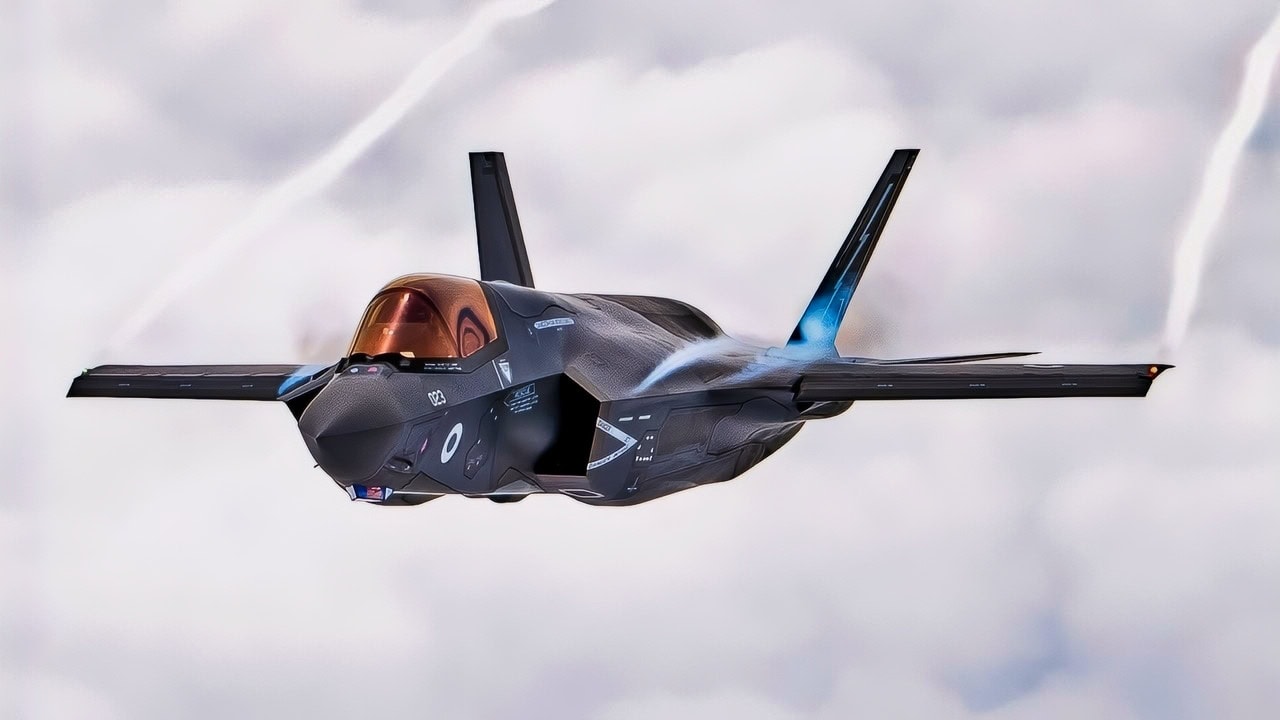
The geography is the story. Northern Norway sits near Russia's Kola Peninsula, home to some of Moscow's most valuable naval and strategic aviation infrastructure. A Tu-160 route over the Barents and Norwegian seas is not just a long-range aviation drill. It runs along the edge of NATO's northern surveillance network, close enough to force identification, tracking, and command decisions without creating an overt violation.
Norway's F-35A fleet is built for exactly this sort of work. The aircraft at Evenes Air Station support Quick Reaction Alert missions designed to launch within minutes when unidentified or unannounced aircraft approach NATO airspace. Barents Observer noted that Norwegian F-35s can be airborne within 15 minutes from Evenes to identify and monitor Russian aircraft approaching from the Kola direction. AeroTime reported that Norway's F-35 force launched on QRA 41 times in 2025 and identified and documented 53 Russian military aircraft.
Those numbers matter because air policing is not a ceremonial mission. NATO describes air policing as continuous monitoring of air traffic in and around Europe, including the ability to detect, identify and intercept unusual or potentially hostile aircraft. In the Arctic, that means fighter readiness, tanker access, radar coverage, command-and-control discipline, and political nerves all have to work in bad weather, long distances and compressed timelines.
Why The Tu-160 Is Different
The Tu-160 is not just another Russian aircraft making a nuisance flight near NATO airspace. Known to NATO as Blackjack, it is the world's largest and heaviest supersonic combat aircraft and a core platform in Russia's airborne nuclear and conventional long-range strike force. It can carry long-range cruise missiles, and variants of Russia's strategic bomber fleet have been used in missile attacks against Ukraine.
That does not mean this sortie was a rehearsal for nuclear war. It does mean NATO cannot treat it like a transport aircraft squawking badly. A Tu-160 flight with MiG-31 escort and in-flight refueling is a message about reach, endurance and survivability. The refueling piece is important: Russia was not merely showing that the aircraft can leave base and return. It was showing that the platform can stay in the air long enough to complicate NATO's response cycle.
There is a second, less comfortable layer. Russia's bomber force is valuable precisely because it is hard to replace. AeroTime noted that Moscow delivered two modernized Tu-160M variants in December 2025. It also pointed to reporting on protective shelters being built at Engels Air Base, associated with Tu-160 and Tu-95MS operations, after Ukrainian long-range drone attacks exposed the vulnerability of aircraft parked in the open. If Russia is taking greater care of these aircraft on the ground, then sending them near NATO's northern flank is not casual theatre. It is a deliberate use of scarce strategic assets.
NATO Just Finished Rehearsing This Problem
The timing was not subtle. NATO has just concluded Ramstein Flag 2026, this year's major air force exercise across the Nordic region. According to the Barents Observer, roughly 150 aircraft took part, with much of the activity over northern Norway, Sweden and Finland. Then Russia sent strategic bombers through the same broad northern air-security environment.
That does not prove Moscow timed the flight as a direct reply. It does make the sortie impossible to separate from the larger Nordic airpower picture. Finland and Sweden's entry into NATO changed the map. The alliance now has a much more coherent northern flank, but it also has more airspace, more bases, more political expectations and more escalation-management problems. The old assumption that Arctic security could remain a specialist subfield is dead.
Here is the thing many Western officials prefer not to say out loud: the Arctic air problem is not solved by buying F-35s. Fifth-generation fighters help enormously, but they still need hardened bases, dispersed operating sites, stocks of air-to-air missiles, tanker support, ground-based air defence and secure communications. If Russian bombers can repeatedly trigger NATO intercepts at times and routes of Moscow's choosing, then the alliance is spending readiness every time it proves readiness.
The Signal Moscow Wanted To Send
Russia is trying to normalize strategic aviation pressure in the north. That is the signal. Each flight says three things at once: Moscow still has global-range military tools despite the war in Ukraine; the Kola region remains central to Russian military identity; and NATO's new Nordic geography comes with a daily operational price.
For Europe, the uncomfortable lesson is that deterrence in the north is no longer a winter exercise or a NATO communique line. It is a live contact game involving aircraft that can carry long-range missiles, fighters that must launch quickly, and commanders who must distinguish signalling from preparation under pressure.
The next thing to watch is not whether another Tu-160 or Tu-95MS appears off Norway. It almost certainly will. Watch instead whether NATO increases the density of northern air policing, adds more tankers and surveillance aircraft, and hardens Nordic air bases against the kind of drone and missile threat Ukraine has made impossible to ignore. Russia's 16-hour flight was legal. It was also a reminder that legal pressure can still be strategically expensive.
The real question is whether NATO is willing to pay that cost every week, not just during the exercise season.
Russian Tu-160 bombers conducted a 16-hour flight over the Barents and Norwegian seas, practicing aerial refueling and prompting NATO F-35s to respond. The operation involved MiG-31 interceptors and was framed by Russia as routine, although it tested NATO's air defense readiness in the Arctic. This flight underscores the strategic significance of the Kola Peninsula and the ongoing military dynamics in the region.
- Russian Tu-160 bombers flew for 16 hours over neutral waters in the Barents and Norwegian seas.
- MiG-31 interceptors provided escort for the Tu-160s during the flight.
- NATO F-35s were deployed to intercept the Russian aircraft near Northern Norway.
- The flight was described as routine and compliant with international airspace rules by Russia.
- This sortie is seen as a stress test of NATO's Arctic air defense capabilities.