
Russia's 2026 Missile Incursion Put NATO's Poland Problem on Display
 Alexandra Reeves
Russia's 2026 Missile Incursion Put NATO's Poland Problem on Display
Russia did not need to hit a Polish city to create a NATO crisis. A Kh-101 cruise missile and two other objects crossed into Polish airspace on Friday while 11 countries were conducting a major military exercise in southeastern Poland. Nobody was killed. No building was destroyed. That is precisely why the incident matters: Moscow managed to test the alliance's political reflexes without giving Warsaw an obvious target for retaliation.
The Missile Was the Message
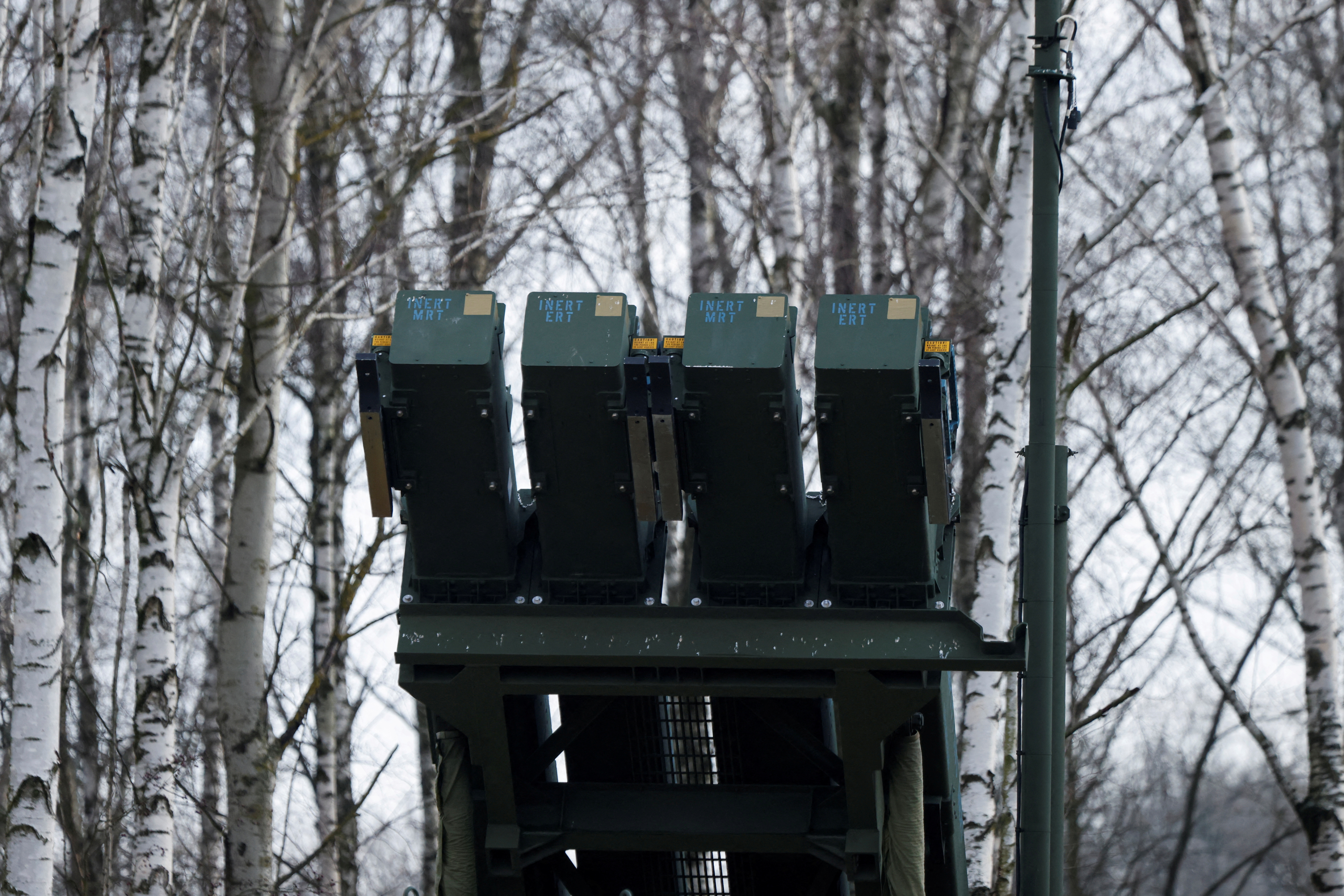
According to the BBC, Poland's Defence Minister Wladyslaw Kosiniak-Kamysz said the Kh-101 struck a rural area near Nowy Lipowiec, roughly 50 kilometres from the Ukrainian border, at about 06:30 local time. A second suspected missile came down near Rudnik nad Sanem, while a jet-powered drone crashed near Mołodycz. Polish authorities reported no casualties or damage, but NATO aircraft were scrambled after what Secretary General Mark Rutte called “grave violations of Polish airspace.”
The Kh-101 is not an unguided battlefield rocket. It is an air-launched, conventionally armed cruise missile built for long-range precision attack, using inertial and satellite navigation and a low-level flight profile. Its tactical purpose in Ukraine is to reach fixed targets deep behind the front. Its political purpose in Poland was different. It forced NATO to decide how much risk it was willing to accept when a Russian strike appeared to spill across the border during a live allied exercise.
Why the Exercise Changes the Calculation
Prime Minister Donald Tusk said the incident did not look accidental because the objects landed near the area where “Koalicja 2026” was taking place. The UK- and France-led exercise was designed to train the Coalition of the Willing for a possible peace arrangement in Ukraine, with Polish troops participating and defence ministers from Britain, France, Poland, Estonia and Lithuania visiting the training ground later that day.
That detail matters more than the physical damage. Russia was not merely attacking Ukraine while a NATO exercise happened to be nearby. It was conducting a large strike during a moment when European governments were publicly rehearsing how they might sustain a post-war security architecture. The simplest interpretation is not necessarily that Moscow planned every impact point. The more important point is that Russia understood the opportunity created by the timing and can now watch how European capitals describe it.
“This incident is clearly dangerous - a consequence of Russia's ongoing war against Ukraine,” Mark Rutte said, according to the BBC.
Warsaw called the incursion a provocation and sought additional NATO support. London and several European leaders used similar language. But “provocation” is a political category, not a military response. It tells Moscow that the alliance is angry. It does not tell Moscow where the operational boundary lies.
NATO's Air-Defence Problem Is Not Just Hardware
Poland has invested heavily in layered air defence, including Patriot systems, fighter aircraft and improved radar coverage. Yet no national air-defence network can make a border perfectly impermeable during a war next door. Cruise missiles fly low, radar pictures are incomplete, and commanders must distinguish between a weapon deliberately aimed at Poland, a missile that has gone off course, and debris or a drone crossing at speed.
The problem is therefore not simply whether Poland owns enough interceptors. It is whether NATO can make a rapid, shared decision about an object that is dangerous but not yet clearly an attack on the alliance. Shooting down a missile is a tactical act. Deciding to do so under Article 5's political shadow is a strategic act. The distinction is where deterrence becomes expensive.
Europe has spent two years discussing air-defence shortages, interceptor production and the vulnerability of critical infrastructure. The latest Polish incident shows the missing layer: rules of engagement that are credible to Moscow and understandable to the public. If every incursion produces a different explanation, Russia gains room to probe. If every incursion triggers an automatic shoot-down, NATO risks escalation from an event that may have begun as a strike against Ukraine.
The Baltic Spillover Is Widening
The same weekend brought another warning. A Russian cargo ship, the Sparta II, caught fire after a drone attack in the Gulf of Finland and drifted into Finnish waters. Finnish defence officials said Ukraine was likely behind that attack, while Prime Minister Petteri Orpo said the war was spilling into Finland's immediate vicinity. The two incidents are not identical: one involved a Russian missile entering NATO airspace, the other a suspected Ukrainian strike on a Russian-linked vessel. Together, however, they show how quickly the geography of the war is expanding beyond Ukraine's front line.
That expansion creates an awkward problem for European governments. They want Ukraine to retain the ability to strike Russian military and logistical targets. They also want the war contained. Those goals are increasingly in conflict as missiles, drones and damaged vessels move through the Baltic region's crowded air and maritime space.
What to Watch Next
Three indicators will reveal whether this was a one-off spillover or a new Russian pressure tactic. First, watch whether NATO increases persistent air patrols and air-defence deployments around southeastern Poland, rather than merely scrambling jets after an intrusion. Second, watch whether Warsaw receives a public commitment on the authority to engage future missiles. Third, watch Russian messaging: an explicit denial would suggest concern about escalation, while silence or contradictory claims would suggest that ambiguity is serving the operation.
The immediate military damage was negligible. The strategic damage is harder to measure. Russia has demonstrated that it can place a NATO member in a crisis during an allied exercise, force leaders to debate intent in public, and leave the alliance responsible for defining its own red lines. NATO's eastern flank is not undefended. It is politically undecided. That is the problem Moscow will test next.
Sources
- BBC News, “Russian missile hits Poland as Ukraine's allies hold military exercise, says Tusk,” 21 November 2026.
- BBC News, “Russia-bound ship still on fire after attack in Gulf of Finland,” 22 November 2026.
- NATO Secretary General Mark Rutte's public condemnation of the Polish airspace violations, quoted by BBC News.
Russian missiles, including a Kh-101 cruise missile, crossed into Polish airspace during a NATO military exercise in November 2026. No casualties or damage were reported, but NATO scrambled aircraft in response to the violations. The incident is seen as a provocation, testing NATO's political resolve amid ongoing tensions with Russia.
- A Kh-101 cruise missile crossed into Polish airspace during a NATO exercise.
- No casualties or damage were reported from the missile strikes.
- NATO aircraft were scrambled in response to the airspace violations.
- The incident is viewed as a provocation by Polish authorities and NATO leaders.
- The timing of the incident coincided with a significant military exercise involving multiple NATO countries.