

Key Points and Summary – Russia’s Navy cannot match U.S. global reach, but its Kilo-class submarines still matter because they’re designed to be brutally quiet, heavily armed, and hard to track.
-That’s why reports of a Kilo being destroyed by a Ukrainian underwater drone are so consequential: it suggests the undersea game is evolving fast, especially in confined waters where sensors, drones, and persistence can compress a submarine’s margin for error.
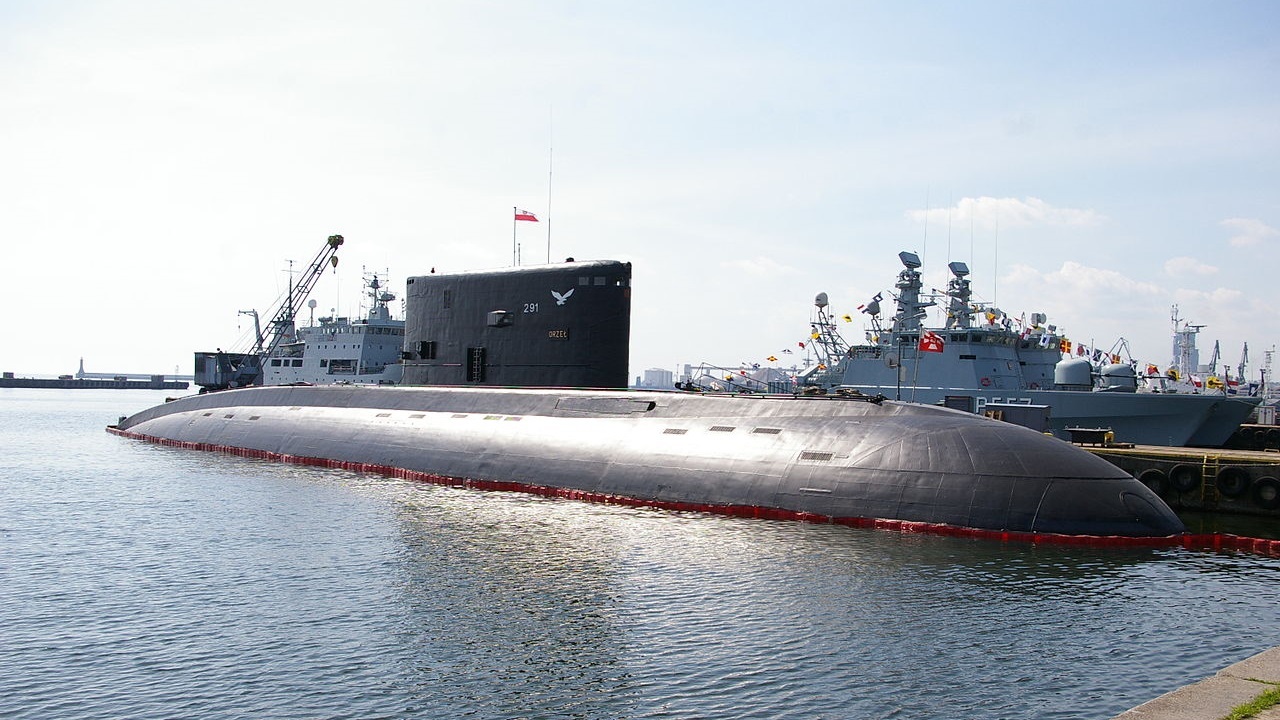
Polish Navy submarine, Kilo-Class.
-The piece argues the improved 636.3 Kilos bring serious torpedo-and-mine punch, but questions whether their automation, sensors, and overall combat system can truly rival modern Virginia-class boats—particularly as U.S. subs expand ISR roles close to hostile coastlines.
-Russia’s Navy is smaller, less lethal, and much less capable of projecting global power when compared to the U.S. Navy, but its submarines remain a serious and pressing threat.
Enter the Black Hole – Kilo-Class Destroyed
Current variants of the 1980s-era Soviet Kilo-class submarine feature an improved engine, advanced combat system, and cutting-edge noise-reduction technologies.
Some in the U.S. naval community refer to this class as the “black hole” because of its stealth.
However, despite its reputation for being almost undetectable, multiple reports say a Kilo-class submarine was recently destroyed by a Ukrainian underwater drone.
The Type 636.3 Kilo-class variants are the result of a series of enhancements in the mid-2010s to further strengthen the boat’s anti-submarine and anti-surface-ship missions.
Over several decades, the Kilo-class boats have been engineered with advanced sonar and mine detection.
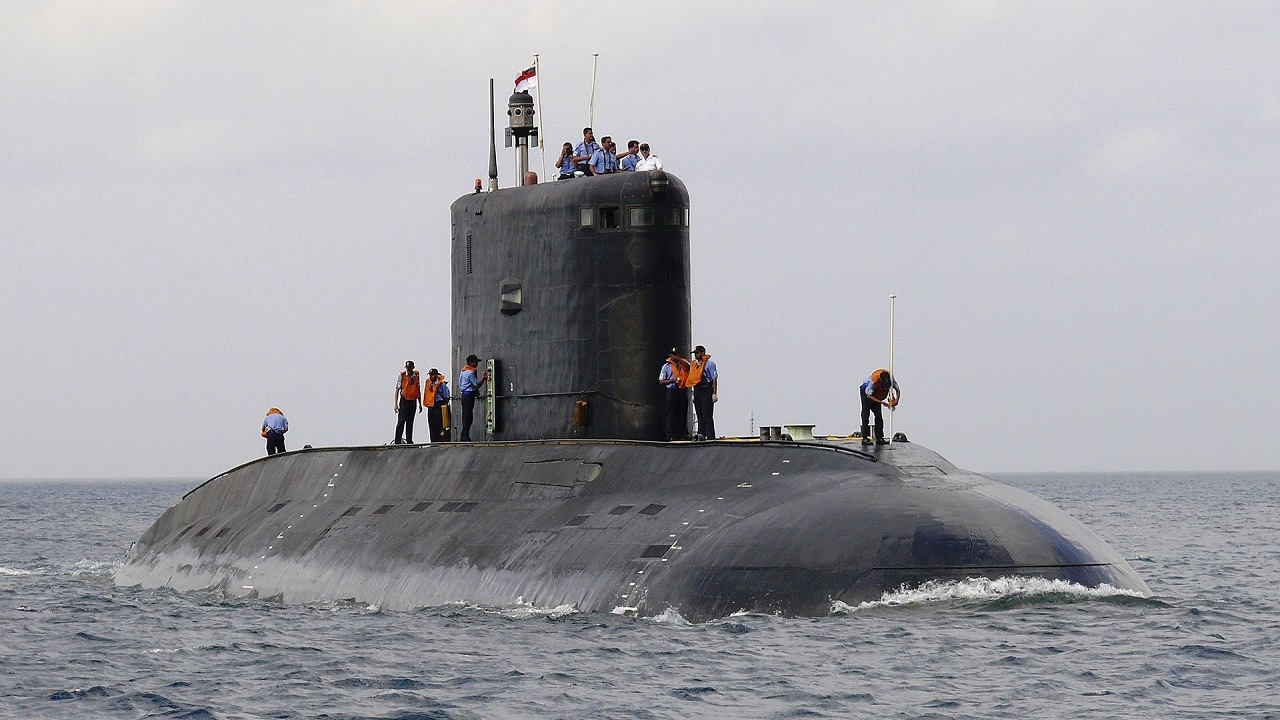
Kilo-Class Submarine.
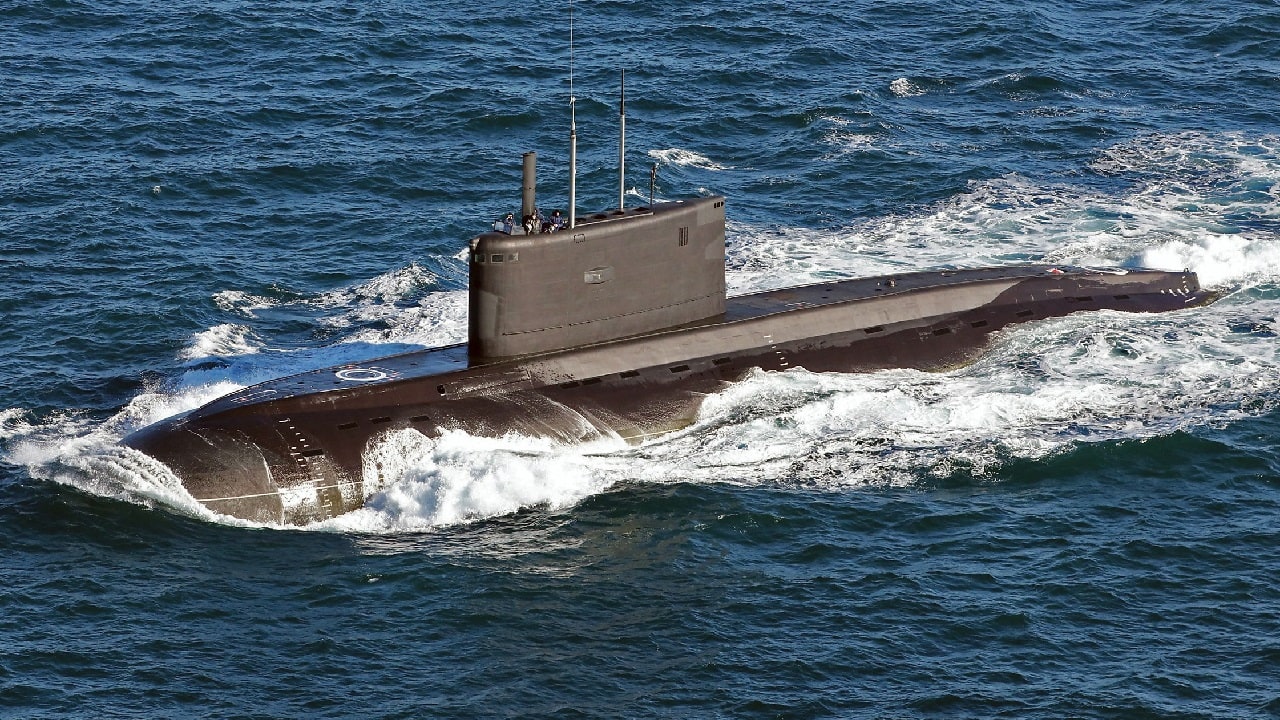
Pictured is a Kilo-Class Russian Submarine in the English Channel. The image was taken from Royal Navy Wildcat HMA2 Helicopter of 815 Naval Air Squadron. Kilo class is the NATO reporting name for the diesel-electric attack submarine.
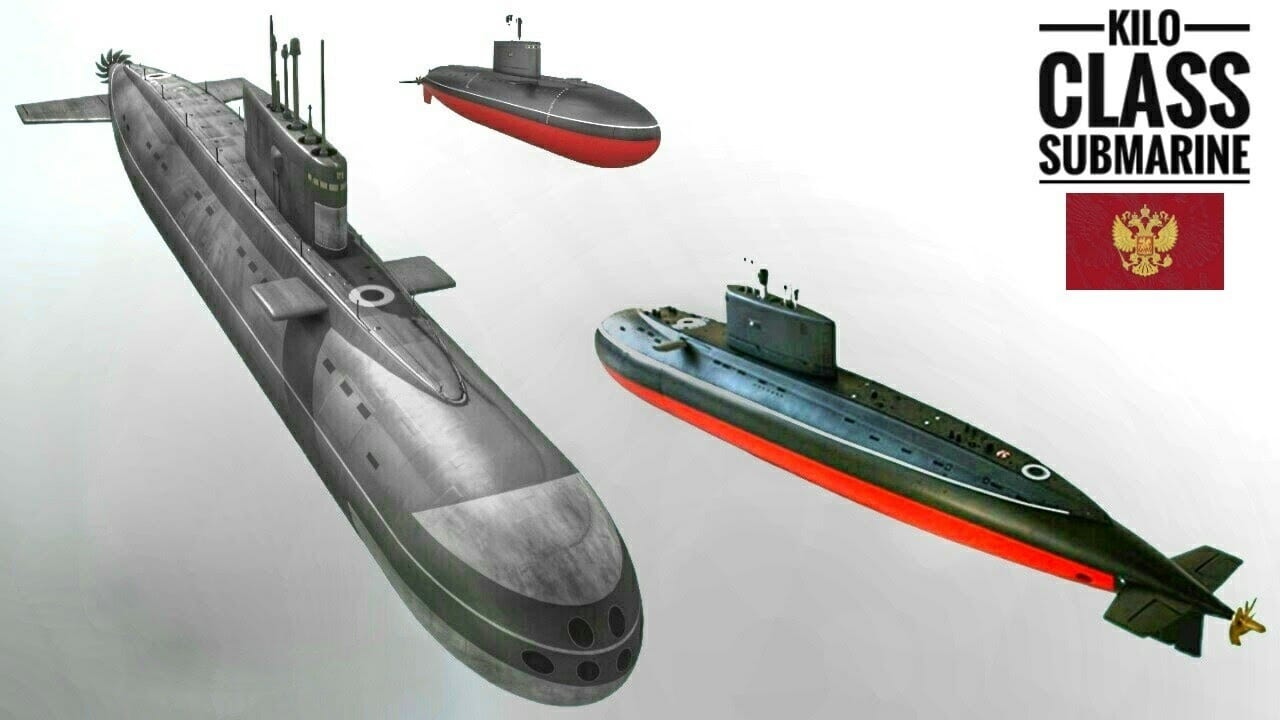
Kilo-class Submarine. Image Credit: Creative Commons.
Other improvements include ceramic compounds to improve quieting, according to a paper published by Rosoboronexport.
Anechoic files, as they are called, are fitted onto casings to absorb soundwaves, resulting in a reduction and distortion of the return signal.
Torpedo-Armed Kilo-class
The Kilo-class can fire torpedoes accurately and very quickly within a 15-second window, often using remote-controlled firing.
The weapons capacity of the boats is detailed in an article from the Federation of American Scientists:
“The submarine can carry 24 mines with two in each of the six tubes and twelve on the racks. Two torpedo tubes are designed for firing remote-controlled torpedoes with a very high accuracy. All torpedo tubes and their service systems provide effective firing from periscope to operational depths. The computer-controlled torpedo system is provided with a quick-loading device. It takes only 15 seconds to prepare stand-by torpedo tubes for firing: The first salvo is fired within two minutes and the second within five minutes.”
Kilo vs Virginia-Class Submarine From U.S. Navy
The most important question is whether 636.3 Kilo-class submarines can rival advanced U.S. Virginia-class submarines in terms of torpedo guidance, launching, and range.
The FAS essay adds that the Kilo-class can deploy mines from its torpedo tubes. It would be significant if, like the newest Virginias, the Kilos could launch drones from their torpedo tubes.
Virginia-class Block III submarines started with the USS South Dakota almost eight years ago; known details on its capabilities are few.
However, senior Navy weapon developers said the enhancements involved antennas, coating materials, and engine-quieting technologies.
Block III Virginia
Block III Virginias also have a Large Aperture Bow advanced sonar and an automated, joy-stick-controlled computerized fly-by-wire navigation system.
The Kilo-class is described as having some computer automation, but it is hard to say whether it could rival Virginia-class submarines.
Virginia-class submarines are increasingly being used for Intelligence, Surveillance, Reconnaissance (ISR) missions to survey high-risk areas such as enemy coastlines while remaining much less detectable than surface ships.
About the Author: Military Expert Kris Osborn
Kris Osborn is the President of Warrior Maven – Center for Military Modernization. Osborn previously served at the Pentagon as a highly qualified expert in the Office of the Assistant Secretary of the Army—Acquisition, Logistics & Technology. Osborn has also worked as an anchor and on-air military specialist at national TV networks. He has appeared as a guest military expert on Fox News, MSNBC, The Military Channel, and The History Channel. He also has a Masters Degree in Comparative Literature from Columbia University