
Russia's EUR4,000 Italy Spy Ring Targeted Ukraine's SAMP/T Shield
 Alexandra Reeves
Russia's EUR4,000 Italy Spy Ring Targeted Ukraine's SAMP/T Shield
Four thousand euros is a stupidly small price for the kind of information Moscow was allegedly trying to buy in Rome. That is the uncomfortable part of the Italian espionage case reported this week: Russia was not just fishing for gossip inside a NATO capital. It was asking about the exact European air defence systems keeping Ukrainian cities alive.
According to court documents reviewed by Defense News, Italian investigators say an alleged Russian GRU officer, Mikhail Astakov, used a former Italian intelligence official, Gavino Piras, to recruit sources in the Italian military. Investigators allege the network passed packages of information on microSD cards, hidden in a wall for collection, with EUR4,000 paid for each package. Piras's lawyer has denied that he passed classified information to Russia.
That caveat matters. These are allegations, not a conviction. But the target list is already revealing.
The Shopping List Was the Story
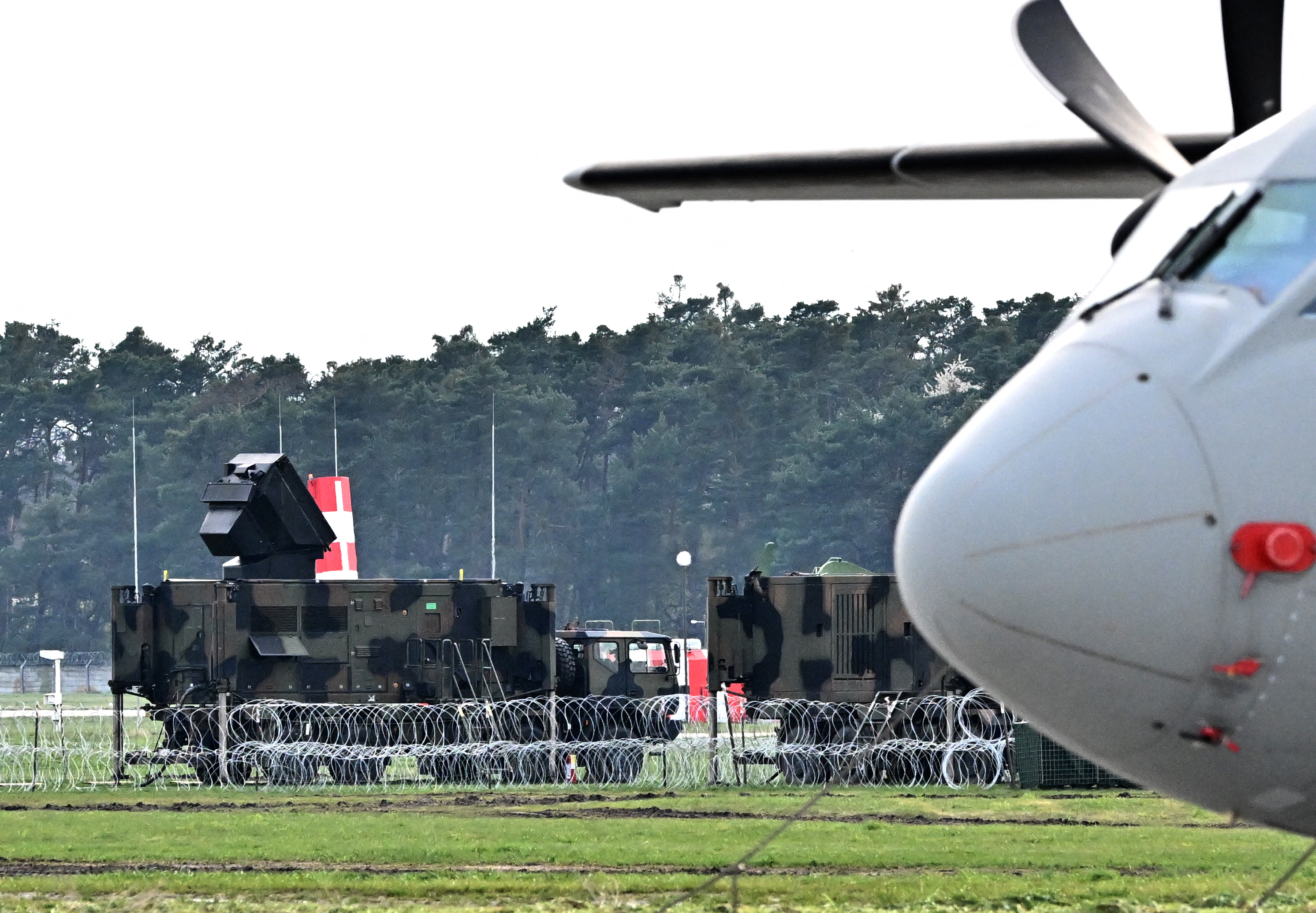
Defense News reports that Astakov, a Russian military attache in Rome accused by Italian authorities of working for military intelligence, asked about SAMP/T, the Franco-Italian air defence system supplied to Ukraine; MBDA's CAMM-ER missile, which Kyiv has discussed assembling; Leonardo's Michelangelo Dome concept; Italy's Storm Shadow plans; EU and NATO rearmament priorities; and Avio, the Italian propulsion company tied to solid rocket motor work with the U.S. Army.
That is not random collection. It is a map of Europe's Ukraine support architecture.
SAMP/T matters because it is one of the few European systems able to contribute to high-end air and missile defence in Ukraine alongside Patriot. It fires the Aster missile family and represents the kind of scarce capability Kyiv cannot replace quickly. CAMM-ER matters because MBDA describes it as a 160kg, 4.2m extended-range air defence missile with soft vertical launch, a two-way data link and the ability to use third-party targeting from a wider battlespace network. In plain English, it is built for the networked air defence problem Ukraine faces every night.
Michelangelo Dome matters for the same reason. Leonardo has presented it as an open-architecture air defence approach meant to connect existing sensors and effectors rather than force every participant into one closed system. Defense News reports that Leonardo management has said it will be trialed in Ukraine in November. If you are Russia, the trial is a threat. If you can learn how the architecture links radars, command posts and interceptors, you do not need to defeat every missile. You look for the joints.
Russia Is Hunting the Gaps Between Systems
Western coverage of Ukraine's air defence problem often turns into an inventory argument: more Patriots, more SAMP/T batteries, more interceptors, more short-range systems. That argument is not wrong, but it is incomplete. Modern air defence is not just hardware. It is software, timing, emissions control, sensor fusion, command authority, crew training and maintenance discipline.
Those are exactly the kinds of details an intelligence service wants before a strike campaign.
Russia has already adapted its missile and drone attacks around Ukrainian defences. It mixes Shahed-type drones, decoys, ballistic missiles, cruise missiles and glide bombs to stretch interceptors and force radar operators to make ugly decisions under time pressure. The more Europe helps Ukraine connect different national systems into a layered shield, the more Moscow has an incentive to collect on integration details rather than just count launchers.
This is where the Italian case cuts against a lazy assumption in some European capitals: that support to Ukraine is mainly a logistics problem. Send the battery, send the missile, issue the press release. The hard part is done.
No. The hard part begins when Russia starts treating every supplier, repair hub, test range, defence company and retired official as part of the battlefield.
Italy Is Not a Side Theatre
Italy can look like a secondary actor in Ukraine policy compared with the United States, Germany, Britain, Poland or France. That is misleading. Italy co-developed SAMP/T with France, hosts major missile and electronics firms, and sits inside the European industrial base that Ukraine increasingly needs. Avio's propulsion work, Leonardo's air defence architecture and MBDA Italy's missile role all put Rome closer to the centre of the war than Italian domestic politics sometimes admits.
That is why Foreign Minister Antonio Tajani's response was sharper than boilerplate. After Italy announced the expulsion of two Russian military attaches, including Astakov, Tajani said Moscow continues to use hybrid warfare to attack the West and Italy, calling it serious and unacceptable interference in Italian institutions and national security.
The right lesson is not that Russia spies. Everyone knows that. The lesson is that Russia is collecting against the practical mechanics of Europe's Ukraine war effort.
There is a difference. Political espionage tells Moscow what leaders might say. Technical and industrial espionage tells Moscow what Ukrainian crews might be able to shoot down in November, which missile stocks will be thin in January, and which European factory bottleneck is worth pressuring next.
The NATO Problem Is Bigger Than Rome
NATO likes to talk about resilience. The word is usually stretched until it means everything and nothing. This case gives it a useful definition: can the alliance protect the people and companies that make Ukraine's defence possible?
That includes military secrets, but it also includes procurement schedules, factory capacity, test data, deployment concepts and repair procedures. A retired intelligence officer with useful contacts may be less glamorous than a cyber breach, but the effect can be just as damaging. A microSD card passed in Rome can become a missile-planning input in Moscow.
Europe also has to be honest about scale. If alleged payments of EUR4,000 bought information packages, the cost-benefit calculation for Russian intelligence is absurdly favourable. NATO governments are spending billions to build air defences, then relying on uneven counterintelligence cultures across a continent of contractors, ex-officials, military retirees and attaché networks. That is not a comforting balance sheet.
What to Watch Next
The immediate question is whether Italian prosecutors can prove classified material moved and how far the alleged network reached into active military circles. The second question is whether Ukraine's planned Michelangelo Dome trial in November now receives extra counterintelligence protection. It should.
The broader question is whether NATO treats this as an Italian scandal or as a warning shot. Moscow appears to be studying Europe's air defence supply chain with the same seriousness it studies Ukrainian radar emissions. That means Europe's answer cannot be only more equipment. It has to be tighter protection around the knowledge that makes the equipment work.
The uncomfortable judgment is simple: Russia may not need to outproduce Europe's air defence systems if it can learn how Europe connects, moves and exposes them. The next fight over Ukraine's skies will not only happen above Kyiv. Some of it is already happening in offices, embassies and quiet meetings across NATO capitals.
Russian GRU officer Mikhail Astakov engaged in espionage activities in Rome, targeting Ukraine's SAMP/T air defense system and other military technologies. The network allegedly used microSD cards to collect sensitive information, with payments of EUR4,000 for each package. Italy has expelled two Russian military attaches in response to these activities, highlighting the serious implications for European defense efforts.
- Russia targeted Ukraine's SAMP/T air defense system through espionage in Italy.
- Alleged Russian GRU officer Mikhail Astakov was involved in recruiting sources.
- Information was reportedly passed on microSD cards for EUR4,000 per package.
- The espionage aimed to understand European air defense integration and capabilities.
- Italy expelled two Russian military attaches in response to the espionage.