
Russia's Glide Bombs Are Turning Ukraine's 2026 Winter Into a Weapon
 Alexandra Reeves
Russia's Glide Bombs Are Turning Ukraine's 2026 Winter Into a Weapon
The attack pattern is changing
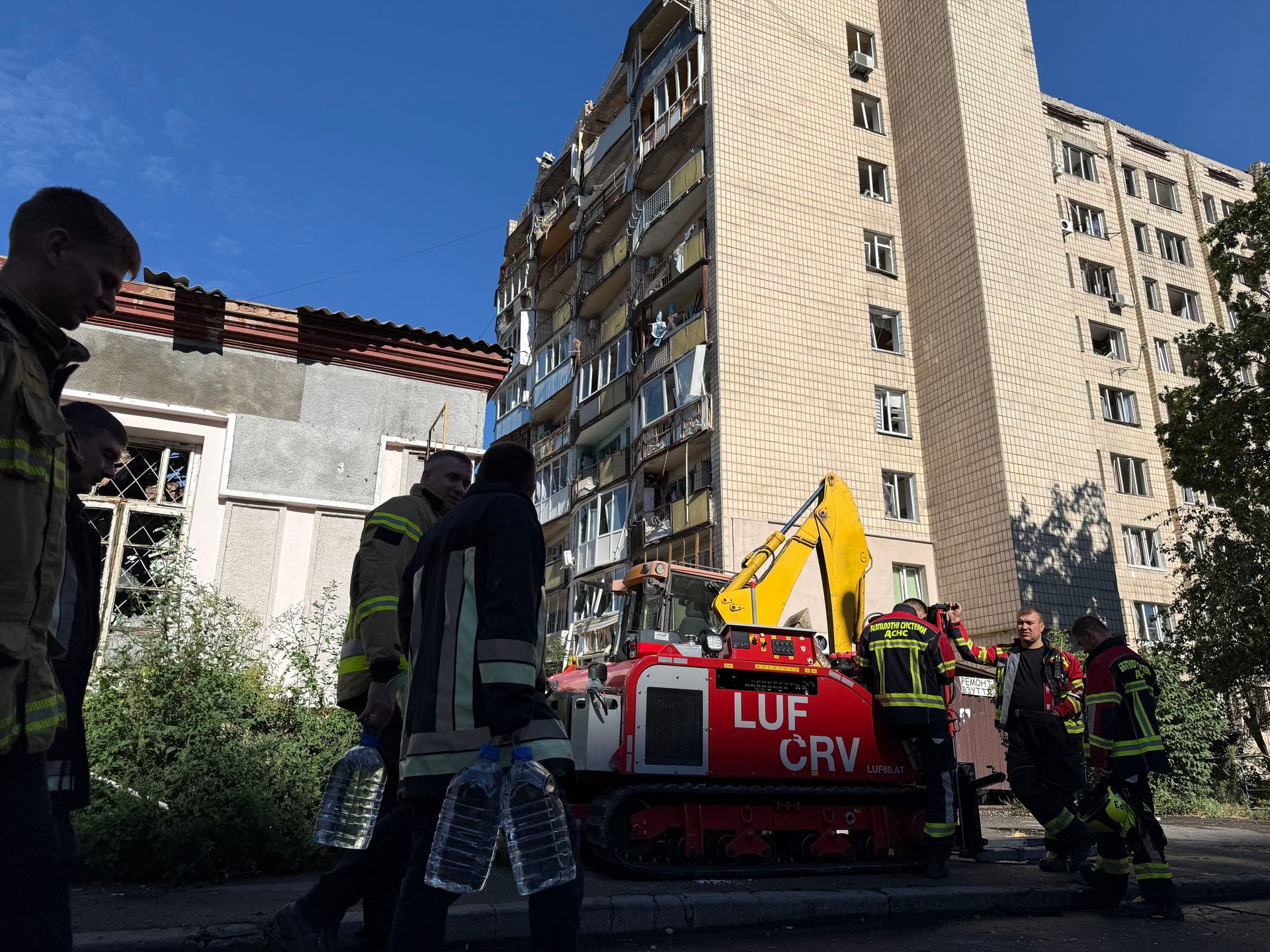
Russia is not waiting for winter to arrive. It is trying to manufacture the conditions that will make winter unbearable for Ukraine. The latest campaign combines glide bombs against frontline cities, missiles and drones against Kyiv, and repeated pressure on the electricity and transport systems that keep urban life functioning. The point is not simply to destroy buildings. It is to make staying put feel irrational.
That distinction matters. The Kremlin has spent years treating Ukraine's civilian infrastructure as a second battlefield. This autumn, the battlefield is moving into people's calculations about whether to remain in the capital, send children to school, or keep a business open. A war can be militarily static and socially mobile at the same time.
Glide bombs make the frontline more dangerous
According to the BBC, a Russian glide-bomb strike on two civilian buses in Kramatorsk killed at least 30 people and wounded 18, according to Ukrainian officials. Three more people were reported killed in nearby Bilenke. The strike came in a city that has served as a logistics hub and sits inside the Donbas fortress belt Moscow says it intends to capture.
Glide bombs are not exotic weapons. They are conventional bombs fitted with winglets and guidance kits, allowing aircraft to release them from distance and let them travel toward a target rather than simply drop. Their military value is brutally practical: Russian aircraft can attack from outside some Ukrainian short-range air-defence envelopes, while the bomb's large warhead does not need the precision of a small missile to devastate a building or transport node.
The result is an ugly asymmetry. Ukraine must protect a wide urban and logistical network; Russia needs only to find gaps, or to make the cost of defending every possible target impossible. The Kramatorsk attack also shows why a nominally civilian route can become a strategic target. Once buses stop running, the state loses more than transport. It loses a way to evacuate people, move workers, and signal that ordinary life still exists.
Kyiv is the larger pressure point
The same logic is now visible around the capital. BBC reporting describes near-continuous Russian air raids, damage to petrol stations, power plants and bridges, and interruptions to Kyiv's metro caused by voltage drops. Water pressure has also suffered when the electricity supply faltered. The city is not merely being bombed; its operating rhythm is being attacked.
Kyiv has built around 15 small power plants in fortified bunkers over the past 18 months. Steel cages are intended to protect them from drones, and each plant can supply heat and electricity to several hundred high-rise apartment blocks. That is smart adaptation, but it is also a confession. Ukraine is being forced to decentralise a national energy system because Moscow has learned that a few large nodes are easier to hit than a hundred small ones.
A September Gradus survey cited by the BBC found that 40% of Ukrainians were considering relocation if living conditions deteriorated, while 25% were undecided. Those figures do not mean that Kyiv is about to empty. They do show that Russia's campaign is producing a strategic effect even when it does not seize territory: it is turning population movement into another cost for Ukraine.
Why air defence is the decisive issue
Ukraine's immediate problem is not a lack of courage or improvisation. It is magazine depth. The BBC notes that interceptor missiles are in short supply globally and that Ukraine has little chance of stopping every incoming ballistic weapon. Drones can be engaged more cheaply, but glide bombs and ballistic missiles force defenders into a far more expensive contest.
This is where the argument becomes uncomfortable for NATO. European governments can announce more aid, sanctions and declarations of solidarity. None of those statements intercepts a missile over Kyiv. Ukraine needs layered air defence, reloads, electronic-warfare support, hardened energy equipment and the industrial capacity to replace launchers and interceptors faster than Russia can generate targets.
According to Reuters, a Russian air strike in Zaporizhzhia on 9 October killed one person and injured two, another reminder that the campaign is not confined to one dramatic attack. The pattern is cumulative. Each strike tests a different part of the defensive system, and each outage makes the next strike more damaging. Moscow does not need a single knockout blow if it can keep forcing Ukraine to spend scarce interceptors, repair critical infrastructure and move civilians.
Ukraine's response will widen the map
President Volodymyr Zelensky has said the Kramatorsk strike will not go unanswered, while Reuters has reported that he intends to target Russian refineries in response to what he calls Moscow's new air-strike doctrine. That response is strategically understandable. If Russian energy and logistics are treated as legitimate pressure points, Kyiv will try to impose costs on the fuel system that sustains the attacks.
But this creates a second dilemma for Ukraine's partners. Long-range Ukrainian strikes can disrupt Russian military production and complicate the Kremlin's calculations. They can also make escalation management harder, especially if Western-supplied systems are involved or if attacks reach deeper into Russia. The right Western policy is not to demand restraint from Ukraine while tolerating a campaign designed to make restraint impossible. It is to provide the air defence and strike capacity that gives Kyiv choices beyond absorbing punishment.
The winter test is political
Russia's glide bombs matter because they are part of a broader coercive system. They hit the front, the capital, the power grid and the public's sense of whether the future is survivable. Ukraine's new bunkerised power plants and dispersed logistics can reduce the damage, but resilience is not the same as protection.
The next thing to watch is not only the number of missiles launched. Watch interceptor stocks, the operating hours of Kyiv's transport and water networks, and whether families begin leaving in larger numbers before the coldest months. If NATO treats this as another round of battlefield attrition, it will miss the strategy. Moscow is trying to turn infrastructure failure into political exhaustion. The question for Europe is whether it will fund the shield before winter answers it for them.
Sources
- BBC News, Russian strikes and approaching winter force some in Kyiv to pack bags and flee, 9 October 2026.
- BBC News, Russian strike on buses kills at least 30 in Kramatorsk, 8 October 2026.
- Reuters, Russian air strike kills one, injures two in Ukraine's Zaporizhzhia, 9 October 2026.
Russian forces conducted airstrikes using glide bombs in Kramatorsk, killing at least 30 and wounding 18. Ongoing attacks in Kyiv have damaged infrastructure, including power plants and transport systems, leading to significant civilian impact. A survey indicated that 40% of Ukrainians are contemplating relocation due to worsening conditions.
- Russian glide-bomb strike in Kramatorsk killed at least 30 people and wounded 18.
- Kyiv is experiencing near-continuous air raids affecting power and transport systems.
- 40% of Ukrainians are considering relocation due to deteriorating living conditions.