
Russia’s GUGI Tested NATO’s Arctic Blind Spot in 2026
 Alexandra Reeves
Russia’s GUGI Tested NATO’s Arctic Blind Spot in 2026
The exercise was the warning
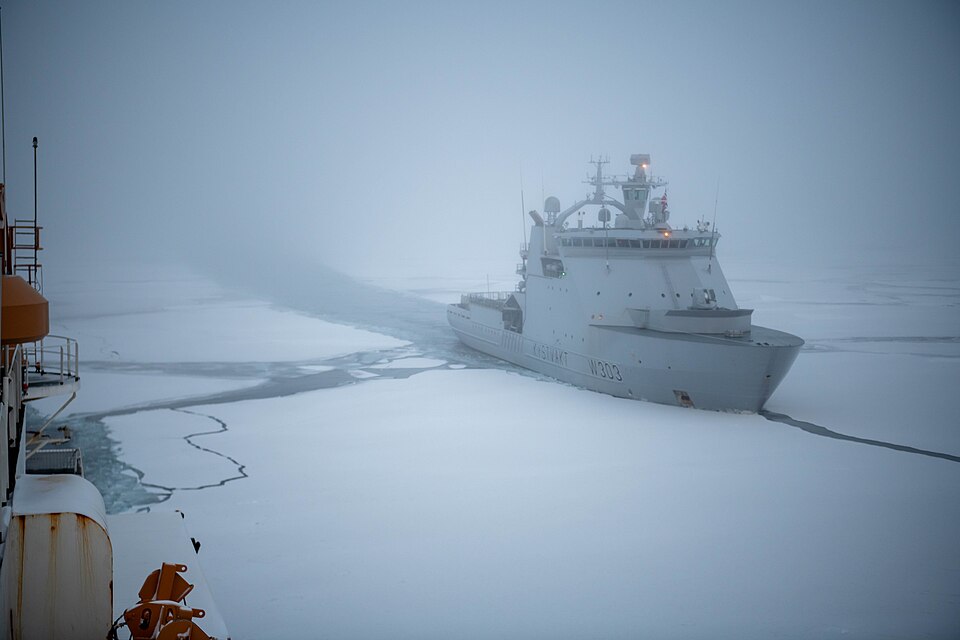
Russia did not cut a cable near Svalbard this spring. That is precisely why the incident matters. According to a Reuters investigation published by Defense News on September 10, Russian vessels linked to the Main Directorate for Deep Sea Research, known as GUGI, used deep-sea submersibles to rehearse the deployment of a secret weapon designed to disable critical undersea cables without leaving an obvious trace. Britain, Norway and the United States tracked the vessels, confronted them at sea and prevented the exercise from being completed.
This was not an attack. It was a practice run in a place where a real attack would create an outsized strategic problem. The distinction is important, but it should not be comforting.
Why Svalbard is a strategic pressure point
Two fiber-optic cables connect Svalbard to mainland Norway. Reuters reported that each runs roughly 1,400 kilometers and reaches depths of up to 2,700 meters. They carry satellite data from SvalSat, the world’s largest satellite ground station and a node connected to NASA’s Near Space Network. Damage would not merely inconvenience local communications. It would affect scientific, commercial and military users that depend on Arctic data moving south.
The cables are also a useful test case for modern hybrid warfare. They are thin, difficult to monitor continuously and legally exposed to activity in international waters. A vessel that drifts over a route while claiming innocent passage may be mapping the seabed, waiting for an opportunity or simply collecting information that can be used later. The attacker does not need to occupy territory. It only needs to make repair slow, attribution uncertain and political reaction divided.
GUGI is built for the seabed
GUGI is not a normal naval formation. It is Russia’s specialised deep-sea warfare directorate, associated with nuclear-powered support ships, smaller submersibles and oceanographic platforms able to operate at depths ordinary submarines cannot. The precise weapon described by Western officials remains undisclosed. That secrecy is itself part of the problem: NATO planners must defend a network against a capability they cannot publicly characterise, while Moscow can learn from every allied response.
- Location: waters near the Svalbard archipelago in the High North.
- Target: critical fiber-optic infrastructure linking Svalbard and mainland Norway.
- Russian activity: simulated deployment of a covert cable-disabling system using deep-sea submersibles.
- Allied response: British, Norwegian and American tracking and maritime confrontation.
- Confirmed damage: none; the operation was an exercise rather than a completed sabotage attack.
The lack of a public technical description does not make the threat abstract. A system that can interfere with a cable without producing an unmistakable break could delay detection and complicate the legal and political case for retaliation. NATO would be forced to answer a harder question than who cut the line: who placed the device, when, and under what threshold should an ambiguous act trigger collective defence?
The Arctic gap is an alliance problem
Western officials told Reuters that some United States intelligence analysts increasingly fear Moscow may test NATO’s Article 5 commitment. That does not mean an Article 5 crisis is imminent. It does mean the High North is being treated as a potential laboratory for calibrated escalation. Russia can probe infrastructure, gather reactions and stop short of an act that clearly demands a military response.
The geography makes this especially uncomfortable. Russian nuclear submarines based on the Kola Peninsula would pass through the roughly 400-mile-wide Bear Gap between Norway and Svalbard on the way to the Atlantic. The same waters therefore connect two NATO concerns that are often discussed separately: protecting civilian infrastructure and tracking strategic submarines. A cable patrol can become an anti-submarine mission. An escort can become a signal of deterrence. The line between policing and military confrontation gets thin very quickly in the Arctic.
Britain, Norway and the United States have shown that they can cooperate when a suspicious operation is detected. Norway’s Defence Minister Tore Sandvik said the joint operation made clear that attempts to target critical infrastructure would be detected and met with consequences. Britain also deployed forces to Jan Mayen in August alongside Norwegian and American allies for a High North exercise. NATO has Baltic Sentry and the United Kingdom-led Nordic Warden, while Norway plans a new fiber-optic cable linking Svalbard and Jan Mayen to the mainland by 2028.
Those measures improve surveillance, but surveillance is not the same as resilience. The alliance still has to answer how quickly it can repair a cable, replace lost satellite connectivity, protect repair ships and share classified evidence with the public. Europe spent decades expanding its dependence on seabed infrastructure while shrinking the forces available to guard it. The result is an expensive network with a surprisingly small security perimeter.
The signal NATO should not miss
The mainstream assumption is that deterrence succeeds when an adversary is caught before it causes damage. That is too low a standard for undersea infrastructure. If the purpose of the Russian exercise was to test whether GUGI could approach, rehearse and withdraw, then the encounter already supplied Moscow with information about NATO detection times, political messaging and the limits of allied escalation.
The immediate lesson is not that Russia has found a magic weapon. It is that NATO remains structurally reactive. The alliance can assemble capable partners around an incident, but it still treats the seabed as a collection of national responsibilities rather than a single operational theatre. The next stage should be permanent Arctic infrastructure patrols, shared cable-route intelligence, pre-positioned repair capacity and agreed response thresholds before the next incident.
No cable was cut near Svalbard. That is the good news. The bad news is that NATO had to discover the test at sea before it could begin building the political consensus to stop it. The next Russian rehearsal may be less visible, and the next allied response may not arrive before the damage is done.
Sources
Reuters reporting by Sarah McFarlane and Gram Slattery, published via Defense News, September 10, 2026; The Kyiv Independent summary of the Reuters report, September 10, 2026; Norwegian Defence Minister Tore Sandvik statement quoted in the Reuters report; public background on NATO Baltic Sentry and Nordic Warden cited in the same reporting.
Russian vessels from the Main Directorate for Deep Sea Research (GUGI) conducted a simulated deployment of a covert cable-disabling system near Svalbard in 2026. The exercise was tracked and confronted by British, Norwegian, and American forces, preventing its completion. This incident underscores NATO's vulnerabilities in the Arctic and raises concerns about Russia's potential to test NATO's response to ambiguous threats.
- Russian vessels linked to GUGI rehearsed the deployment of a secret weapon to disable undersea cables.
- The exercise was tracked and confronted by British, Norwegian, and American forces.
- No damage was confirmed as the operation was an exercise, not an attack.
- The incident highlights NATO's vulnerabilities in the Arctic region.
- The exercise tested NATO's response capabilities and raised concerns about potential future escalations.