
Russia's Oreshnik Strike Exposes NATO's 2026 Air Defense Gap
 Alexandra Reeves
Russia's Oreshnik Strike Exposes NATO's 2026 Air Defense Gap
The uncomfortable lesson from Russia's latest Oreshnik launch is not that Moscow has found a war-winning weapon. It has not. The lesson is that Russia is now comfortable mixing strategic signaling, mass drone warfare, and conventional terror strikes into one package, and Europe still talks about air defense as if these are separate problems.
On the night of 23-24 May, Russian forces launched one of the largest combined attacks of the war against Ukraine. According to Ukraine's Air Force, as reported by Ukrainska Pravda, the strike package included 90 missiles and 600 drones. Air defense units shot down or jammed 604 aerial targets, including 55 missiles and 549 drones, but 16 missiles and 51 strike drones still hit 54 locations. Kyiv was the primary target.
The Oreshnik Was the Signal Inside the Swarm
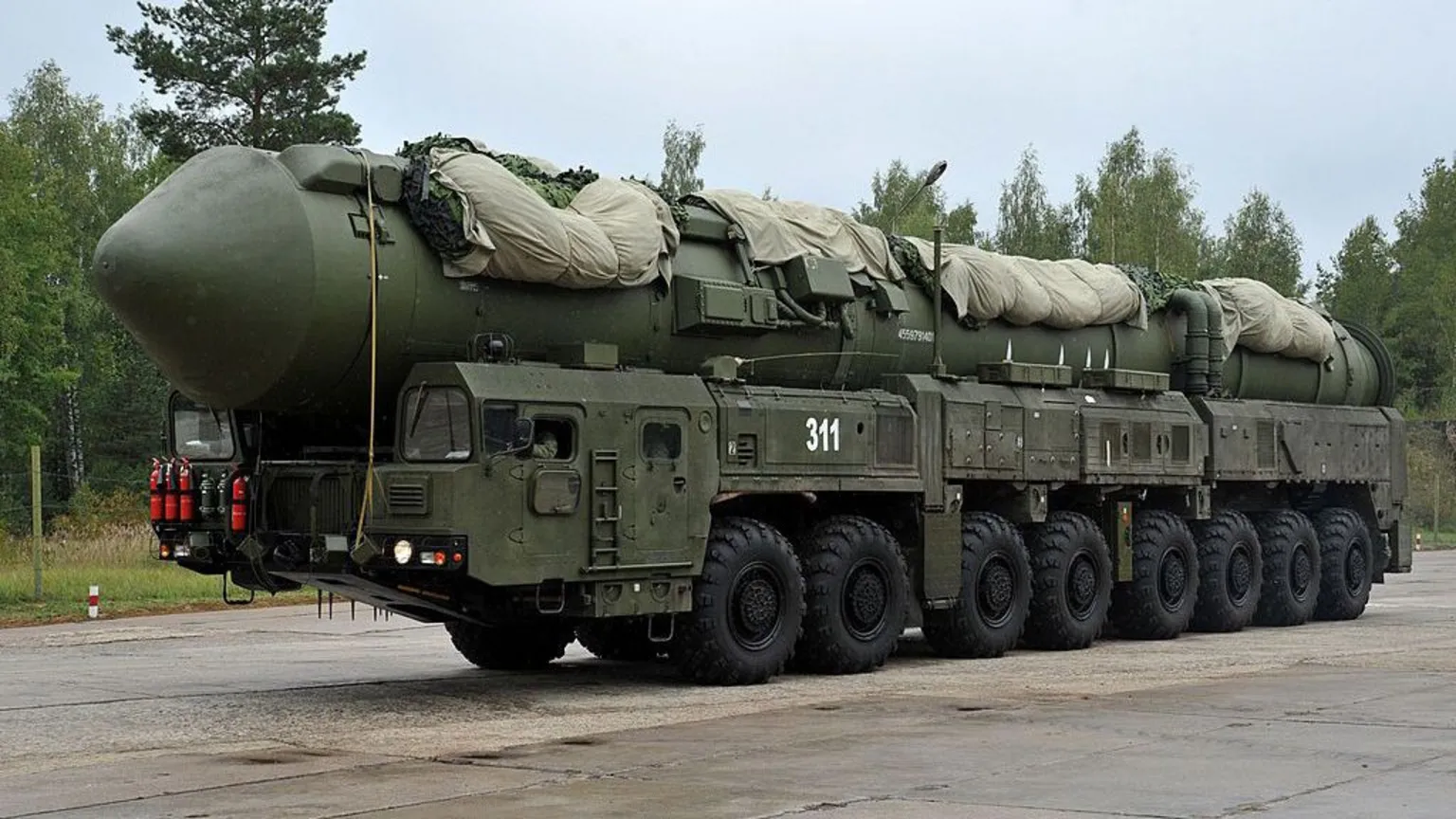
Ukraine confirmed that the strike included an Oreshnik intermediate-range ballistic missile against the Bila Tserkva district in Kyiv Oblast. AP reported that President Volodymyr Zelenskyy said this was the third use of the weapon in the four-year war. Euronews, citing Russian claims and Western reporting, described Oreshnik as a nuclear-capable intermediate-range ballistic missile with a notional 3,000 to 5,500 kilometre range, multiple warhead capability, and a claimed speed around Mach 10.
Those figures matter, but not in the way Moscow wants them to matter. Every ballistic missile re-entry vehicle is fast. Hypersonic branding is doing a lot of political work here. The more important fact is that Russia placed a strategic-range, nuclear-capable system inside a conventional strike package dominated by Shahed-type drones, Iskander-class ballistic missiles, cruise missiles, Kinzhals, and Zircons. That is a message to Kyiv, but it is also a message to Warsaw, Berlin, Brussels, and Washington.
The message is simple: Russia can make every future air-defense decision feel nuclear-adjacent without actually crossing the nuclear threshold.
This Is Not Just a Ukrainian Problem
NATO's public debate still tends to separate the threat into neat categories. Drones are a short-range tactical problem. Cruise missiles are an integrated air and missile defense problem. Ballistic missiles are a strategic defense problem. Nuclear-capable systems belong in deterrence theory. Russia just put them all in the same night's work.
That matters because the alliance's eastern flank is not protected by one magic shield. It is a patchwork of Patriot batteries, SAMP/T systems, NASAMS, IRIS-T, fighter aircraft, radars, electronic warfare, and national command chains that do not always move at the same speed. Ukraine has become very good at fighting this kind of mixed raid because it has had no choice. NATO has been watching, learning, and writing concepts. There is a difference.
The uncomfortable comparison is Israel and the Gulf. When Iran fires a mixed package of drones, cruise missiles, and ballistic missiles, the defense is regional, layered, and pre-scripted. When Russia does it against Ukraine near NATO borders, European governments still debate whether a particular battery can be spared, whether stockpiles are too low, and whether escalation management requires holding back.
Here is the thing: escalation management is not the same as under-defending yourself.
Russia Is Stress-Testing the Western Arsenal
The May 24 strike also says something about Russian inventory and adaptation. A 90-missile, 600-drone raid is not cheap, even if Shahed-type drones are far cheaper than precision missiles. Ukrinform, citing ISW, reported that Russian forces may have launched a second Oreshnik during the same strike package and that the total cost could have reached hundreds of millions of dollars if that assessment is correct. That remains to be fully confirmed, but the direction is clear: Moscow is willing to spend expensive weapons to shape the political environment around Ukraine.
That political environment is the target as much as the apartment blocks and military facilities. A large raid after weeks of ceasefire theater tells Europeans that Russia can escalate whenever diplomacy becomes inconvenient. An Oreshnik launch tells Americans that Ukraine is now part of a broader strategic missile conversation. A swarm of 600 drones tells defence ministries that expensive interceptors will keep being drained unless cheaper counter-UAS layers are deployed at scale.
The Western response has improved, but it is still too boutique. Patriot is excellent, but there are too few batteries. SAMP/T is valuable, but Europe does not have enough of it. IRIS-T and NASAMS can protect key nodes, not whole societies. Electronic warfare helps against drones, but it cannot replace missile defense. Fighter patrols are useful, but they do not solve the problem of ballistic re-entry vehicles or saturation raids.
The Capability Gap Is Also a Political Gap
The fashionable line in some European capitals is that Russia is weaker than it looks. There is truth in that. Russian ground forces have paid heavily for limited gains, and the Oreshnik itself may be closer to a prestige weapon than a mature operational system. But weaker than advertised is not the same as harmless.
A Russia that cannot break Ukraine's front line can still punish Ukrainian cities. A Russia that cannot outproduce NATO in quality can still outproduce many NATO states in cheap attack drones. A Russia that cannot win a clean military victory can still create enough fear to slow Western decision-making. That is the strategic purpose of the Oreshnik strike.
For NATO, the answer is not to chase every Russian superweapon headline. The answer is to build an air-defense architecture that treats mass drones, ballistic missiles, cruise missiles, electronic attack, and political signaling as one fight. That means deeper interceptor stockpiles, more distributed sensors, hardened bases, common engagement procedures across the eastern flank, and a serious European industrial plan for low-cost drone interception.
It also means accepting that Ukraine is not merely consuming Western air-defense capacity. Ukraine is generating the combat data NATO needs to survive the next decade. Every mixed Russian raid is a live-fire syllabus for the alliance.
What to Watch Next
The next useful indicators are not Kremlin boasts about Mach numbers. Watch whether Russia repeats Oreshnik launches in mixed raids, whether Ukraine can confirm failed or partial launches, whether Belarus becomes a more visible basing node, and whether NATO moves from exercises to permanent air-defense density on the Baltic and Black Sea approaches.
The key finding is blunt: Oreshnik is less important as a missile than as a warning about the kind of war Russia wants NATO to fear. Moscow is betting that Europe will keep treating air defense as a procurement problem rather than a strategic emergency. If that bet is right, the real gap is not in the sky. It is in European political nerve.
On the night of May 23-24, Russian forces launched a significant attack on Ukraine, deploying 90 missiles and 600 drones, with key targets in Kyiv. The Oreshnik intermediate-range ballistic missile was used, marking its third deployment in the conflict. Despite Ukraine's air defense intercepting many threats, several missiles and drones successfully struck multiple locations. This operation underscores the evolving nature of warfare and the challenges facing NATO's air defense systems.
- Russia launched a combined attack with 90 missiles and 600 drones against Ukraine.
- 16 missiles and 51 drones hit 54 locations, primarily targeting Kyiv.
- The Oreshnik missile is described as nuclear-capable with a range of 3,000 to 5,500 kilometers.
- The strike indicates Russia's willingness to escalate military actions despite previous ceasefires.
- NATO's air defense capabilities are highlighted as insufficient against such mixed attacks.