
Russia's Six-Day Strike Run Is Exposing Kyiv's Air Defence Math
 Alexandra Reeves
Russia's Six-Day Strike Run Is Exposing Kyiv's Air Defence Math
Six straight days of Russian strikes tells you this is no longer just another nightly terror campaign. It is a pacing operation. Reuters reported on 1 September that Russian attacks killed 12 people in the Kyiv region on the sixth consecutive day of strikes, while a separate Reuters dispatch said Russian attacks also hit export facilities in Ukraine's Odesa region the same morning. That matters because Moscow is no longer trying only to get a few missiles through. It is trying to keep Ukraine under alert long enough, often enough, that the defence system itself becomes tired, expensive and uneven.
ISW made the point more bluntly in its 31 August assessment: Russian forces have recently leaned into prolonged air raids in Kyiv city and oblast in order to exhaust Ukrainian air defences before more dangerous strike packages arrive, while also disrupting transport, logistics and daily life. That is the part too many outside observers still miss. The immediate casualty figure is the headline. The operational effect is the story.
What Changed in the Past 72 Hours
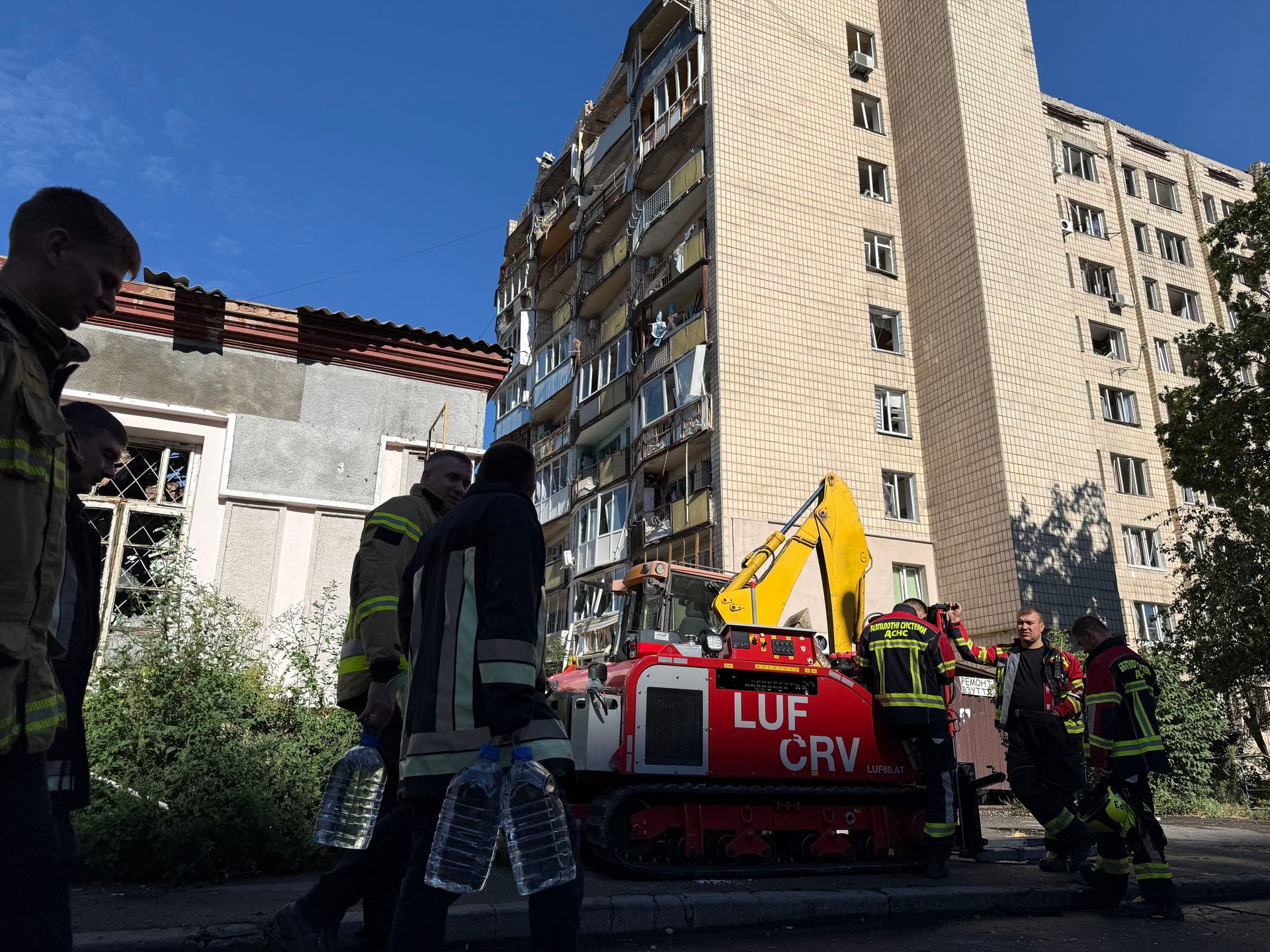
Overnight strike packages in late August were not small. ISW, citing the Ukrainian Air Force, said Russia launched two Iskander-M ballistic missiles and 130 drones on the night of 29 to 30 August, then followed with one Kh-59 cruise missile and 121 drones on the night of 30 to 31 August. Ukrainian officials said some of those strikes hit civilian and logistics infrastructure in Kyiv, Kharkiv, Mykolaiv and Odesa oblasts. ISW also noted that an unspecified number of munitions reached 11 locations during the later wave even after dozens of intercepts.
That is exactly how pressure campaigns work. You do not need a perfect breakthrough. You need repeated leakage. One drone or one missile hitting a warehouse, a rail node, a postal hub or a port facility can force delays far out of proportion to the cost of the weapon used. Reuters' report on strikes against Odesa export facilities fits that pattern neatly. So does ISW's note that Russian attacks recently hit a Nova Poshta facility in Odesa oblast and food-industry warehouses around Kyiv and Mykolaiv.
There is another important detail in the current cycle: Ukraine no longer publishes the same regular missile-by-missile interception data it once did. ISW notes that Kyiv stopped routinely reporting full missile counts in mid-August as air-defence pressures mounted. That does not mean the system is collapsing. It means the public scoreboard was giving a false sense of certainty. Air defence was always a magazine problem before it was a morale problem.
The Expensive Layer Is the Point
Russia's strike mix is built around that reality. The cheap end is still the Shahed family and its Russian Geran derivatives. The newer reported Geran-5 matters because, if Ukrainian intelligence assessments are roughly right, it trades some of the old Shahed logic for speed, flying at roughly 500 to 600 kilometres per hour instead of the propeller-driven Geran-2's roughly 180. That pushes more engagements away from improvised interceptor drones and back onto guns, manned aircraft and missile-based air defence. In plain English: Russia is trying to force Ukraine to spend from the expensive shelf.
The heavier tier remains cruise and ballistic missiles. The Kh-101 is still the most strategically useful Russian air-launched cruise missile in this war because Tu-95MS bombers can carry eight and Tu-160s can carry twelve, allowing salvos from well outside Ukrainian airspace. Open-source reference data places its effective strike reach at more than 2,000 kilometres. Pair that with decoys, Shaheds and occasional ballistic missiles, and the question is no longer whether Ukraine can intercept a lot of incoming weapons. It often can. The question is what it must spend to do so, and what gets through when the alert lasts for hours.
- Geran-5 reported speed: roughly 500-600 km/h
- Geran-2 baseline speed: roughly 180 km/h
- Kh-101 launch platforms: Tu-95MS and Tu-160 bombers
- Kh-101 strike reach: more than 2,000 km in open-source assessments
This Is Also a European Test
Here is where the alliance politics become uncomfortable. Europe still talks about supporting Ukraine as if support were mainly a question of declarations, sanctions packages and summit language. It is not. During a sustained strike cycle, support becomes industrial arithmetic. How many interceptors can be transferred without stripping national stocks? How quickly can they be replaced? Which systems are available now rather than next year?
That is why Russian pressure on Kyiv's skies and Odesa's export route should worry NATO capitals even if the strikes never touch NATO territory. A campaign that keeps Ukraine burning through high-end interceptors forces every European government into a choice it has tried to postpone: either expand production and accept thinner domestic inventories for a while, or watch Ukraine absorb the pressure with fewer tools. Neither option is politically comfortable. Only one is strategically serious.
There is no neat European substitute waiting in the wings. SAMP/T matters because it is Europe's only indigenous upper-tier air-defence system with a demonstrated ballistic-missile intercept pedigree, but the bottleneck there is also interceptor production and delivery tempo. Patriot remains the backbone for the hardest shots. That means the debate about Ukraine's air defence is really a debate about Western manufacturing discipline. Russia understands that better than many Western politicians do.
What to Watch Next
The next thing to watch is not just body counts after each raid. Watch duration, rhythm and target mix. If Russia keeps combining prolonged alerts over Kyiv with repeat strikes on logistics nodes and Black Sea export infrastructure, then the aim is clear: wear down the network that keeps Ukraine functioning while conserving enough Russian long-range strike capacity for a winter energy campaign.
The short answer is that this is working better for Moscow than many in Europe would like to admit. Not because Ukrainian air defence has failed, but because success is getting more expensive by the week. The key finding from this six-day run is simple: Russia is no longer only attacking Ukrainian cities. It is attacking the economics of Ukraine's survival. The forward-looking question is whether Europe will treat interceptor production, transfer timing and port protection as an emergency now, or after another month of attritional raids makes the answer obvious. The thing to watch next is whether allied stockpiles move faster than Russian launch crews. If they do not, the arithmetic will keep getting uglier.
Russian forces conducted sustained airstrikes over six days, targeting Kyiv, Odesa, Kharkiv, and Mykolaiv, resulting in 12 casualties. The strikes aimed to exhaust Ukrainian air defenses and disrupt logistics, with significant impacts on civilian infrastructure. This ongoing campaign reflects a strategic shift in Russian operations, focusing on economic pressure rather than just territorial gains.
- Russia conducted six consecutive days of strikes in Ukraine.
- 12 casualties were reported in the Kyiv region due to Russian attacks.
- Russian forces targeted logistics and civilian infrastructure in multiple regions.
- Ukraine's air defense system is under significant pressure from sustained attacks.
- The strikes aim to exhaust Ukrainian defenses and disrupt logistics.