
Russia's Strike on Kyiv's Bridges in 2026 — 27 Ballistic Missiles and a New Pressure Strategy
 Dmitri Volkov
Russia's Strike on Kyiv Bridges in 2026 — 27 Ballistic Missiles and a New Pressure Strategy
27 ballistic missiles are just part of the Russian barrage that struck Ukraine on the night of November 19 to 20. According to Volodymyr Zelensky, over 400 drones and more than 110 missiles were launched in total. Eight people were killed, and 28 were injured. However, the military significance of this attack is determined not only by its scale. For the first time in a long while, Moscow openly linked the strike to a promise of a "painful response" for the damage to the Kerch Bridge. This is no longer a typical campaign to exhaust Ukrainian energy resources, but an attempt to restore Russia's ability to impose escalation rules on the enemy.
From the Kerch Bridge to the Dnieper
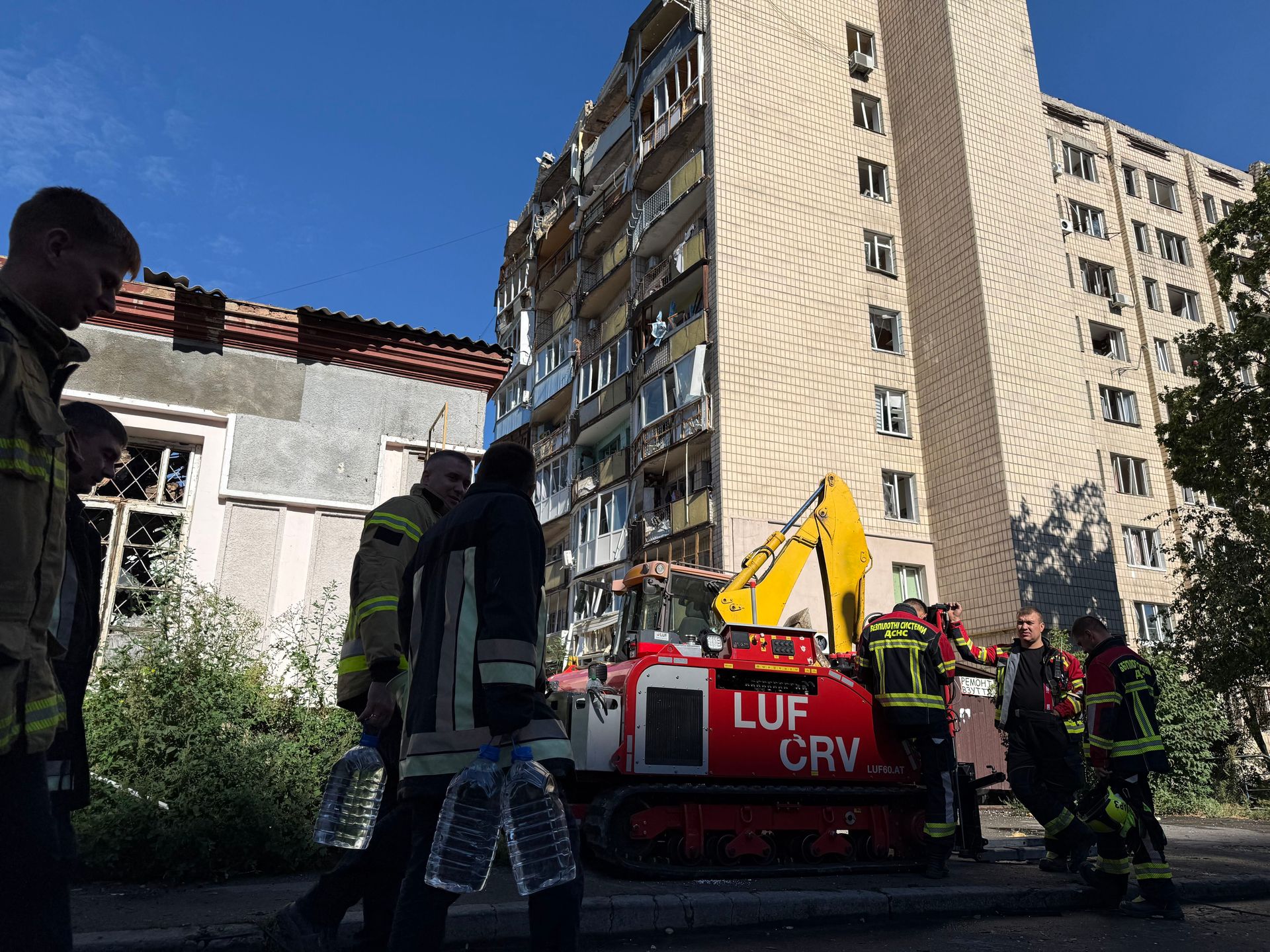
The sequence of events is more important than individual figures. After Ukrainian strikes on the Kerch Strait and significant damage to the road part of the bridge, Vladimir Putin promised to respond. A few hours later, Russian forces attacked bridges across the Dnieper in Kyiv, railway and transport hubs, energy facilities, and defense industry enterprises. The Russian Ministry of Defense stated that the targets were supply routes for weapons to the front. Ukrainian authorities reported damage to the Podil, Darnytsia, and Southern bridges, power outages, and disruptions to water supply facilities (Al Jazeera, November 20, 2026).
From a military perspective, this is a mirrored logic. Ukraine is trying to turn Crimea from a Russia-linked peninsula into a logistical dead end; Russia responds with strikes on nodes that connect the left and right banks of the Ukrainian capital. However, the symmetry here is deceptive. The Kerch Bridge is a single strategic object with a clear function. The Kyiv transport system is a distributed network where the destruction of one bridge creates a bottleneck but does not necessarily paralyze military logistics. Therefore, the Russian attack was aimed not so much at the complete destruction of crossings but at demonstrating the city's vulnerability and the cost of further strikes on Crimea.
Scale of the Barrage and Limits of the Missile Campaign
The Institute for the Study of War called the raid on November 19–20 the largest Russian missile-drone attack of November. ISW cites Ukrainian data on 27 ballistic missiles, 84 cruise missiles, and 404 drones of the "Shahed" and "Geran" types. This combination shows the evolution of the Russian weapon application scheme. Cheap drones overload air defense, cruise missiles seek gaps in its formation, while ballistic systems strike at targets for which Kyiv has less time to react.
But a large barrage does not equal an unlimited stockpile. Ballistic missiles are expensive, require complex production, and consume the most scarce component of the Russian strike system. Public statements about the number of interceptions do not allow for an accurate assessment of the damage, and the official rhetoric of both sides inevitably serves the information war. A more reliable conclusion is that Moscow was able to simultaneously concentrate several types of weapons on transport and energy infrastructure. This indicates the preservation of production and planning capability but does not prove that such a pace can be maintained every week.
Why Bridges Became a Political Target
The strike on the bridges has significance that goes beyond operational logistics. The Russian command seeks to show that the Ukrainian depth is no longer a safe zone. In this sense, the attack is directed at three audiences at once. For Ukrainian society, it should remind them of the cost of strikes on Russian infrastructure. For Western governments, it demonstrates that Moscow retains coercive tools even amid discussions about security guarantees. Finally, for the Russian audience, it presents the response to the Kerch Bridge as a restoration of state dignity.
This reflects a familiar Soviet military tradition: strategic weapons are used simultaneously as a means of defeat and as a diplomatic message. In 2022–2024, such logic was primarily directed against Ukraine's energy system. In November 2026, a more personalized target was added — the capital and its crossings. This is a dangerous change, as it reduces the space for controlled escalation. The clearer Moscow declares the strike as retribution, the harder it becomes for them to stop without creating the impression of retreat.
The Polish Factor and the Risk of Crisis Expansion
During the attack, Poland reported that three objects, likely two missiles and a drone, entered its airspace. Warsaw called it a Russian provocation. Even if these objects were not intentionally directed at NATO territory, such incidents change the military geography of the conflict. The Russian massive attack now requires neighboring countries not only to respond politically but also to maintain constant airspace control, readiness of aviation, and explanations to their own populations.
For Moscow, this may be a side effect of a saturated barrage. But a side effect in NATO conditions quickly turns into an independent strategic risk. The Russian doctrine traditionally relies on the assumption that the opponent will separate intent from outcome. The Alliance, on the other hand, primarily assesses the repeatability and danger of the incident. The more frequently strikes occur near borders, the less confidence remains that the next mistake will be perceived as an error.
Strategic Conclusion
The November attack does not prove that Russia has gained the ability to destroy Ukrainian logistics. It shows something else: the Kremlin is still capable of quickly translating a political promise into a large-scale military operation and linking strikes on infrastructure to a specific episode of the war. This is a powerful tool of pressure but a weak strategy for victory. The distributed Ukrainian network, Western air defense assistance, and Kyiv's ability to respond deep into Russia limit the effect of a single barrage.
The Russian missile campaign will continue as long as its political cost seems acceptable to the leadership. However, each new strike on urban bridges increases not only the damage to Ukraine but also Moscow's dependence on the logic of retribution. In the short term, this may give the Kremlin a sense of control over escalation. In the long term, it may turn the war into a chain of retaliatory strikes, where the decision is no longer made by strategy but by the necessity to confirm a previous threat.
Sources
- Institute for the Study of War, Russian Offensive Campaign Assessment, November 20, 2026.
- Al Jazeera, Russia unleashes barrage of missiles on Ukraine, killing at least 8, November 20, 2026.
- Statements from the President of Ukraine, Ukrainian military, and the Russian Ministry of Defense cited in the mentioned materials.
Russia launched a large-scale missile and drone attack on Ukraine, targeting bridges and infrastructure in Kyiv on November 19-20, 2026. The assault involved 27 ballistic missiles and over 400 drones, resulting in eight fatalities and 28 injuries. This operation was a direct response to Ukrainian strikes on the Kerch Bridge, aiming to demonstrate Russia's military capabilities and disrupt Ukrainian logistics.
- Russia launched 27 ballistic missiles and over 400 drones in an attack on Ukraine.
- Eight people were killed and 28 injured in the strikes.
- The attack targeted bridges and energy infrastructure in Kyiv.
- This operation is linked to previous Ukrainian strikes on the Kerch Bridge.
- The attack is seen as a demonstration of Russia's military capabilities and a response to Ukrainian actions.