
Taiwan’s F-16s get JSOW support as missiles run years late
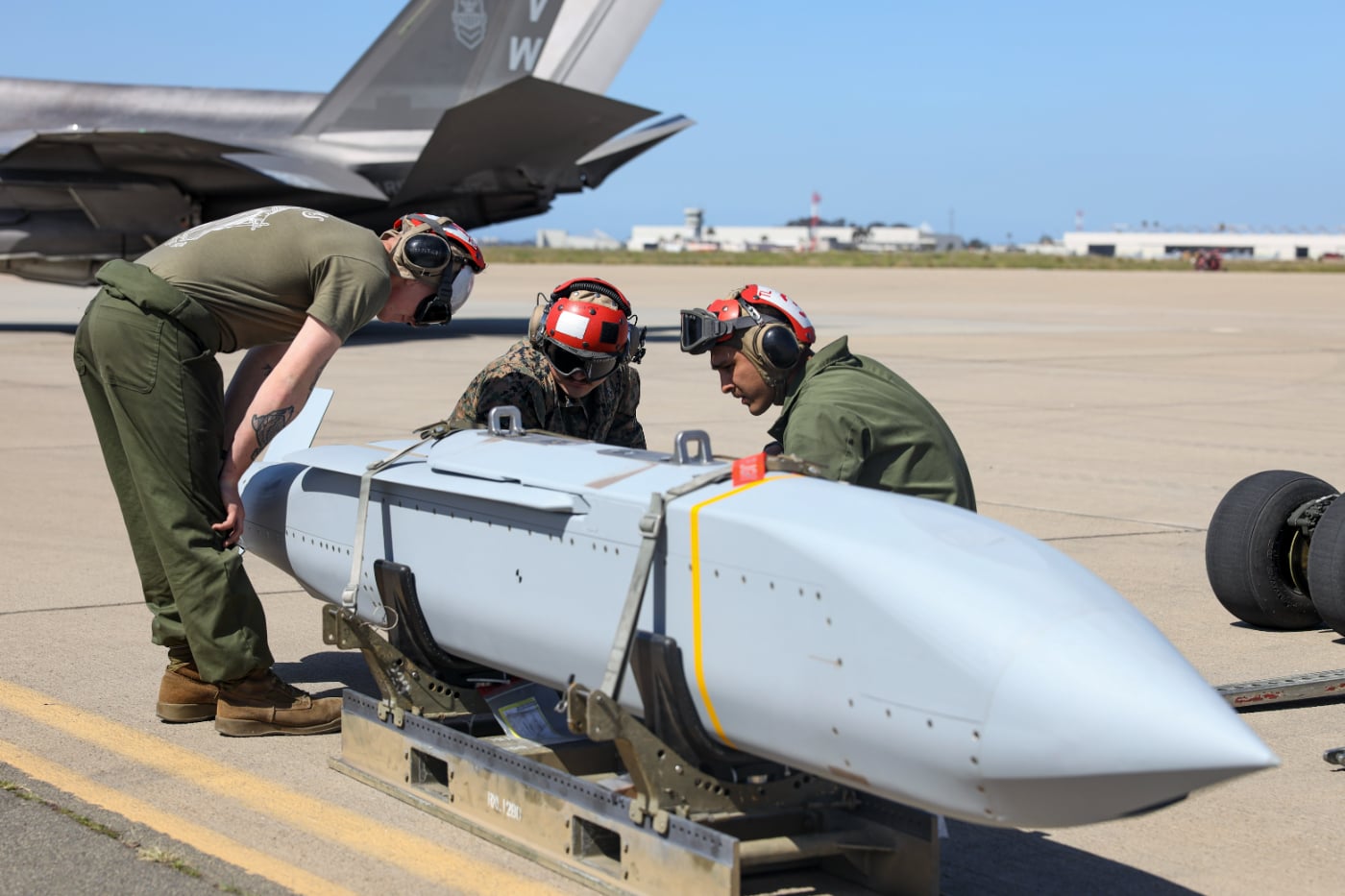
The U.S. Navy has ordered $6.3 million in initial logistics support and training from Raytheon so Taiwan’s air force can use the AGM-154C Joint Standoff Weapon on its F-16 Block 20 fighters, according to a Naval Air Systems Command award notice.
NAVAIR at Patuxent River, Maryland, placed the delivery order on Nov. 10 under a basic ordering agreement with Raytheon in Tucson, Arizona. The notice, posted Nov. 20, describes the work as “Initial Integrated Logistics Support (ILS) and Training for Taiwan Air Force (TAF) F-16 Block 20.” The order’s total value is $6,338,999.98.
Initial logistics support is the groundwork that has to be in place before a weapon goes into service: support equipment, spare parts, technical data and the training that lets crews load, maintain and employ it. With this order, NAVAIR is paying for that groundwork on Taiwan’s upgraded F-16 fleet before the missiles themselves arrive.
The Navy bought the work without competition. NAVAIR called Raytheon “the sole designer, developer, manufacturer and integrator of the JSOW weapon system” and said only the company has the knowledge, tooling and technical data needed.
A class justification covering the same basic ordering agreement explains why in more detail. The document approves sole-source orders to RTX for JSOW and for seekers under the Harpoon missile’s service life extension program, with authority running through Aug. 31, 2030. It covers JSOW production rounds, spares, repairs, training vehicles, Link-16 cryptographic modernization and integration work. Customers include the U.S. Navy and foreign buyers.
NAVAIR tried to buy the rights to the designs, and RTX said no. The Navy’s procurement group asked RTX’s Tucson operation on April 18, 2025, whether it would sell the JSOW data rights. “We respectfully decline to sell the requested data rights,” RTX answered on May 15, 2025, according to the justification. A similar request for the Harpoon seeker drew this reply on April 14, 2025: “Raytheon is the Design Authority for the SLEP Seeker and at this point in time, we are not offering to sell the TDP.”
Without those technical data packages, the Navy can’t run a competition. The justification says developing a new data package and qualifying a second source has “historically taken anywhere from four (4) to seven (7) years.” A sources-sought notice in June 2025 drew a single reply, from Begini Howard Private Equity LLC. That company said it was interested but never sent a capability statement when NAVAIR followed up. NAVAIR “has no plans at this time to compete future contracts” for the work, the document said.
Raytheon has held JSOW since a 1992 competition, which Texas Instruments won before Raytheon bought its defense business.
Taiwan’s JSOW purchase goes back nearly a decade. The State Department approved the sale of 56 AGM-154C missiles to Taiwan on June 29, 2017, valued at $185.5 million, with integration, captive flight vehicles, dummy training missiles, spares and support equipment. In 2019, the Pentagon notified Congress of a $49.9 million price increase that raised the total case value to $235.4 million. Raytheon later received a $68.4 million contract to build 50 AGM-154C Block III missiles for Taiwan.
Taiwan’s Ministry of National Defense told lawmakers in November 2025 that JSOW delivery would slip to 2027 and 2028 because Taiwan chose the new Block III version, which required restarting production lines and system integration.
The AGM-154C is an unpowered glide weapon with a unitary warhead, built to hit targets from outside the range of many air defenses. The Block III version adds a two-way datalink, which lets it be retargeted in flight and attack moving ships.
The F-16 Block 20s in the order are Taiwan’s older F-16A/B fighters, about 140 of which were upgraded to the F-16V configuration in a program completed in 2023. They make up the bulk of Taiwan’s fighter force while it waits for the rest of its new jets. Taiwan’s air force took delivery of its first two new-build F-16V Block 70 fighters on Oct. 2, 2026, about three years behind the original schedule, out of 66 on order.
The notice says subcontracting opportunities may be available through Raytheon in Tucson.
Content preview only. Full article available at source. View Full Article
The U.S. Navy ordered $6.3 million in logistics support for Taiwan's air force to utilize the AGM-154C Joint Standoff Weapon on F-16 Block 20 fighters, with the order placed on November 10, 2025. Raytheon will provide initial integrated logistics support and training, as Taiwan's delivery of the JSOW is delayed to 2027 and 2028 due to the selection of the Block III version. This procurement underscores the ongoing military cooperation between the U.S. and Taiwan.
- The U.S. Navy ordered $6.3 million in logistics support for Taiwan's air force.
- Taiwan's air force will use AGM-154C Joint Standoff Weapon on F-16 Block 20 fighters.
- The delivery order was placed on November 10, 2025.
- Raytheon is the sole designer and manufacturer of the JSOW weapon system.
- Taiwan's JSOW delivery is delayed to 2027 and 2028 due to the choice of the new Block III version.