
Russia's Third Oreshnik Strike Exposes NATO's Air Defense Math
 Alexandra Reeves
Russia's Third Oreshnik Strike Exposes NATO's Air Defense Math
Russia did not need the Oreshnik to destroy Kyiv. That is the point NATO should be worrying about.
According to AP reporting and Ukrainian officials, Russia used the nuclear-capable Oreshnik intermediate-range ballistic missile during a mass drone and missile attack on Kyiv and the surrounding region on May 24, killing at least two people and wounding dozens. Ukraine said the weapon struck the Bila Tserkva area in Kyiv Oblast. Russia's Defence Ministry confirmed it used Oreshnik along with other missiles against what it described as command facilities, air bases, and defence-industrial targets.
Ukrainian outlets citing the Air Force reported a much larger salvo: 90 missiles and 600 drones of various types in one overnight attack. Defence Express listed the package as including Oreshnik, Kinzhal, Zircon, Kalibr, Iskander, Kh-101 missiles, and Shahed-type UAV swarms. Those details may be refined as debris is examined, but the basic operational picture is already clear. Moscow combined cheap mass with scarce prestige weapons and forced Ukraine's air-defence network to sort everything at once.
The Missile Is the Message
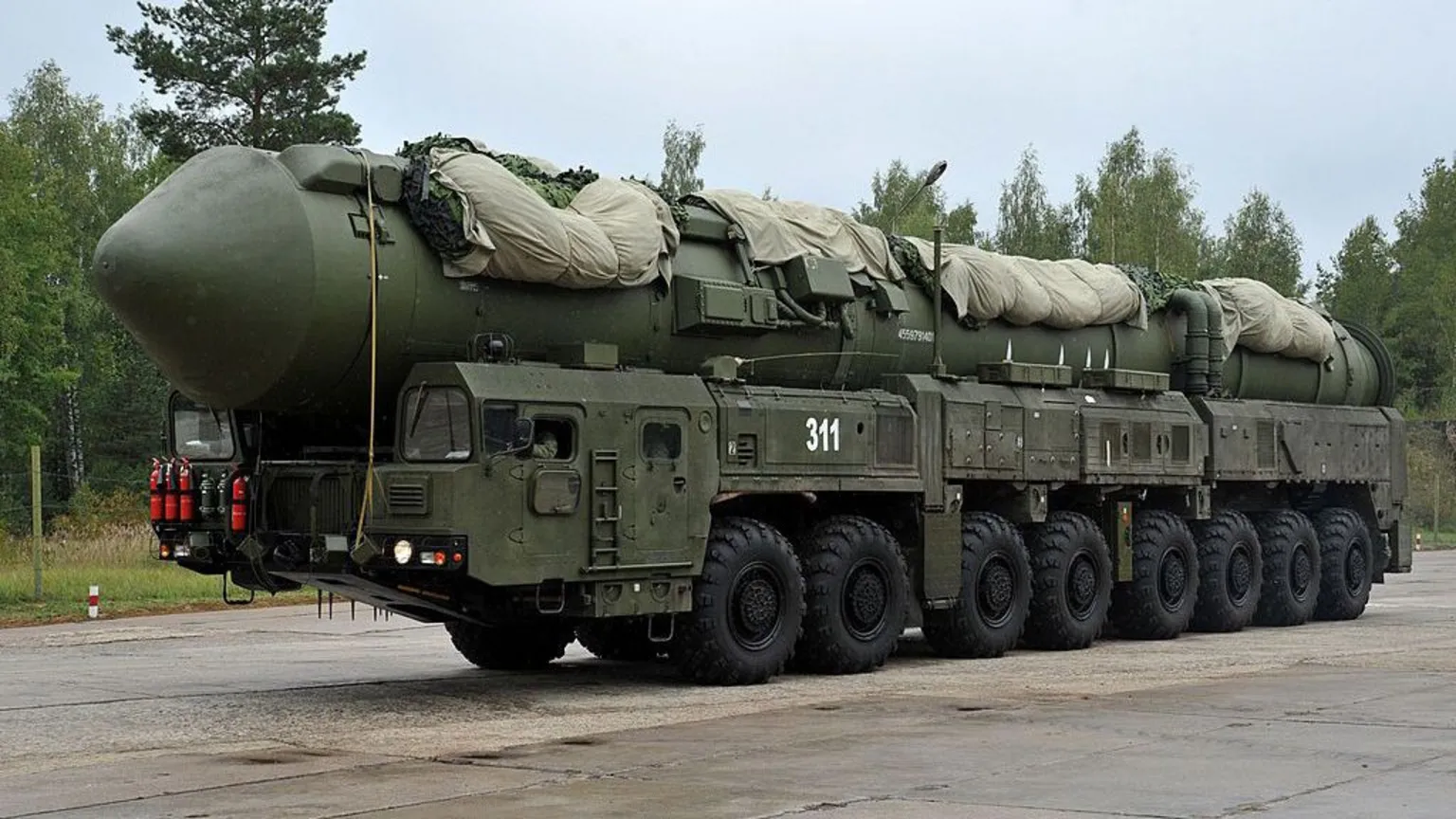
The Oreshnik is not just another ballistic missile in Russia's inventory. CSIS Missile Threat identifies it as a road-mobile intermediate-range ballistic missile, likely derived from the RS-26 Rubezh, with a range estimated between 3,500 and 5,470 kilometres. That matters because even the lower estimate covers most European capitals from Russian territory, and deployment in Belarus compresses warning times for NATO's eastern flank.
Its warhead architecture is the harder problem. CSIS assesses that Oreshnik has MIRV capability. Open-source estimates cited by CSIS describe a demonstrated payload of six warheads, each potentially deploying six sub-munitions. In plainer English: one missile can create several terminal objects, and each object can arrive fast enough to make defensive engagement brutally compressed.
There is a habit in Western commentary of treating Oreshnik as theatre. That is too comfortable. Yes, Russia uses it for signalling. Yes, Putin wants the West to watch the videos and think twice about Ukraine aid. But signalling weapons still have military effects, and this one attacks the two things Ukraine and NATO never have enough of: high-end interceptors and decision time.
Mass Beats Elegance
The uncomfortable lesson from the May 24 strike is not that Russia owns a magic missile. It does not. The lesson is that Russia is learning how to wrap exotic missiles inside ordinary saturation.
A single Oreshnik launch would be a strategic warning. One Oreshnik inside a package of hundreds of drones and dozens of missiles is something else: an air-defence budget attack. Shahed-class drones pull mobile fire teams, guns, electronic-warfare systems, and short-range missiles into action. Cruise missiles stress medium-range batteries and radars. Ballistic missiles demand the most expensive and capable interceptors. Add an Oreshnik-type threat and the defender has to decide, in minutes or seconds, what absolutely must be covered.
That is where NATO should stop congratulating itself for having better hardware. Patriot, SAMP/T, IRIS-T, NASAMS, and mobile counter-drone teams are not interchangeable pieces on a PowerPoint slide. They sit in different layers, defend different footprints, and consume different munitions. The May 24 package was designed to force those layers to compete with each other.
Ukraine has become very good at this kind of defensive improvisation. But improvisation is not a stockpile. If Russia can repeatedly pair 600-drone nights with small numbers of ballistic and quasi-strategic systems, the Western supply problem becomes political before it becomes technical. No alliance wants to admit that the marginal interceptor fired over Kyiv today may be one unavailable for Warsaw, Rzeszow, Constanta, or Vilnius tomorrow.
Belarus Changes the NATO Angle
The Guardian noted that Russia has deployed Oreshnik systems to Belarus, a country bordering Ukraine and three NATO members: Lithuania, Latvia, and Poland. That turns the May 24 strike into more than a Ukraine story. It is a live demonstration of a weapon family that Moscow wants Europe to imagine over its own logistics hubs.
This is where the alliance politics get ugly. NATO's eastern members will read the strike as another argument for more forward air and missile defence. Western European capitals will ask whether more batteries can actually be spared. Washington will see another demand signal for Patriot interceptors at exactly the moment Indo-Pacific planners are making their own case. Everyone will be correct, which is why the problem is serious.
The old NATO assumption was that Russia's conventional missile threat could be managed through a mix of deterrence, dispersal, and limited missile defence around key sites. Ukraine is showing the limits of that model. Russia is not trying to win a clean missile duel. It is trying to create simultaneous dilemmas: defend the capital or the air base, the transformer yard or the ammunition depot, the NATO transit corridor or the civilian district.
What to Watch Next
The first thing to watch is whether Russia normalises Oreshnik use. Three launches in the war, if Ukrainian and Russian accounts are accurate, are still rare enough to be politically theatrical. Five or six would start to look like doctrine. The second thing to watch is Belarus. Any visible dispersal, rail movement, or shelter construction around suspected Oreshnik sites would increase pressure on NATO planners from the Baltic to the Black Sea.
The third thing is Ukraine's interception data. If Kyiv can show which categories were stopped, which penetrated, and what decoys were mixed into the raid, that will matter more than the dramatic footage. NATO does not need another debate about whether hypersonic weapons are scary. It needs a cold accounting of how many interceptors, radars, crews, and reload cycles a night like May 24 consumes.
Russia's latest Oreshnik strike was meant to frighten Ukraine and impress Europe. It should do something more useful: force NATO to admit that air defence is no longer a niche enabler. It is the centre of European deterrence. The real question is whether the alliance can buy, build, and deploy it faster than Moscow can turn terror raids into routine operational arithmetic.
Sources
- AP reported Russia's confirmed use of Oreshnik in the May 24 Kyiv-region attack and casualty figures from Ukrainian authorities.
- Ukrainska Pravda and Defence Express cited Ukrainian Air Force figures of 90 missiles and 600 drones in the combined strike.
- CSIS Missile Threat provides Oreshnik specifications, including range, road-mobile basing, and MIRV assessment.
- The Guardian reported Ukrainian warnings, NATO-relevant Belarus deployment context, and Kyiv damage reports.
Russia launched a mass drone and missile attack on Kyiv on May 24, utilizing the nuclear-capable Oreshnik missile among others. The assault involved 90 missiles and 600 drones, resulting in at least two fatalities and numerous injuries. This operation targeted command facilities and air bases, demonstrating the effectiveness of combining various missile types to overwhelm air defenses. The deployment of Oreshnik systems in Belarus further complicates NATO's defense posture in Eastern Europe.
- Russia conducted a mass drone and missile attack on Kyiv using the Oreshnik missile.
- At least two people were killed and dozens wounded in the attack.
- The strike involved 90 missiles and 600 drones, targeting command facilities and air bases.
- The Oreshnik missile has a range that threatens most European capitals and is deployed in Belarus.
- The attack highlights NATO's challenges in air defense against simultaneous threats.