
S-400 in the Kerch Strait loses protective dome after strikes on June 24
 Dmitri Volkov
S-400 near the Kerch Strait loses protective dome after strikes on June 24
The most important figure of the day is not the four destroyed systems near Kerch or even the 1,200 kilometers strike range to Orenburg. What matters more is this: Kyiv claims that the Russian command is already redeploying air defense assets from the regions to two perimeters — Moscow and the Kerch Bridge. If this report from Ukrainian intelligence is at least half true, we are witnessing not just another episode in the drone war, but a crisis in the distribution of scarce air defense resources in a large country that has been accustomed to considering the depth of its territory as a strategic advantage.
Strikes on June 24 and the geography of redeployment
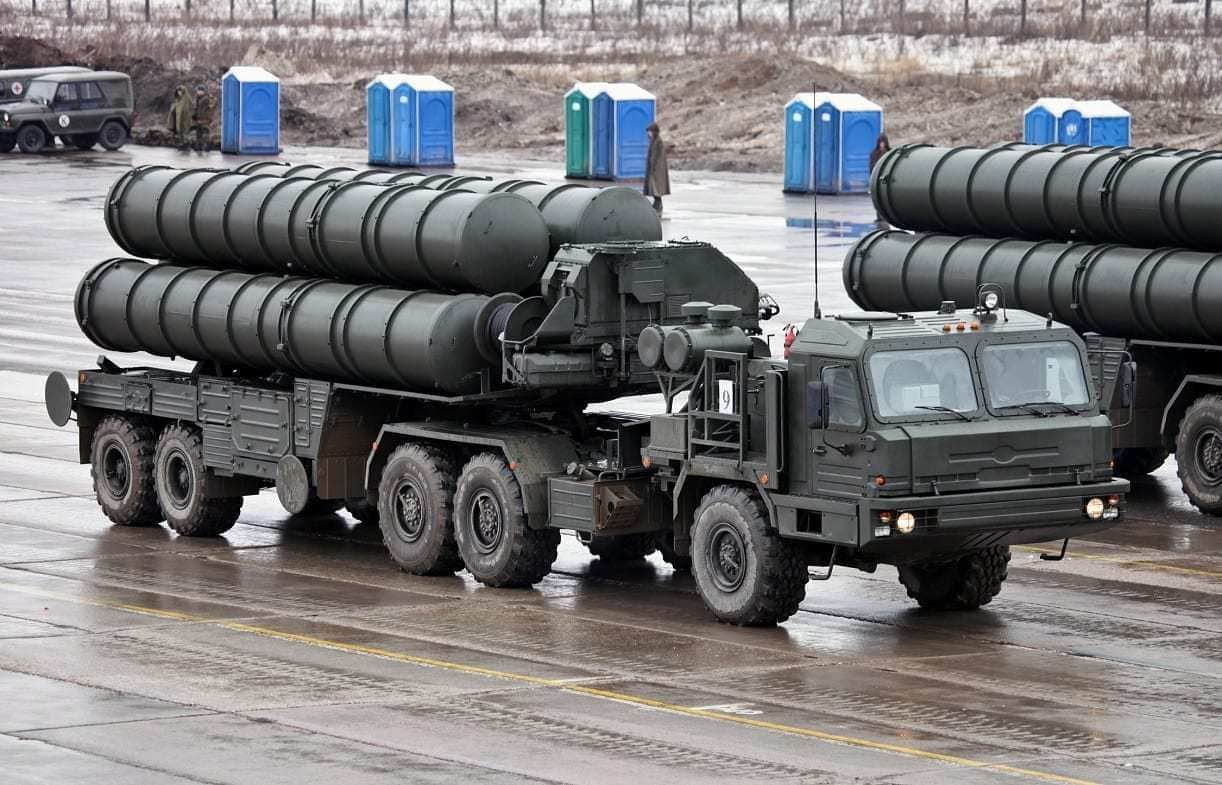
According to the General Staff of Ukraine, on the night of June 24, the Orenburg gas processing plant and the only helium plant in Russia were hit; the distance from the front line exceeds 1,200 km (Ukrinform, June 24, 2026). It is also noted that the Orenburg complex is designed to process 45 billion cubic meters of gas per year and accounts for about 60% of the processing structure of "Gazprom Processing." This is not just an ordinary oil tank at the border, but a facility associated with sulfur, ethane, helium, special plastics, cable insulation, and components for missile production. On the same day, the SBU reported strikes on air defense assets near the Kerch Strait and on the infrastructure of the Sakyi and Gvardeyske airfields: two S-400 elements, two "Pantsir-S1" systems, and four aircraft storage hangars were named as preliminary results of the operation.
At the same time, Ukrainian sources reported the destruction of the main substation in Sevastopol, facilities in Crimea, and gas infrastructure in the Orenburg region, while Militarnyi in its summary for June 24 also listed strikes on two bridges important for logistics in Crimea and damage at the Voronezh semiconductor plant. Even if some of these reports require independent verification, their cumulative effect is important as an operational picture: the Ukrainian long-range campaign no longer appears to be a series of symbolic raids. It is becoming a series of strikes on energy, communications, air defense, airfields, and industrial hubs, that is, on those layers that in the Soviet military school were referred to as rear resilience.
Why the S-400 and "Pantsir" have become a political resource
The S-400 was created as a long-range system capable of engaging aerodynamic targets at distances of up to 250–400 km depending on the missile, and ballistic targets at significantly shorter ranges. The "Pantsir-S1" is supposed to cover the close zone, primarily from cruise missiles, small UAVs, and precision weapons. On paper, this is a layered architecture. In practice, as has already been the case in Crimea since 2023, the layer turns into a set of valuable but vulnerable batteries if the enemy can first detect radars and launchers, then deplete the close defense with false or cheap targets, and after that finish off the expensive elements of the complex.
The Ukrainian report about the redeployment of air defense to Moscow and the Kerch Bridge is particularly telling. In normal military logic, object defense is distributed according to the probability of a strike, the value of the object, and the possibility of recovery. But in Russian political logic, Moscow and the Kerch Bridge have the status of almost sacred objects: the former symbolizes the governability of the state, the latter — the material fixation of the annexation of Crimea. Therefore, the air defense battery becomes not only a military tool but also a political insurance. The Soviet General Staff, with all its faults, understood the cost of such an imbalance: defending symbols at the expense of industrial areas means inviting the enemy to choose less protected targets.
Orenburg as a test of Russia's depth
The strike on Orenburg is particularly unpleasant for Moscow precisely because it breaks the old notion of safe depth. In 1941–1945, the evacuation of industry to the Urals and the Volga worked because German aviation could not systematically reach these areas. In 2026, a long-range drone is not equivalent to a strategic bomber, but it cancels the psychological inviolability of the rear. An object 1,200 km from the front should already have not only departmental security and fire-fighting units but also a full-fledged early warning system, electronic warfare, small-caliber air defense, and backup production circuits.
Here, Russia faces an arithmetic that cannot be hidden behind press releases. If it is necessary to cover Moscow, Kerch, Sevastopol, oil refining, gas chemistry, long-range aviation airfields, UAV storage facilities, electronics factories, and border regions simultaneously, the need for batteries and calculations grows faster than the industry can supply modern complexes. The production of missiles for the S-300/S-400, radar stations, and "Pantsirs" is not an infinite function of the budget. It depends on machines, electronics, skilled workers, chassis, optics, and component base, and these areas are particularly sensitive to sanctions and wear.
Moscow's response and limits of adaptation
Russian adaptation will likely proceed in three directions. The first is the further concentration of the most modern assets at politically important sites. The second is saturating regions with cheaper solutions: mobile groups, anti-aircraft artillery, electronic warfare, and passive protection. The third is retaliatory strikes on Ukrainian civilian and energy infrastructure. The last point is already visible: on June 24, Kyiv reported 101 Russian drones overnight, of which 95 were shot down or suppressed, as well as a missile strike by "Iskander-M" with a cluster warhead on Kryvyi Rih, where four people were killed and 30 were injured (Kyiv Independent, June 24, 2026).
The military problem for Russia is not that the S-400 is "bad." The problem is that even a good system becomes insufficient when it is forced to simultaneously defend the front, the regime's symbols, and an industrial rear the size of a continent.
The Ukrainian long-range strike campaign is currently not capable of paralyzing the Russian defense industry all at once. The Orenburg plant will be repaired, some capacities can be redistributed, and official Russian data on damages, as usual, will be minimized. But the strategic effect is already different: each new strike forces Moscow to prove that it controls the space from Crimea to the Urals. The more complexes are sent to Moscow and Kerch, the more questions arise among governors, factory directors, and commanders in other regions. The Russian air defense system will endure this war not due to redundancy, but through a strict choice of priorities. And it is this choice that will become more noticeable in the coming months than the very debris of downed drones.
Ukrainian forces conducted airstrikes on Russian S-400 air defense systems near the Kerch Strait on June 24, 2026, resulting in the destruction of four systems and two Pantsir-S1 systems. Additionally, the Orenburg gas processing plant was targeted, highlighting a shift in Ukrainian strategy towards critical infrastructure. Reports suggest that Russian air defense assets are being redeployed to Moscow and the Kerch Bridge, indicating a potential crisis in air defense distribution.
- Ukrainian strikes on S-400 systems near the Kerch Strait on June 24, 2026.
- Four S-400 systems and two Pantsir-S1 systems were reportedly hit.
- The Orenburg gas processing plant was targeted, affecting energy infrastructure.
- Ukrainian sources claim a shift of Russian air defense assets to Moscow and the Kerch Bridge.
- The strikes indicate a significant change in the operational landscape of the conflict.