
San Diego USV maker says Quickfish has entered production
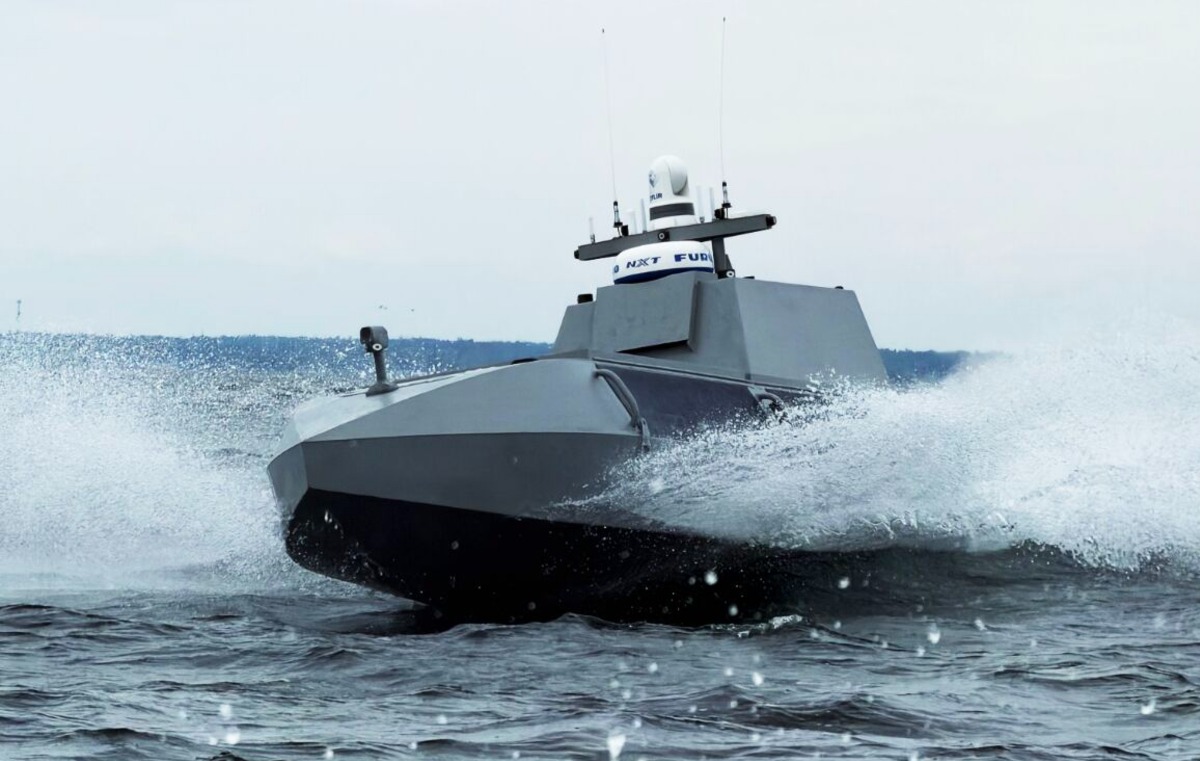
San Diego-based unmanned surface vessel maker Seasats said its Quickfish interceptor-class USV has entered production and is now available at scale.
The company said Quickfish is built on Seasats’ existing technology stack and can sprint at more than 40 knots (74 km/h) while remaining at sea for weeks at a time. It has a large modular payload bay designed to carry a range of mission systems, including unmanned aircraft, according to Seasats. The company said the hull is self-righting and built to survive Sea State 10 conditions, the roughest classification on the World Meteorological Organization’s sea state scale.
Seasats took part in Silent Swarm 2026, a two-week Electromagnetic Spectrum Operations experimentation event run by the Naval Surface Warfare Center, Crane Division. The exercise took place July 13 to 24 at the Alpena Combat Readiness Training Center in Michigan, part of the National All-Domain Warfighting Center, and drew participants including the Michigan National Guard, NOAA, the Army’s C5ISR Center and the Air Force Test Center.
Seasats said it deployed a fleet of five autonomous surface vessels during the exercise, including its Lightfish and Quickfish platforms, to demonstrate coordinated multi-platform operations with a small number of operators. The company said the event also involved integrating maritime sensing and electromagnetic spectrum equipment across the fleet.
A production-run Quickfish completed the full two-week exercise while carrying multiple payloads, Seasats said. The company described Quickfish as built on the Lightfish hull and electronics stack, adding high sea state performance, long range and a payload bay sized for aerial vehicles. Seasats also said the boat includes an on-station patrol mode that allows it to stay deployed for weeks without refueling.
Seasats credited the Naval Surface Warfare Center, Crane Division for the opportunity to test the technology.
The company said Quickfish’s payload bay is watertight and can hold several unmanned aircraft of different types and sizes. That allows a single vessel to be reconfigured for different missions, such as intelligence, surveillance and reconnaissance, communications relay or strike, without modifying the boat itself, according to Seasats. Because the aircraft ride inside the enclosed bay, the company said a Quickfish on patrol gives no outward sign of what it is carrying.
Seasats linked that capability to the Defense Innovation Unit’s Suitable Warfighting Adaptive Payloads program, known as SWAP-USV, which is seeking mature, affordable unmanned surface vessels that can integrate with unmanned aircraft to counter asymmetric threats at sea. The company said Quickfish is in production now and can be delivered on DIU’s timeline.
Content preview only. Full article available at source. View Full Article
Seasats announced that its Quickfish interceptor-class unmanned surface vessel has entered production and is now available at scale. The Quickfish demonstrated its capabilities during the Silent Swarm 2026 exercise at the Alpena Combat Readiness Training Center in Michigan, where it operated alongside four other autonomous vessels. The Quickfish can reach speeds over 40 knots and is designed for long-duration missions with a modular payload bay for various unmanned aircraft.
- Seasats' Quickfish USV has entered production and is available at scale.
- Quickfish can sprint at over 40 knots and remain at sea for weeks.
- The vessel has a modular payload bay for various mission systems, including unmanned aircraft.
- Quickfish was tested during the Silent Swarm 2026 exercise with a fleet of five vessels.
- The hull is designed to survive Sea State 10 conditions.