
Saudi Arabia and the UAE are heading to KORKUT and HİSAR after the Iran War 2026 to reduce the cost of drone interception.
 Ahmed Al-Rashid
Saudi Arabia and the UAE Turn to KORKUT and HİSAR After the Iran War 2026 to Reduce the Cost of Drone Interception
On June 24, the Gulf International Forum published an important reading on the shift in defense mood in the Gulf after the recent Iran War. The summary was not that the Patriot and THAAD systems failed, but that their success itself became too costly to bear in a long war of drones, cruise missiles, and loitering munitions. A few days later, as discussions continued in Gulf capitals about the aftermath of the ceasefire between Washington and Tehran, an old question returned in a harsher form: Are we building air defense for political display or for a real war of attrition?
From a military perspective, this is the right question. Any officer who has served in the region knows that the Gulf has purchased nearly the best upper-tier systems: Patriot PAC-3 against ballistic missiles, and THAAD in Saudi Arabia and the UAE against threats outside the atmosphere, along with early warning networks linked to the United States. However, the recent war showed that the Iranian threat no longer comes only as a clearly guided ballistic missile. The threat also comes as a cheap drone, or a small wave of low-altitude targets, or a graduated attack that forces defense to expend an expensive missile against a cheap target.
Numbers Explain the Problem More Than Speeches
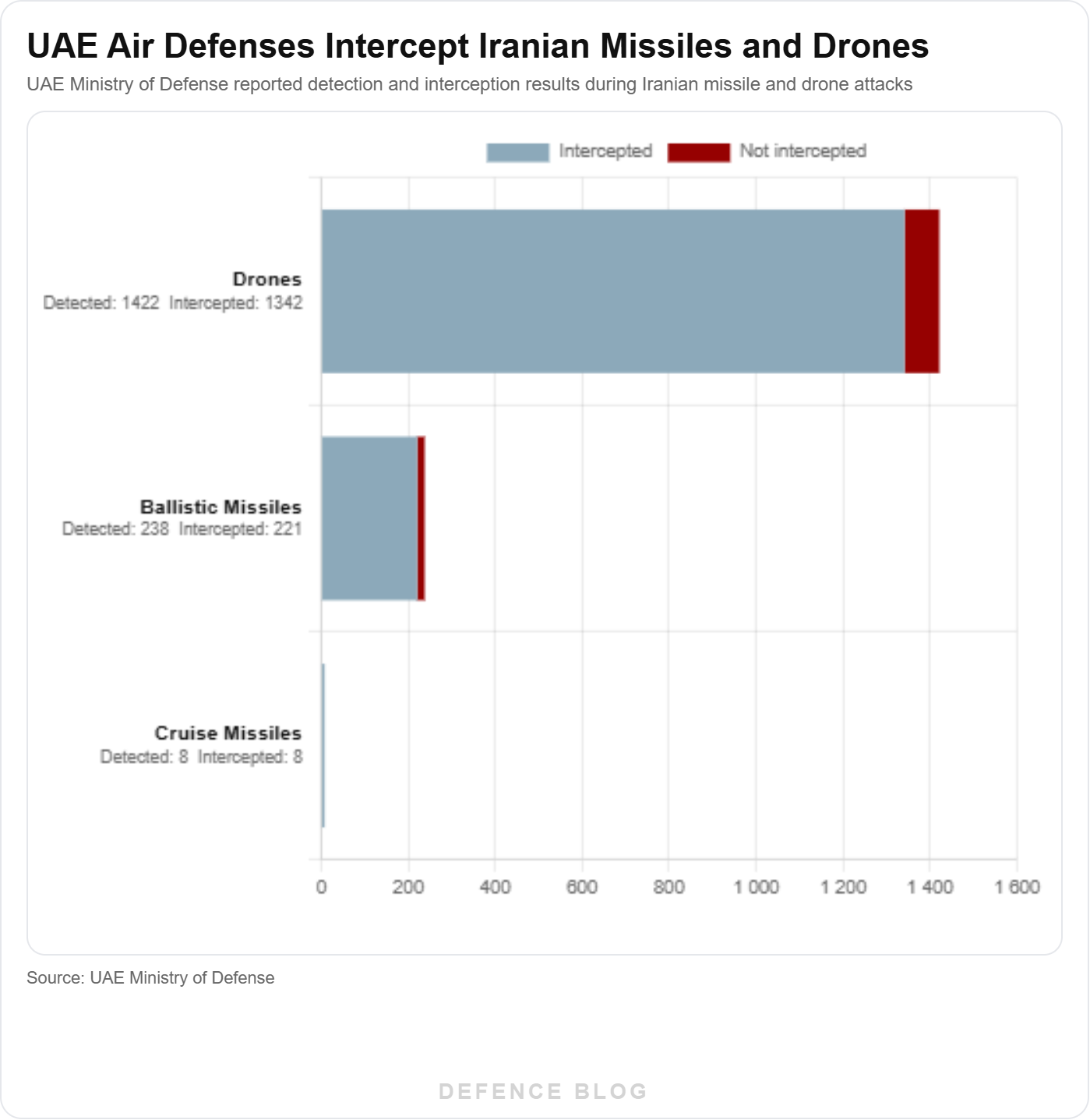
Published data on UAE air defense during the Iranian attacks presents a dual picture: high interception capability on one hand, and significant numerical pressure on the other. In the commonly cited example, 1,422 drones were detected and 1,342 were intercepted, 238 ballistic missiles were detected and 221 were intercepted, with eight cruise missiles intercepted out of eight. These are good tactical numbers, but they open an operational problem that politicians do not like to hear: How many times can this performance be repeated if the stockpile is limited and Western production lines are strained between Ukraine, the Middle East, and Asia?
Patriot PAC-3 and THAAD are not a mistake. On the contrary, they are essential in facing Iranian ballistic missiles. But using the upper tier against cheap targets is like using a ceremonial sword to cut a daily rope. The sword succeeds, yes, but it is not the right tool for every task. Here begins the importance of what Ankara calls the Steel Dome logic, not as a direct alternative to THAAD, but as cheaper and more mobile layers between radar, gun, short and medium-range missiles, and electronic warfare.
Why Riyadh and Abu Dhabi Look to Ankara
Turkey does not offer the Gulf just a single platform. It offers an operational package: KORKUT 100/25 against drones and low-altitude targets, HİSAR-A+ and HİSAR-O+ for short and medium range, SİPER as a higher layer still under development, KALKAN radars, and jamming and command and control capabilities. This is important because the drone battle is not a matter of a prettier missile in the catalog, but a matter of early detection, rapid classification, launch decision, and reasonable interception cost.
The Saudi interest, as regional reports have indicated over the past months, focuses on bridging the gap between the oil base and cities and ports and the higher-priced defense batteries. KORKUT, for example, is a short-range air defense system based on 35mm guns and programmed munitions, and this type of weapon does not look exciting in pictures like THAAD, but it is very practical against small drones and loitering munitions. Meanwhile, KALKAN addresses the more important problem: seeing low-altitude targets and sending the image to a command center that can distribute fire instead of leaving each battery to fight alone.
In my opinion, the Gulf's attraction to Turkey does not mean the end of American reliance. Those who say so confuse politics with desire. Saudi Arabia, Qatar, Kuwait, and the UAE still rely on the United States for early warning, training, munitions, maintenance, and linking the aerial picture. SIPRI data for the period 2021-2025 indicates that the United States remained the source of 77 percent of Saudi arms imports, 48 percent of Qatar's imports, 62 percent of Kuwait's imports, and 42 percent of the UAE's imports. This is not a relationship that can be replaced by a single deal in Istanbul.
The Real Shift in Purchasing Philosophy
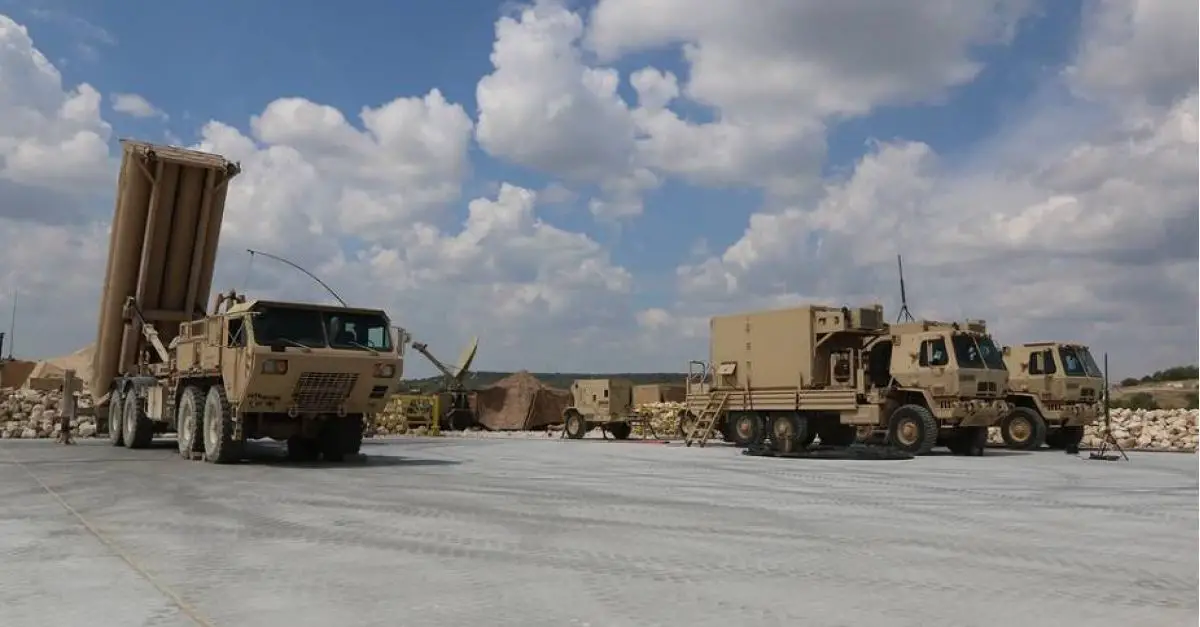
What is changing is the purchasing philosophy. For decades, Gulf countries preferred to buy the heaviest and most expensive system because it sends a clear political message: we are under the American umbrella. After the Iranian drone and missile attacks, the political message is no longer sufficient. What is now required is a system that can fight every night, not just deter in a press release. Therefore, Turkey, South Korea, Ukraine, and Britain appear as sources for lower, cheaper, and closer layers to the war of attrition.
South Korea entered this discussion through Cheongung-II or KM-SAM, and the UAE has shown practical interest in this type of medium layer. Ukraine offers harsh experience in facing Shahed and cheap drones. Britain markets low-cost interception solutions. But Turkey has an additional advantage for Saudi Arabia: readiness for local manufacturing and transferring part of the industrial work. SAMI's agreements with Baykar regarding Akinci since 2023 were not just about purchasing drones, but an attempt to learn the production, assembly, and maintenance cycle.
The Gulf dilemma is not a lack of money. The dilemma is that money buys the platform quickly, but it does not buy an operational doctrine, a sustainable stockpile, and a national maintenance chain at the same speed.
The Limits of the Turkish Bet
However, the Turkish bet should not be exaggerated. HİSAR, KORKUT, and KALKAN do not intercept an Iranian ballistic missile in the tier where THAAD operates. SİPER is developing, but it is not yet a political or technical alternative to Patriot PAC-3 or THAAD. Moreover, integrating Turkish systems within an American Gulf network is not just a matter of purchasing trucks and radars. There are communication protocols, information security, American approvals, crew training, and a familiar problem in Arab armies: who has the launch decision when multiple layers and multiple suppliers enter a single network?
This is where the gap between equipment and institution appears. The military can buy KORKUT and HİSAR, but it needs training units, training munitions, simulation centers, a fire distribution doctrine, and engineers capable of fixing faults without waiting for a foreign team every time. Without that, the new layer becomes just another layer of dependency, but in Turkish instead of English.
What This Means for Iran and the United States
For Iran, the Gulf's shift towards cheaper layers threatens part of its operational logic. Tehran bets on target density and cost disparity. If Riyadh, Abu Dhabi, and Doha can build a low-cost interception layer linked to effective radars, then the cheap drone loses part of its value. But it does not lose it all, as Iran can always adjust paths, altitudes, and saturation tactics.
As for the United States, the shift is not a total loss. Washington will remain the owner of the upper tier and the political umbrella. However, it will have to accept the reality that Gulf allies want greater flexibility in the lower tiers. Here lies the paradox: the more the Gulf relies on Washington for major deterrence, the more it seeks Turkey, Korea, and Ukraine for daily defense. This is not complete independence, but an attempt to reduce the cost of reliance.
The Gulf is now entering a more mature phase, or at least it should be. The issue is no longer who has the highest-priced system, but who can keep the sky open after the third, tenth, and thirtieth night of attack. And as the old military saying goes, a weapon that you cannot sustain turns from a strength into a burden. Between the American THAAD and the Turkish KORKUT, the Gulf states face the same truth: deterrence is not created by purchase alone, but by the institution that knows when to launch, what to launch, and how much it can launch before the war actually begins.
Saudi Arabia and the UAE are transitioning to KORKUT and HİSAR air defense systems to lower interception costs for drones following the Iran War in 2026. This strategic shift addresses the operational challenges posed by low-cost drone threats, as the Gulf states seek more sustainable defense solutions. Turkey is providing a comprehensive package of air defense systems, while the Gulf states continue to depend on the US for certain military capabilities.
- Saudi Arabia and the UAE are considering KORKUT and HİSAR systems for air defense.
- The shift is in response to the high costs of using Patriot and THAAD systems against low-cost drone threats.
- The report highlights the operational challenges faced by Gulf states in air defense.
- Turkey is offering a comprehensive operational package including KORKUT and HİSAR systems.
- The Gulf states still rely on the US for early warning and training despite the shift towards Turkish systems.