
Saudi Arabia and the United States in 2026 Reassess Deterrence Against Houthi Threat After Rubio's Commitment to Defense
 S.W
S.WSaudi Arabia and the United States in 2026 Reassess Deterrence Against Houthi Threats After Rubio's Commitment to Defense
On September 23, 2026, U.S. Secretary of State Marco Rubio announced that Washington "will fulfill its defense commitments" to Saudi Arabia, at a time when the Houthis are raising their threats against Riyadh due to Saudi strikes in Yemen. This statement is not an announcement of a new military operation, but a calculated message to both parties: to the Houthis that pressure on Saudi Arabia will not come without cost, and to the Saudi leadership that the American umbrella is still in place, even if it is no longer a blank check.
The American Commitment and Its Practical Meaning
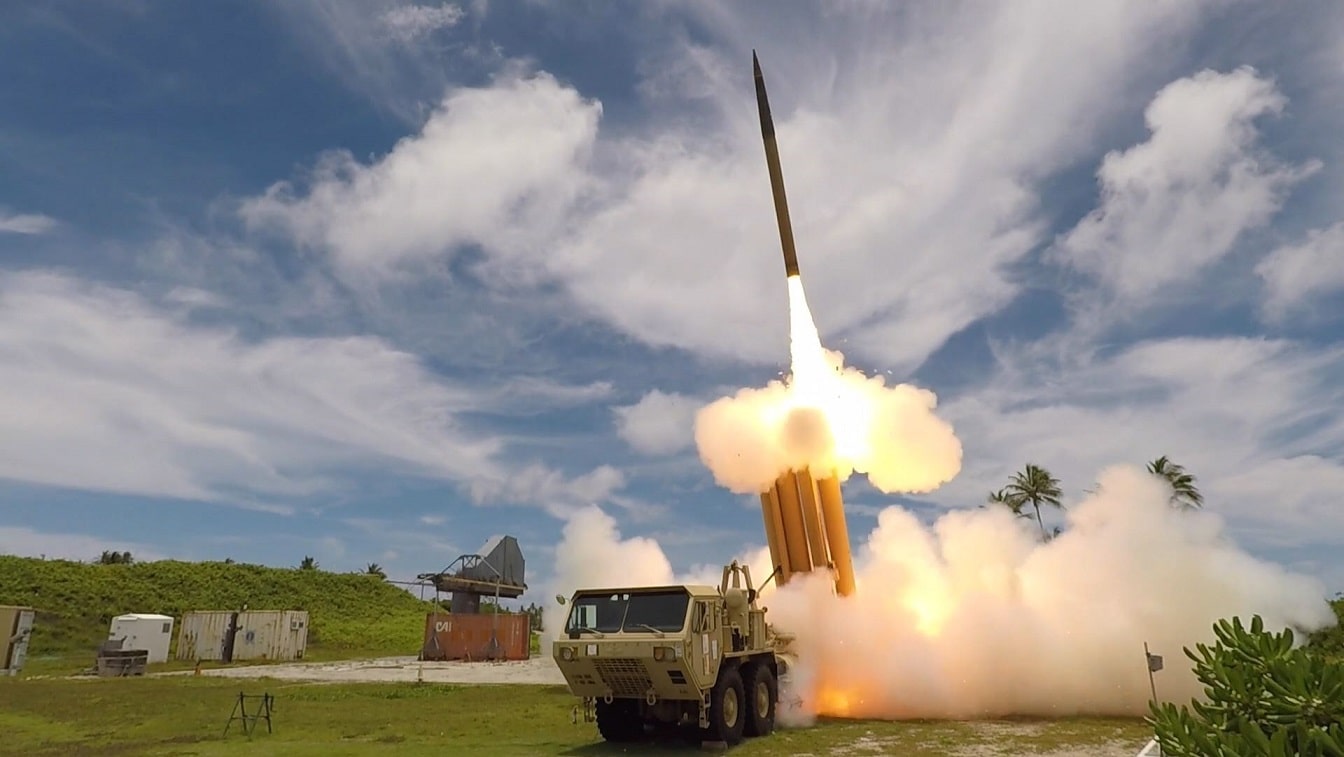
Rubio's remarks came days after discussions intensified regarding Saudi Arabia's ability to protect its territory and vital installations from drone and missile attacks. The Jerusalem Post and Al Arabiya English reported that the American minister reaffirmed his country's commitment to the defense agreement with Riyadh, while other reports linked the message to Houthi threats and the need to prevent Yemen from becoming an open war of attrition. Here, it is important to distinguish between a political "defensive commitment" and a ready plan to intercept every missile. The former indicates Washington's intent, while the latter requires interconnected radars, a stockpile of missiles, trained crews, and bases capable of operating under attack.
From a military perspective, the value of the statement lies in its deterrent effect. If the Houthis believe that striking an oil facility or an airbase will prompt immediate American support, they may hesitate to carry out a large-scale attack. However, deterrence weakens when the wording of the commitment is vague or when the adversary does not know the limits of the American response. Words buy time, but they do not compensate for the deployment of air defense batteries.
The Houthis Press on Saudi Weakness
The Houthis do not need to possess a conventional air force to cause significant problems. A low-cost drone or a limited-accuracy ballistic missile can impose a temporary shutdown of an airport, power station, or oil facility. The cost of interception is much higher than the cost of the attack, and this is a formula known to every military personnel who has served in the region. Therefore, protection is not measured solely by the number of missiles intercepted by Saudi Arabia, but by its ability to maintain the flow of energy, transportation, and command after the first strike.
The Houthi threat is also political as much as it is military. The group wants to link any Saudi pressure in Yemen to a cost within the Kingdom, and to show that the southern border is not quiet even when Riyadh avoids a full-scale war. Thus, the American commitment may deter major escalation, but it may not prevent a series of small, repeated attacks designed to exhaust defenses and force Riyadh to spend continuously.
The Saudi Triangle of Capability
I have become accustomed to using a simple yet harsh triangle in evaluating armies: equipment, training, and institutions. Saudi Arabia possesses advanced equipment, from Patriot and THAAD to fighter jets and American sensor networks. However, possessing the system does not equate to having the full capability to operate it. Modern air defense requires data integration between air forces, air defense, civil defense, and facility security, as well as clear rules of engagement that do not change with every political crisis.
- Equipment: Interceptor missiles and multi-layered radars, with the ability to handle ballistic and drone targets simultaneously.
- Training: Crews capable of working long hours, redistributing munitions, and changing positions before the batteries become fixed targets.
- Institutions: A national command center that links early warning to political decision-making, with the authority for rapid response without waiting for a long chain of approvals.
The problem is that Saudi Arabia has advanced rapidly in the equipment category, but it has not yet proven that the other two categories are on par. This is why every American statement about "commitment" comes back to the forefront. When the local institution is self-sufficient, American support becomes a force multiplier; however, when it is necessary to operate the system, it becomes part of the capability itself.
Does the Message Mean a Return to Full Dependence on Washington?
I do not think Riyadh wants to return to the pre-Yemen war formula, when arms purchases were sometimes understood as a substitute for building national capability. Saudi Arabia is investing in local manufacturing, expanding its relations with Turkey and South Korea, and trying to turn contracts into knowledge, maintenance, and production. However, these projects take years, while the Houthi missile does not wait for a factory to be completed or a batch of technicians to graduate.
Therefore, Riyadh will continue to combine two seemingly contradictory paths. The first path is to seek rapid American guarantees, while the second is to reduce dependence on Washington in the long term. This is not a contradiction in Saudi diplomacy as much as it is an acknowledgment that defensive independence cannot be purchased at a weapons fair. The United States can provide warning, munitions, and expertise, but it will not manage all layers of Saudi security forever.
The Next Test of Deterrence
The sincerity of the American commitment will be demonstrated in three indicators, not in press conferences. First, will Washington participate in improving the Saudi early warning network, or will it be satisfied with a political statement? Second, will it ensure a steady supply of interceptor missiles and spare parts if the attrition continues? Third, will it help Riyadh protect oil facilities and ports, not just military bases?
In my estimation, Rubio's commitment is important because it prevents the Houthis from interpreting American hesitation as a free opportunity. However, it does not resolve the original dilemma. Saudi Arabia needs American protection now, while it wants to prove that it can protect itself tomorrow. Between the immediate need for American power and the desire to build an independent defense decision, there will remain a gap that cannot be filled by statements, but rather by training, institutions, and the ability to endure a long war.
Sources
- Jerusalem Post, September 23, 2026, Marco Rubio's statements on defense commitments to Saudi Arabia.
- Al Arabiya English, September 23, 2026, Washington's confirmation of its commitment to the defense agreement with Riyadh.
- Center for Strategic and International Studies, September 23, 2026, discussion on American support for Saudi Arabia at a moment of threat.
- Council on Foreign Relations, September 22, 2026, background on the implications of the Saudi-Houthi conflict for the United States.
U.S. Secretary of State Marco Rubio reaffirmed U.S. defense commitments to Saudi Arabia on September 23, 2026, amid rising Houthi threats. This commitment aims to deter Houthi attacks following Saudi airstrikes in Yemen. While not signaling a new military operation, it serves as a political message to both the Houthis and Saudi leadership regarding U.S. support. The report highlights Saudi Arabia's ongoing efforts to enhance its defense capabilities and reduce dependency on U.S. military support.
- U.S. Secretary of State Marco Rubio announced defense commitments to Saudi Arabia on September 23, 2026.
- The U.S. aims to deter Houthi threats against Saudi Arabia due to recent attacks.
- The commitment is not a declaration of a new military operation but a political message.
- The Houthis are increasing their threats against Saudi Arabia in response to Saudi airstrikes in Yemen.
- Saudi Arabia is working to enhance its defense capabilities while reducing reliance on U.S. support.