
Saudi Arabia intercepts 11 Houthi drones and a ballistic missile in 2026 and reveals the limits of Gulf deterrence.
 Ahmed Al-Rashid
Saudi Arabia intercepts 11 Houthi drones and one ballistic missile in 2026 and reveals the limits of Gulf deterrence
In the early hours of October 23, 2026, the Saudi-led coalition announced the interception of 11 Houthi drones and one ballistic missile, while regional reports spoke of a wave of nighttime attacks and the sound of explosions near Riyadh. The significance of the news lies not only in the number of targets that were shot down but also in that it puts Saudi air defense to a new test: Can it protect cities and vital installations when the war with Iran turns into a network of proxy fronts extending from the Gulf to Yemen?
Successful interception but not a closure of the front
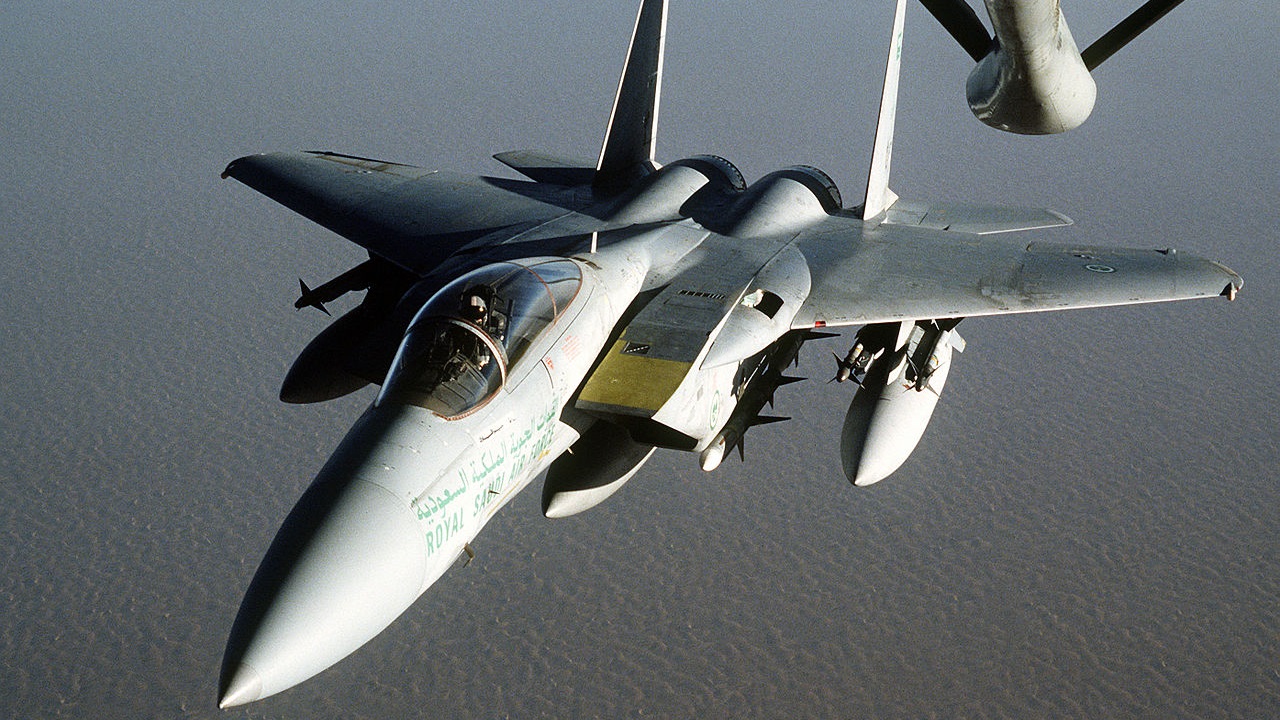
The interceptions, according to reports from Anadolu Agency and The National, indicate that the warning network, radars, and interceptor missiles worked in this round. However, air defense is not measured by the number of targets shot down in a single statement. The true measure is the state's ability to repeat the operation day and night, at a bearable cost, while keeping airports, power stations, and command centers operational.
The Houthi drone is relatively cheap and can be launched in simultaneous numbers from different directions. On the other hand, the interceptor missile, along with radar operation, command and control, and air sorties, costs much more. Therefore, shooting down 11 drones and one missile may be a tactical victory, but it does not guarantee superiority in a war of attrition. The enemy does not need to penetrate every wave; it is enough for it to impose continuous expenditure on the defender and make air, trade, and energy movements more cautious.
The Yemeni war has entered the shadow of the Iran war
The attacks coincided with a meeting of European and Middle Eastern ministers in Istanbul to discuss the war with Iran, along with Iranian warnings of expanding strikes targeting economic and civilian facilities if American and Israeli attacks resumed. In this context, Yemen is no longer a separate theater from the larger crisis. The Houthis have an independent decision-making capability on some issues, but they also represent a low-cost pressure tool on Saudi Arabia at a moment when Washington and Tel Aviv are trying to manage escalation with Tehran.
This is the most dangerous change for Riyadh. Defending Saudi airspace is no longer just a matter of protecting southern borders; it has become part of a regional equation that could include oil facilities, ports, airports, and shipping lanes. The higher the tension around the Strait of Hormuz, the more valuable Bab el-Mandeb and the Red Sea become as alternative pressure routes. Practically, an armed group with limited capabilities can force a state that possesses F-15s and advanced air defense systems to distribute its resources over a vast area.
The Saudi capability triangle remains unbalanced
From a military perspective, I always return to the capability triangle that combines equipment, training, and institutions. Saudi Arabia possesses advanced equipment, from F-15 fighters to American air defense systems and multi-layered radar networks. However, possessing the system does not mean having independent operational capability. Air defense requires data integration between the air force, air defense, and naval forces, as well as an inventory of interceptors, maintenance teams, and training to operate under jamming and false alarms.
The problem is not that the Saudis do not know how to use their equipment. The problem is that the defense structure is still heavily reliant on American support for maintenance, munitions, data, and deployment. A Defense News report confirmed that U.S. Defense Secretary Pete Hegseth discussed regional threats and the offensive and defensive aspects of the U.S.-Israeli partnership with Benjamin Netanyahu, at a time when Israel hosts thousands of American military personnel and Houthi attacks on Saudi Arabia are increasing. This picture explains the Gulf contradiction well: Washington provides the umbrella, but its very presence may make Gulf states direct targets in the adversaries' calculations.
Egypt seeks negotiation while Riyadh seeks time
On October 22, Egypt called for talks regarding Yemen, while the Egyptian parliament was discussing the possibility of providing military support to Saudi Arabia, according to a Reuters report. Combining the two paths is not a contradiction; Cairo knows that protecting navigation in the Red Sea requires limited military pressure, but it also knows that a permanent solution does not come from intercepting another missile. Any military operation that does not open a political path will reproduce the same cycle, changing only the number of drones and casualties.
For Riyadh, successful interceptions provide breathing space, but they do not offer a solution. The kingdom can buy more missiles, expand radars, and request additional fighters, but none of this eliminates the Houthis' ability to choose the timing and direction of the attack. Moreover, deterrence does not succeed if the adversary believes that the cost of striking it is less than the cost of defending against it.
Conclusion
Intercepting 11 drones and one ballistic missile is good news for Saudi forces, but it is not evidence that the Yemeni front is under control. It proves that the system is capable of preventing a disaster in a specific round, not that it can end the war or protect the economy indefinitely. The old Gulf dilemma remains in a harsher form: buying weapons provides protection, but does not alone create independence; and reliance on the American ally deters the adversary, but makes the region part of a war whose capitals do not have the decision to start or end it.
Sources Al Jazeera October 23, 2026, Defense News October 20, 2026, and reports from Anadolu Agency, The National, and Reuters published on October 22 and 23, 2026.
Saudi Arabian forces intercepted 11 Houthi drones and 1 ballistic missile on October 23, 2026, near Riyadh. This interception occurred during a wave of nighttime attacks, raising concerns about the effectiveness of Saudi air defenses in a prolonged conflict. The situation highlights the ongoing regional tensions involving Iran and its proxies, with Egypt also seeking to negotiate regarding Yemen.
- Saudi forces intercepted 11 Houthi drones and 1 ballistic missile on October 23, 2026.
- The interceptions occurred amid reports of nighttime attacks near Riyadh.
- The effectiveness of Saudi air defense is questioned regarding sustained operations.
- The situation reflects broader regional tensions involving Iran and proxy forces.
- Egypt is seeking negotiations regarding Yemen while discussing military support for Saudi Arabia.