
U.S. Army takes over retired U.S. Navy drone helicopters
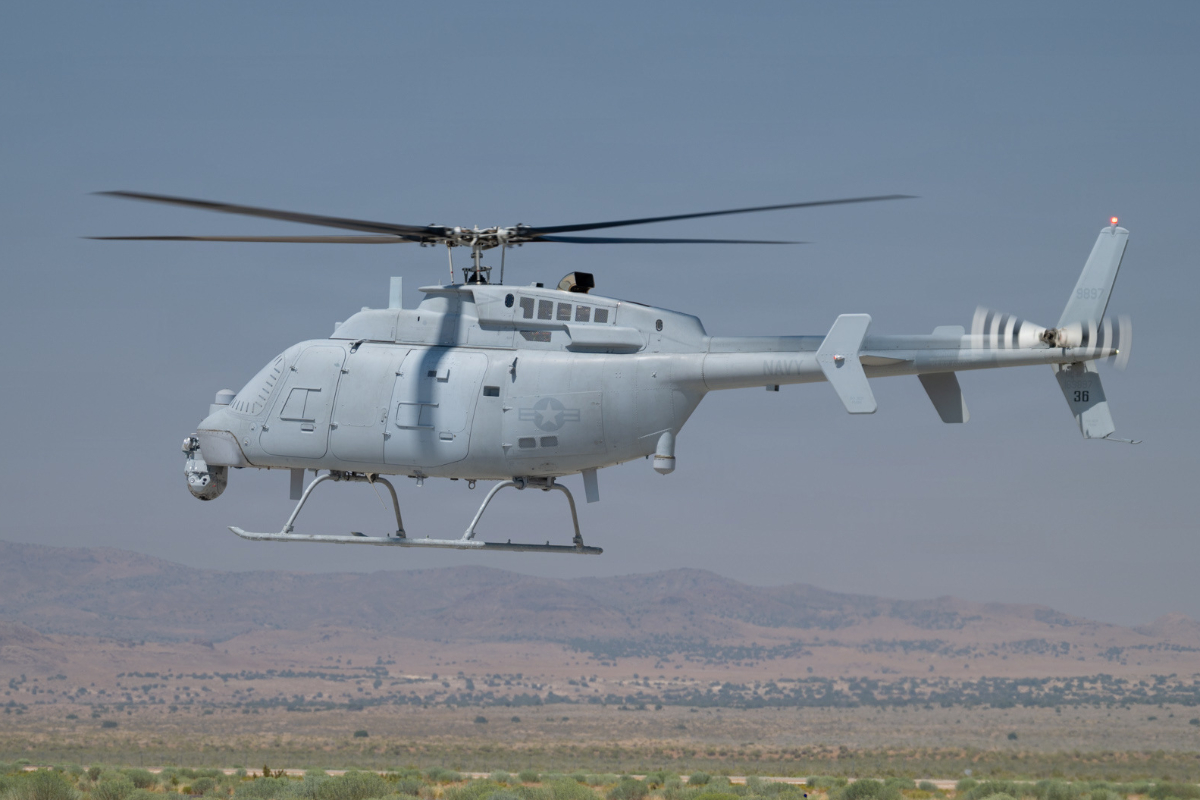
The U.S. Army has started flight testing four MQ-8C Fire Scout unmanned helicopters that the U.S. Navy was retiring, turning aircraft headed for long-term storage into flying testbeds for Army sensors and saving the Army just over $70 million in procurement costs.
The Army’s Redstone Test Center at Redstone Arsenal, Alabama, received the four aircraft along with two Mobile Mission Control Systems, spare engines and support equipment, and completed ground testing in August 2026. Flight tests are now underway at Dugway Proving Ground, Utah, and at Redstone Arsenal to build aircrew confidence and give maintainers hands-on experience with the system.
The Navy began divesting the MQ-8C in February 2024, with the final retirement scheduled by the end of fiscal 2026. The Navy’s Multi-Mission Tactical UAS program office, known as PMA-266, was about 60% of the way through sending aircraft, mobile control systems and support equipment to the 309th Aerospace Maintenance and Regeneration Group in Tucson, Arizona, the military’s aircraft storage and regeneration center often called the boneyard, when the Army asked about taking over some of the fleet.
That request came in November 2024, when the Redstone Test Center asked whether the Fire Scout could serve as a captive carry testbed for Army sensor packages. In captive carry testing, a sensor or payload is mounted on an aircraft and flown in realistic conditions without being released, giving engineers flight data without dedicating a new aircraft to the job. Army and Navy teams visited Point Mugu, California, in December to evaluate the MQ-8C and its control systems, and the Redstone Test Center submitted a formal request to the Navy in January 2025 for four aircraft, two control systems, spare engines and support equipment.
The Navy approved the transfer in May 2025, and all four aircraft and both control systems arrived at Redstone Arsenal by July 2025. The program office also worked with Naval Supply Systems Command to recover communications security equipment, including radios, transponders and modems, that had already been returned to common stock during the divestment, and the last of those assets reached Redstone in July 2026.
“Considering where we started—having zero experience with these systems—it’s quite remarkable what has been accomplished. We are certainly thankful for the many people across various organizations that helped us along the way,” said Chief Warrant Officer 4 Taylor Kiel, a test director and experimental test pilot with the Redstone Test Center’s Aviation Flight Test Directorate.
Beyond the $70 million in procurement savings, the Navy said the Army avoided additional costs in research and development, flight hours, data collection, contracts, asset sourcing and manpower. The program office said the full transition, from the first request to the start of flight tests, took 14 months.
“Our priority is delivering lethal and ready capabilities to the warfighters,” said Col. Leigh Irwin, PMA-266 program manager. “Repurposing these MQ-8C assets from storage to active testing is a major acquisition win for both services, demonstrating how we can supercharge existing capabilities and increase acquisition velocity to support joint operations.”
Built by Northrop Grumman on the airframe of the commercial Bell 407 helicopter, the MQ-8C was designed to fly from the Navy’s littoral combat ships and other air-capable vessels, providing surveillance and targeting support with up to 12 hours of endurance and a range of about 150 nautical miles (280 km). The Navy reached initial operational capability with the MQ-8C in June 2019 and bought 38 of the aircraft, but by 2023 it was operating only 10 of them and keeping the rest in storage.
With the Navy’s MQ-8C retirement now complete, the four aircraft at Redstone Arsenal continue flight testing at Dugway and in Alabama as the Army prepares them for sensor test work.
Content preview only. Full article available at source. View Full Article
The U.S. Army has begun flight testing four MQ-8C Fire Scout unmanned helicopters at Dugway Proving Ground and Redstone Arsenal, repurposing them from Navy retirement for sensor testing. This initiative, which started with a request in November 2024, has saved the Army over $70 million in procurement costs. The Navy's divestment of the MQ-8C began in February 2024, with the final retirement expected by the end of fiscal 2026.
- The U.S. Army is flight testing four MQ-8C Fire Scout unmanned helicopters previously retired by the U.S. Navy.
- The Army saved over $70 million in procurement costs by repurposing these drones.
- Flight tests are being conducted at Dugway Proving Ground and Redstone Arsenal.
- The Navy began divesting the MQ-8C in February 2024, with the final retirement scheduled by the end of fiscal 2026.
- The transition from request to flight tests took 14 months.