
Saudi Arabia intercepts three ballistic missiles and four Houthi drones in 2026 and tests the limits of regional deterrence.
 Ahmed Al-Rashid
Saudi Arabia intercepts three ballistic missiles and four Houthi drones in 2026 and tests the limits of regional deterrence
On the morning of October 27, 2026, the Saudi-led coalition command in Yemen announced the interception of three ballistic missiles launched towards the Eastern Province, and four drones heading towards southern regions of the Kingdom. According to the Saudi narrative, no injuries were recorded as a result of this round, but the alerts issued in the Eastern Province and Al-Kharj Governorate revealed that the attack was no longer a distant test on the Yemeni border, but had become pressure on the Kingdom's demographic and economic depth. This coincided with a meeting of Saudi, Turkish, and Pakistani officials with Iranian leadership in Tehran to open a channel to prevent the return of military escalation.
The numbers of the attack are more important than the interception image
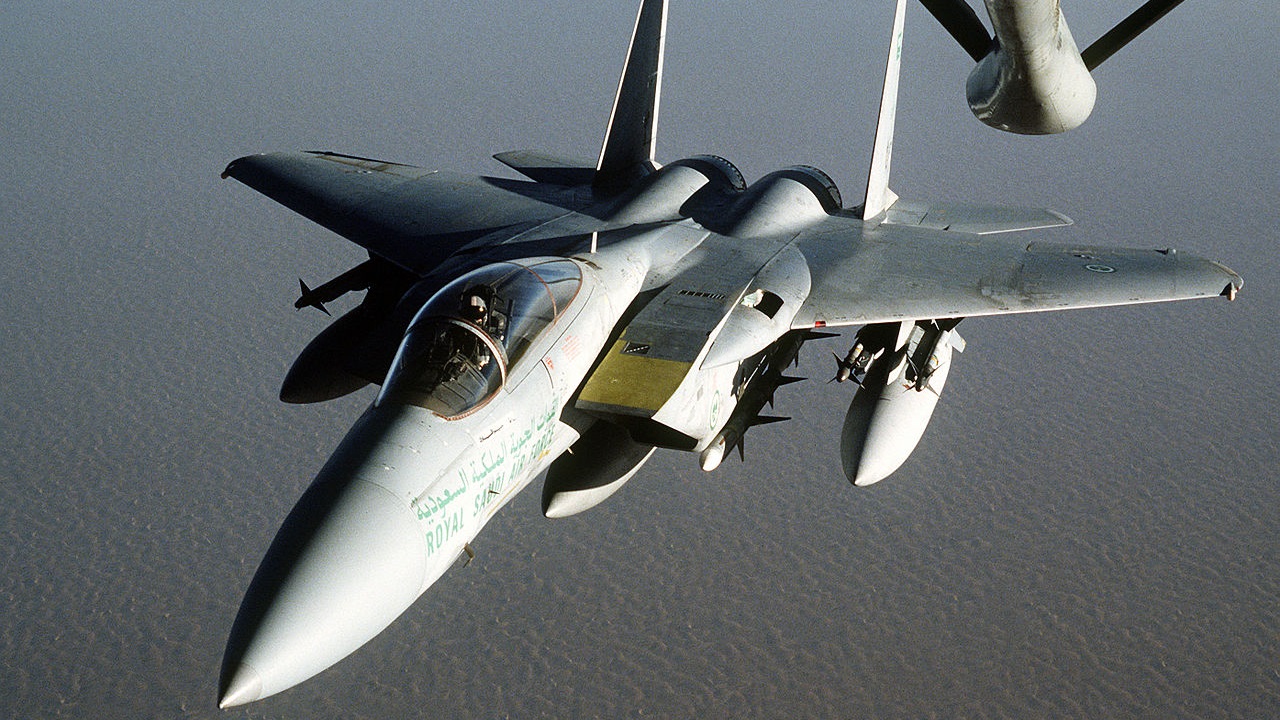
The direct military data indicates seven aerial targets in two different directions. The ballistic missiles towards the east carry a clear significance, as the Eastern Province is the center of the Kingdom's oil and industrial weight, while the south remains more exposed to drones coming from the Yemeni theater of operations. The coalition command also stated that it intercepted three additional drones over the Riyadh and southern regions the evening before. Whether these numbers are considered a single attack or a series of close incidents, they demonstrate the Houthis' ability to distribute paths and force Saudi air defense to operate over a wide area.
The term interception should be treated with caution. The primary source is the coalition spokesman Colonel Turki Al-Maliki, and the Houthis did not issue an immediate comment to confirm or deny the outcome. However, the official alerts and civil defense measures, including urging residents to avoid gatherings and not to photograph interception sites, indicate that the authorities treated it as a real threat. In professional analysis, it is not enough to count the missiles that fell; the warning time, the expenditure rate on interception missiles, and the system's ability to protect airports and oil facilities simultaneously must be measured.
Air defense succeeds tactically but does not end the problem
Practically, a successful interception provides Riyadh with three immediate benefits. First, it protects infrastructure and prevents human losses that could change political calculations. Second, it proves that the warning, command, and control network is capable of transferring the threat between the eastern and southern sectors. Third, it allows the Saudi government to continue diplomatic work from a less vulnerable position. However, these are temporary defensive benefits and not a solution to the war.
Any military personnel who has served in the region knows that air defense does not operate in a vacuum. Its true capability is the product of equipment, training, and institutions, not just the number of batteries that appear in the data. Advanced Western systems can intercept a missile or drone, but the density of attacks, their diversity, and the low cost of some drones compared to the cost of interceptors may create an uncomfortable attrition equation. If the missiles coincide with a cyber attack, jamming, or strikes on radar facilities, success in one round does not guarantee success in the next.
The deeper problem is that Riyadh is buying defensive time while the Houthis retain the ability to choose the timing and location of escalation. Al Jazeera reported that the group attacked airports, ports, and oil facilities in recent weeks, and a previous attack on King Khalid International Airport resulted in the deaths of 13 people and injuries to more than 300. The coalition also announced strikes on five missile storage tunnels, four launch platforms, and a missile warehouse. These strikes may reduce the stockpile, but they do not eliminate the network of concealment, production, and support that makes mutual targeting sustainable.
Tehran and Riyadh face the test of the Mecca Agreement
The political timing is what makes the October 27 attack more significant than the number of projectiles. Saudi Defense Minister Prince Khalid bin Salman, Pakistani Army Chief General Asim Munir, and Turkish Intelligence Chief Ibrahim Kalin met with Iranian officials in Tehran. These are not ordinary protocol talks; Saudi Arabia, Turkey, and Pakistan signed the Mecca Agreement for mutual defense in August, and then found themselves facing Iran, the state politically and militarily linked to the Houthis, in a single dialogue channel.
The quadrilateral agreement that announced the continuation of dialogue for peace and security opens a window, but it does not prove that Tehran is capable or willing to stop the attacks. Iran's influence over the Houthis is not a button that can be pressed in the negotiation room, and the group has its own Yemeni calculations. Conversely, Riyadh needs to know whether the Iranian channel will produce a verification mechanism or remain a means to reduce media heat while the missiles continue. From an Arab perspective, the value of any understanding is measured by what happens in the skies over Al-Kharj and the Eastern Province, not by the wording of the final statement.
The oil corridor and Saudi deterrence
Targeting both the east and south sends a message that goes beyond disturbing cities. The Eastern Province is linked to energy and export facilities, and the south is connected to the Yemeni corridor and the facilities that support the Kingdom's operations in the Red Sea. If the attacks manage to hit a single facility significantly, the cost of the damage will not only be military; the costs of insurance and energy will rise, and investor confidence in Saudi Arabia's economic transformation plans will face additional pressure.
For this reason, Riyadh will likely continue to combine three tools: air defense, preemptive strikes, and regional mediation. However, this trio reveals a structural contradiction in Gulf security. Saudi Arabia wants independence in decision-making, but it still relies on a network of warning, armament, and technical support linked to external partners. It wants to end the war, but it sees that retreating in the face of attacks on airports and oil facilities threatens deterrence. The Houthis, on the other hand, benefit from the cost gap: a single missile forces the Kingdom to mobilize costly resources even if it is intercepted.
Conclusion
The interception of three ballistic missiles and four drones is a real Saudi military success, but it is neither a political victory nor a guarantee for the future. The next test will not be the number of targets that the batteries shoot down, but the ability of Riyadh, Tehran, Ankara, and Islamabad to translate dialogue into measurable constraints on missile launches. As long as deterrence relies on protecting the sky after launch, rather than changing the calculations of the party that launches, the Kingdom will continue to win the tactical battle while paying the price of the strategic war.
Sources
- Al Jazeera, October 27, 2026, Saudi-led coalition says it downed Houthi missiles and drones
- Reuters, October 27, 2026, Saudi-led coalition says it intercepted Houthi missiles and drones attacking kingdom
- Arab Times, October 27, 2026, Saudi-led coalition intercepts 3 Houthi ballistic missiles targeting Eastern Province
On October 27, 2026, the Saudi-led coalition intercepted three ballistic missiles and four drones launched by Houthi forces targeting the Eastern Province and southern regions of Saudi Arabia. The coalition reported no casualties from these interceptions, but the alerts indicated a significant threat. This military action coincided with diplomatic discussions among Saudi, Turkish, Pakistani, and Iranian officials aimed at reducing military escalation.
- Saudi-led coalition intercepted 3 ballistic missiles and 4 drones on October 27, 2026.
- The attacks targeted the Eastern Province and southern regions of Saudi Arabia.
- No casualties were reported from the interceptions, but alerts indicated a real threat.
- The coalition's actions coincide with diplomatic talks involving Saudi, Turkish, Pakistani, and Iranian officials.
- The report highlights the ongoing military pressure from Houthi forces on Saudi Arabia.