
Saudi Arabia Intercepts Two Houthi Ballistic Missiles in 2026 Red Sea Escalation Tests Gulf Air Defense
 Ahmed Al-Rashid
Saudi Arabia Intercepts Two Houthi Ballistic Missiles in 2026 Red Sea Escalation Tests Gulf Air Defense
On October 24, 2026, the Saudi-led coalition announced that it had intercepted two ballistic missiles launched by the Houthi group towards the regions of Taif and Yanbu. Saudi authorities stated that the brief alerts in Mecca, Jeddah, and Taif had ended and that the danger had passed, but the military value of the news does not lie solely in the success of the interception. The more important issue is that the geography of Houthi pressure has expanded from the southern borders to two sensitive nodes deep within Saudi territory, one near the routes leading to the holy cities and the other linked to the Red Sea coast, energy, and trade.
The official narrative should be treated with precision. The coalition announced the destruction of the two missiles, and no independent data has yet been published to allow for an assessment of the type of missile, the interception point, or whether there were any fragments or material damage. Therefore, it is not appropriate to turn the statement into a final judgment on the performance of the air defense network. A successful interception is important, but it does not alone answer the question that concerns any military personnel who has served in the region: can the system protect cities, facilities, and ports over weeks of repeated attacks?
From Taif to Yanbu, the Threat Map Changes
Taif is not just a military coordinate. Its proximity to Mecca makes any air alert there politically and psychologically costly, even if no missile falls within the city. Yanbu is not just a symbolic target; it is an industrial hub and a port on the Red Sea, housing energy facilities and export and processing facilities. The combination of these two directions suggests that the Houthis want to force Riyadh to distribute its defensive resources over a wide area, rather than concentrating them around the border with Yemen or around the eastern oil facilities.
This is the logic of relatively inexpensive ballistic missiles against an expensive air defense. The attacker does not need to penetrate every time to achieve an operational effect. It is enough to impose repeated alerts, halt air traffic or operations at a facility, and make insurance companies and ports act on the basis of the worst-case scenario. Practically, the cost of intercepting a single missile may be much higher than the cost of launching it, especially if advanced interceptors are used in every wave.
Interception Does Not Equal Control of the Battle
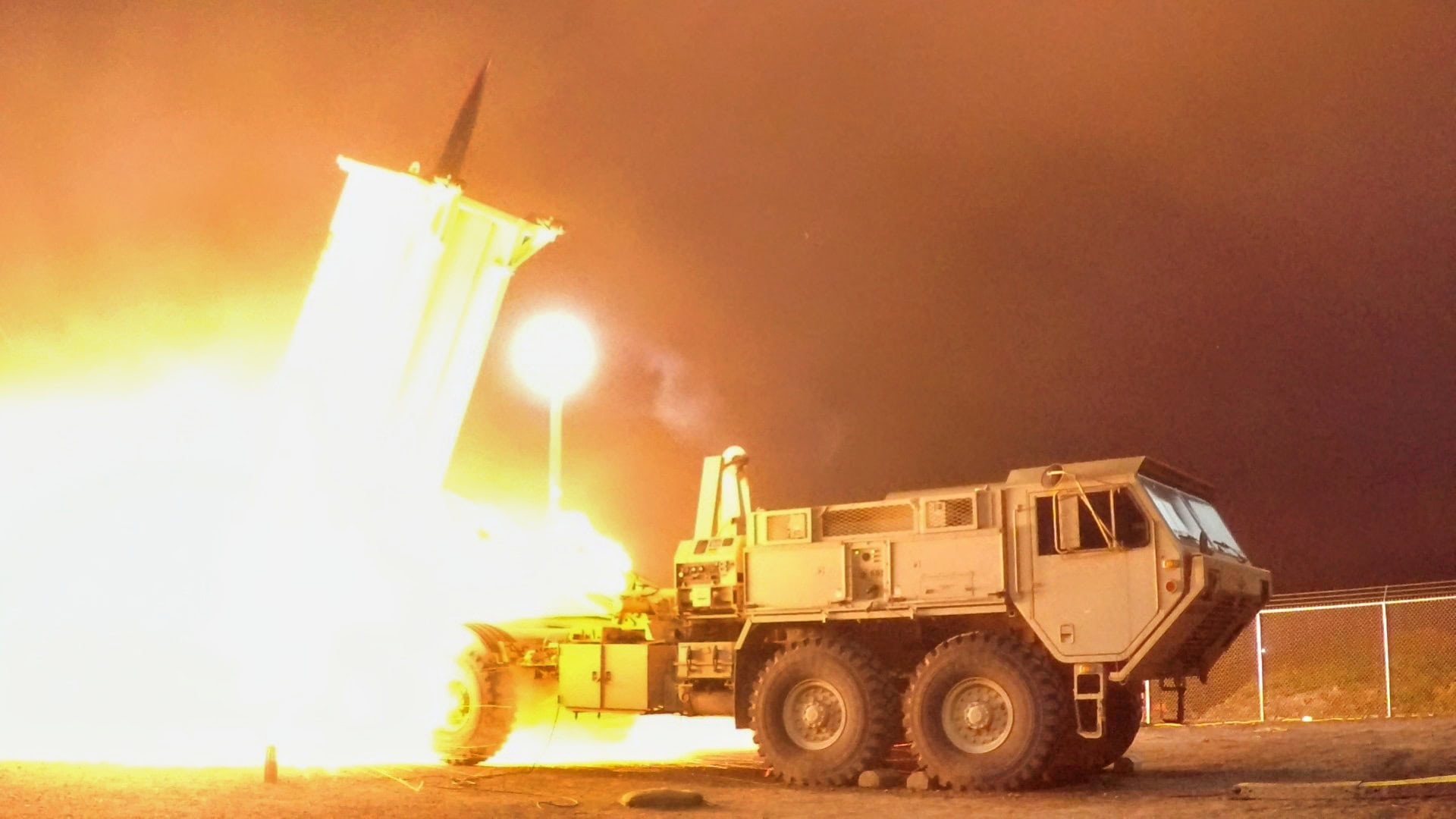
Saudi Arabia possesses a mix of Patriot and THAAD systems, along with American radars and command and control networks. THAAD provides the capability to intercept ballistic missiles at high altitudes, while Patriot offers a different layer closer to protecting points and facilities. However, this equipment does not function as an independent magic shield. Its effectiveness depends on early warning, the presence of trained crews, radar readiness, missile stockpiles, and coordination of rules of engagement between Saudi and American units.
Here lies the triangle of capability that many arms announcements overlook: equipment, training, and institutions. Saudi Arabia can purchase the systems, but maintaining an operational rhythm over the long term requires thousands of hours of training, continuous maintenance, shared data from multiple sources, and quick political decisions on a night crowded with both false and real targets. If one side of the triangle falters, the large numbers in sales brochures turn into limited capability.
Moreover, intercepting two missiles reveals nothing about the network's capability to face a complex barrage that includes ballistic missiles, drones, and loitering munitions. The Houthis and Iran know that even the most advanced air defense can be exhausted by multiple directions, timing of launches, and changing attack trajectories. An investigative report by Reuters indicated that precise Iranian strikes have repeatedly damaged Gulf infrastructure, while other reports documented threats to Saudi airports and oil facilities. This is not a matter of hitting a single target; it is a matter of a state's ability to continue operating under alert.
The Political Problem Behind the Missile
Since the escalation of fighting between the Saudi coalition and the Houthis in the fall of 2026, the group has been trying to shift the war into the realm that directly touches civilian life and the economy. The threat to airports, oil facilities, and international shipping raises the cost from the borders of Yemen to the capitals of the Gulf. In turn, Riyadh finds itself facing a difficult equation. A strong response may widen the war and give Tehran an additional leverage point, while merely relying on defense puts the initiative in the hands of an adversary who chooses the timing and location of the launch.
The joint defense agreement between Saudi Arabia, Turkey, and Pakistan gains importance in this context, and reports in October spoke of activating deterrence measures and rapid deployment of forces. However, it does not immediately address the air defense gap. Allied aircraft and ground forces may raise the cost of an attack, but protecting Yanbu, Taif, Mecca, and oil facilities requires an integrated warning and interception network that operates every day, not just a statement of solidarity after a missile has fallen.
Moreover, reliance on the United States will remain essential in the near term, especially in the areas of munitions, software, maintenance, and networking. This places Riyadh in a contradiction it knows well. It wants greater defensive independence and diversification of partners, but it needs, in moments of danger, the state that has the greatest capability to operate the system and connect it with regional information. Purchasing weapons increases options, but it does not eliminate operational dependency.
Conclusion
Intercepting two missiles aimed at Taif and Yanbu is good news for the population and the economy, but it is not the end of the round. The real test will be Saudi Arabia's ability to maintain readiness, protect infrastructure from complex attacks, and determine whether new alliances add actual capability or merely serve as a political response. In my estimation, Riyadh will continue to purchase additional defensive layers, but the structural problem will remain as long as the adversary can produce repeated pressure at a lower cost than the cost of defending against it. In modern wars, it is not enough to prevent the missile from reaching its target; you must also prevent the enemy from making every ordinary day feel like a day of war.
Sources
- Reuters, October 24, 2026, Interception of Two Ballistic Missiles Aimed at Taif and Yanbu
- Reuters, October 15, 2026, Houthis Expanding Pressure on Saudi Airports and Facilities
- Reuters Investigates, Damage from Iranian Strikes on Gulf Infrastructure
- Al Jazeera, October 5, 2026, Activation of Deterrence Measures Under the Mecca Agreement
Saudi Arabia intercepted two Houthi ballistic missiles targeting Taif and Yanbu on October 24, 2026. This interception highlights the expanding threat from Houthi forces into Saudi territory, raising concerns about the effectiveness of Saudi air defense systems. The incident underscores the geopolitical implications for Saudi Arabia, particularly regarding its defense capabilities and regional security dynamics.
- Saudi Arabia intercepted two Houthi ballistic missiles on October 24, 2026.
- The missiles were aimed at Taif and Yanbu.
- The interception indicates an expansion of Houthi pressure into Saudi territory.
- The effectiveness of Saudi air defense systems is questioned despite the successful interception.
- The geopolitical implications of the missile threats are significant for Saudi Arabia.