
Saudi Arabia intercepts two Houthi missiles over Riyadh in 2026 and reveals the limits of the Gulf Shield before confronting Iran.
 Ahmed Al-Rashid
Saudi Arabia Intercepts Two Houthi Missiles Over Riyadh in 2026 and Reveals Gulf Shield Limits Before Confronting Iran
On October 30, 2026, Saudi Arabia announced the interception of two missiles launched by the Houthi group towards Riyadh, while reports indicated that one civilian was injured due to falling debris from the interception. On the same day, the Houthis spoke of six attacks targeting Saudi airports and oil facilities. These news may seem like an extension of the drone and missile war, but they carry a clear military message: the Saudi air defense system can prevent some strikes, but it cannot alone stop the campaign or protect every node in the energy and transportation network.
The developments come as Riyadh requests U.S. President Donald Trump to give negotiations with Tehran a chance before any strike, according to The Jerusalem Post, while Washington is exploring potential military options and Israel is preparing for the possibility of a short escalation with Iran. Therefore, the interception of the two missiles should not be read as a separate technical incident; it is part of a political and military test of Saudi Arabia's ability to manage the Yemeni front while the larger decision remains in Washington and Tehran.
Successful Interception Does Not Equal Airspace Control
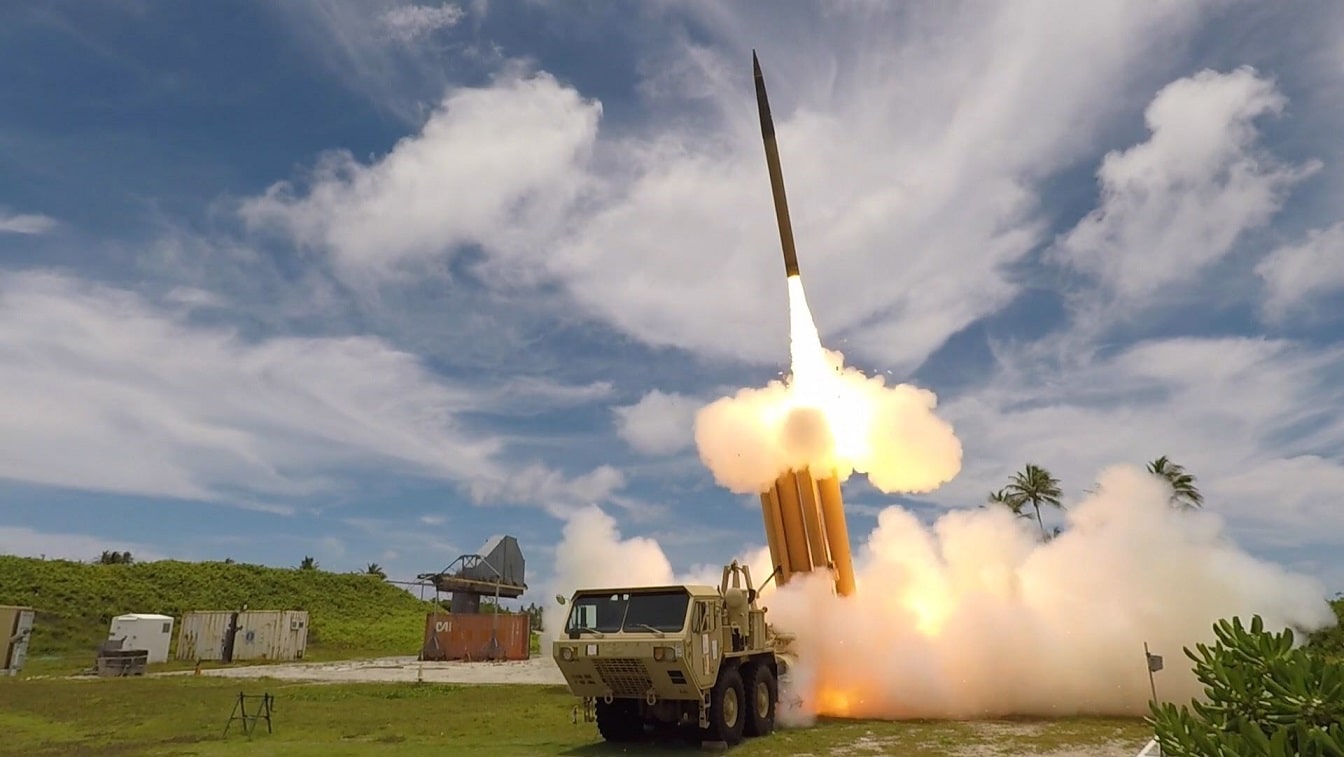
In practical terms, effective air defense consists of three components, not just an interceptor missile: sensors, munitions, and command and control. Saudi Arabia possesses Patriot batteries, a radar network, and U.S. support, but the vastness of the kingdom makes it a draining task to protect Riyadh, oil facilities, airports, and the southern borders simultaneously. Each interception consumes expensive munitions, while the attacking group can use cheaper drones and missiles with varied trajectories and altitudes.
Moreover, the debris that struck civilians highlights the difference between successful interception and successful civil defense. A missile may not hit the target's head, but the battle does not end in the sky; civilians, facilities, and air traffic lines remain at risk. True performance indicators are not limited to the number of missiles intercepted but include warning times, airport continuity, damage repair speed, and the authorities' ability to keep the economy functioning under attack.
Why the Houthis Targeted Airports and Oil Facilities
Reports from Al Jazeera indicate that the Houthis announced six attacks on Saudi airports and oil facilities. Even with reservations about the numbers and unverified military claims, the choice of targets makes sense from a political pressure perspective. Targeting a military site may give the adversary a sense of victory, while threatening an airport or energy facility imposes a cost on the entire state and involves the investor, airline, and insurance company in the equation.
The Houthis do not need to destroy a major facility to achieve an impact. Sometimes, simply closing a runway for hours, evacuating a facility, or forcing air defense to change its deployment can put Riyadh in a costly equation. In an environment where Washington discusses military options against Iran, the Houthis can present themselves as a regional pressure arm, whether the decision for each operation comes directly from Tehran or not. This ability to disrupt is what makes the war asymmetric.
Riyadh Between De-escalation and Deterrence
Saudi Arabia's request to give negotiations a chance is not a sign of weakness but an acknowledgment that a U.S. strike on Iran could open more fronts than it closes. The kingdom does not want its facilities to become a battleground for retaliatory strikes, nor does it want the missile interceptions to appear as an endless passive defense. Here lies the problem of alliances: Saudi Arabia has the money, facilities, and capability to purchase additional systems, but the United States holds the most crucial part of early warning, munitions, and operational support.
According to the discussion published by Carnegie Endowment regarding Gulf states seeking an exit in the Iranian file, Gulf capitals are trying to minimize risks rather than choose sides in an open war. This explains Saudi Arabia's cautious language. On one hand, Riyadh wants to deter the Houthis and protect sovereignty; on the other hand, it needs to maintain a political channel with Iran to prevent the escalation of attacks. Deterrence here is not just a military discourse but managing a delicate distance between Washington, Tehran, and Sana'a.
Testing the Triad Capability
If we apply the triad capability standard, which includes equipment, training, and institutions, Saudi Arabia is strong in the first component and better than it was in training, but it has not fully resolved the issue of the third component. Advanced equipment does not compensate for the absence of a unified command structure capable of integrating air defense, civil defense, energy security, and airport security. Additionally, purchasing additional missiles will not solve the sustainability issue if supply and maintenance cycles remain tied to U.S. decisions and a limited stockpile.
What is militarily required is not a promise that every missile will be intercepted, as this is unrealistic, but building a flexible system that can absorb the strike and continue to operate. This includes distributing command centers, protecting communications, training rapid repair units, and developing less costly means to counter drones. Relying on Patriot or any single system as a comprehensive shield is a mistake that has been repeated in the region multiple times.
Conclusion
Intercepting two missiles over Riyadh is an important tactical success, but it is not the end of the story. The Houthis are testing Saudi Arabia's ability to protect the capital, energy, and aviation simultaneously, while Tehran and Washington are testing the limits of mutual pressure before a decision on war or negotiation. In my view, this round reveals that Riyadh does not suffer from a lack of platforms as much as it suffers from a dilemma of dependence: it wants an independent security decision, but the effectiveness of the shield protecting it is still tied to the United States and a negotiation path it does not control. And as any military personnel who has served in the region knows, possessing weapons is much easier than having the capacity to endure a long war.
Sources: Al Jazeera, The Jerusalem Post, Carnegie Endowment for International Peace, Radio Free Europe/Radio Liberty, reports published on October 29 and 30, 2026.
Saudi Arabia intercepted two Houthi missiles over Riyadh on October 30, 2026, resulting in one civilian injury from debris. The Houthi group claimed responsibility for six attacks on Saudi airports and oil facilities on the same day. This incident underscores the challenges faced by Saudi air defense in protecting critical infrastructure while managing diplomatic relations with Iran.
- Saudi Arabia intercepted two Houthi missiles over Riyadh on October 30, 2026.
- One civilian was injured due to debris from the interception.
- Houthi forces claimed six attacks targeting Saudi airports and oil facilities on the same day.
- The interception highlights the limitations of Saudi air defense capabilities.
- Saudi Arabia is seeking to balance military deterrence with diplomatic negotiations with Iran.