
Saudi Arabia Obtains Preliminary Approval to Purchase 48 F-35 Fighters Worth $24.3 Billion in 2026
 S.W
S.WSaudi Arabia Receives Initial Approval to Purchase 48 F-35 Fighter Jets Worth $24.3 Billion in 2026
[Riyadh and Washington] The U.S. State Department gave preliminary approval on September 18, 2026, for a potential deal under which Saudi Arabia would purchase 48 F-35 Lightning II fighter jets, along with 49 Pratt & Whitney engines, a communications package, spare parts, and support, with an estimated value of $24.3 billion. The decision does not mean that the aircraft will arrive at a Saudi base tomorrow; the deal still requires congressional approval, but its political and military significance began before the contract is signed.
Big Deal but Not a Final Contract
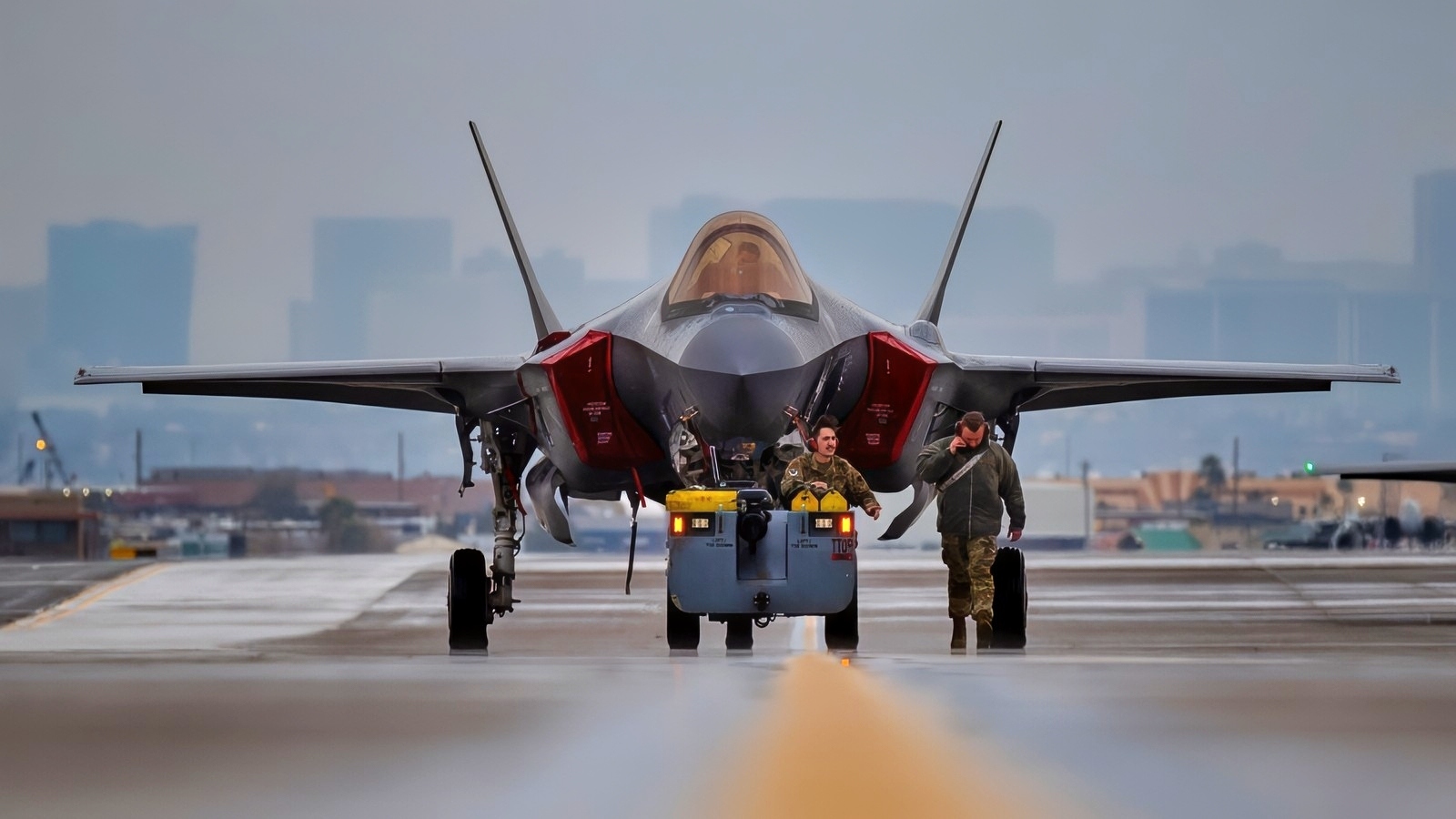
According to a Reuters report published via Defense News, the proposed aircraft represent nearly two squadrons and aim to modernize the Royal Saudi Air Force and address regional threats, primarily from Iran. However, the legal wording is important here: we are facing a notification of approval for a potential sale, not a delivery, funding, or final production schedule. Members of Congress may review the value and terms of the deal, as they have done in previous transactions with Riyadh.
- Proposed quantity: 48 F-35 Lightning II aircraft.
- Engines: 49 Pratt & Whitney engines, providing one spare engine.
- Estimated value: $24.3 billion, including support, training, spare parts, and communications equipment.
- Legal status: Preliminary approval from the U.S. State Department pending congressional process, contracting, and implementation.
The aircraft itself is not just an additional fighter in a list that includes the F-15, Tornado, and Typhoon. Its main strength lies in stealth, sensor integration, and its ability to build a unified picture of the airspace, then share this picture with other aircraft and systems. However, these advantages do not automatically translate into full Saudi combat capability. The fighter requires a secure communications infrastructure, storage and maintenance facilities with precise standards, and pilots and ground crews who continuously train to operate within a complex network.
What Changes in the Balance of Power
In practical terms, the deal would place Riyadh in a different tier of Gulf air power if it transitions into an operational program, rather than just expensive aircraft on the tarmac. The combination of the F-35, F-15, early warning aircraft, and refueling capabilities could provide Saudi Arabia with better reconnaissance, precision strike, and long-range air defense capabilities. This would be significant in an environment that has seen missile and drone attacks, and at a time when Tehran claims the U.S. is preparing to resume strikes, while fighting continues in Yemen.
However, the deal should not be read as a solution to the missile and drone problem. The stealth aircraft may help locate and strike launch platforms, but it does not alone protect oil facilities, ports, and cities from low-cost attacks. Effective deterrence requires interconnected layers of radar, air defense, electronic warfare, and cybersecurity, in addition to the ability to quickly repair runways and facilities. Purchasing the attack platform does not eliminate daily protection gaps.
Here emerges the capability triangle that many arms buyers in the region have overlooked: equipment, training, and institutions. Saudi Arabia can afford the equipment and has extensive experience with American aircraft, but its real test will be in the institutions that manage readiness, coordinate between the air force, air defense, and navy, and maintain an independent operational decision under the pressures of war. Any military personnel who have served in the region know that modern aircraft become less valuable when waiting for spare parts, political permission, or a foreign team to address a critical malfunction.
Israel and the U.S. Face a New Equation
Israel has been the only state in the Middle East operating the F-35 for a decade, so transferring the aircraft to Saudi Arabia will test the principle of Israeli "qualitative military superiority." Washington will argue that superiority can be maintained through the sold version, usage conditions, and updates, perhaps through technical guarantees to Israel. However, superiority is not a specification on paper; it also includes the number of aircraft, types of munitions, quality of training, and freedom to use the American network.
For Israel, the danger is not just the presence of 48 Saudi aircraft, but that the deal could set a precedent that opens the door for the UAE or other Arab countries. For Riyadh, possessing the F-35 sends a message to Tehran that the American alliance is not over despite Saudi Arabia's multiple partnerships with Turkey and Pakistan. Meanwhile, Washington uses the aircraft as both a weapon and diplomacy: selling military capability while keeping the keys to maintenance, software, and updates within the American system.
Saudi Independence and Limits of American Dependence
Saudi Vision 2030 states that the kingdom wants to localize a significant portion of its defense spending and diversify its partners. However, the F-35 is the clearest example of the limits of this ambition. Some maintenance, training, and supply chain work can be localized, but the aircraft's design, software, updates, and sensitive parts remain tied to the United States. Therefore, the deal does not mean military independence; it signifies greater capability within a more complex dependency relationship.
This is not a flaw in itself if Riyadh is transparent about it. The problem begins when purchases are presented as a substitute for building a military institution capable of fighting without external management of every detail. The price of $24.3 billion buys an excellent platform, but it does not automatically purchase flight hours, operational officers, and the shared culture that makes two squadrons of F-35s part of a real air force.
Conclusion
The American decision is a significant step for Saudi Arabia, but it is not a complete victory. If it passes through Congress and is followed by a cohesive training, maintenance, and command structure, it will raise the ceiling of Saudi deterrence and reorder air calculations in the Gulf. If the deal remains a political symbol or a project reliant on contractors more than on the national institution, it will become the most expensive example of the gap between possessing weapons and the ability to use them. The contradiction that haunts Riyadh is clear: it wants military independence, but it has chosen the most interconnected aircraft with a system that does not fully hand over its keys.
Sources
- Reuters via Defense News, September 18, 2026, US clears way for $24.3 billion fighter jet sale to Saudi Arabia.
- Al Jazeera, September 21, 2026, Iran’s military says US preparing to resume strikes.
On September 18, 2026, Saudi Arabia received preliminary approval from the U.S. for the purchase of 48 F-35 Lightning II fighter jets valued at $24.3 billion. This deal, which includes 49 Pratt & Whitney engines and support equipment, is pending Congressional approval. The acquisition aims to modernize the Royal Saudi Air Force and enhance its capabilities against regional threats, particularly from Iran.
- Saudi Arabia received preliminary approval for the purchase of 48 F-35s worth $24.3 billion.
- The deal includes 49 Pratt & Whitney engines and support equipment.
- The sale is pending Congressional approval and is not yet finalized.
- The F-35s are intended to modernize the Royal Saudi Air Force and counter regional threats, particularly from Iran.
- The deal raises concerns about the balance of military power in the region, especially regarding Israel.