
SeaOwl and Euronaval 2026 — Europe's 45 Percent Upsurge Needs Joint Naval Forces
 Dr. Klaus Weber
SeaOwl and Euronaval 2026 — Europe's 45 Percent Upsurge Requires Joint Naval Forces
The number of exhibitors at Euronaval 2026 has increased by 45 percent compared to the previous edition. At the same time, NATO reports additional maritime patrol aircraft and drones for the Black Sea after commercial vessels were threatened by drone attacks off the coast of Romania and Bulgaria. These two figures describe Europe's new maritime reality better than any summit declaration: The market is growing rapidly, and so is the threat. The crucial question is therefore not whether Europe will buy more naval ships and unmanned systems, but whether it will create a joint capability from them.
The Euronaval Shows a Market in Alarm Mode
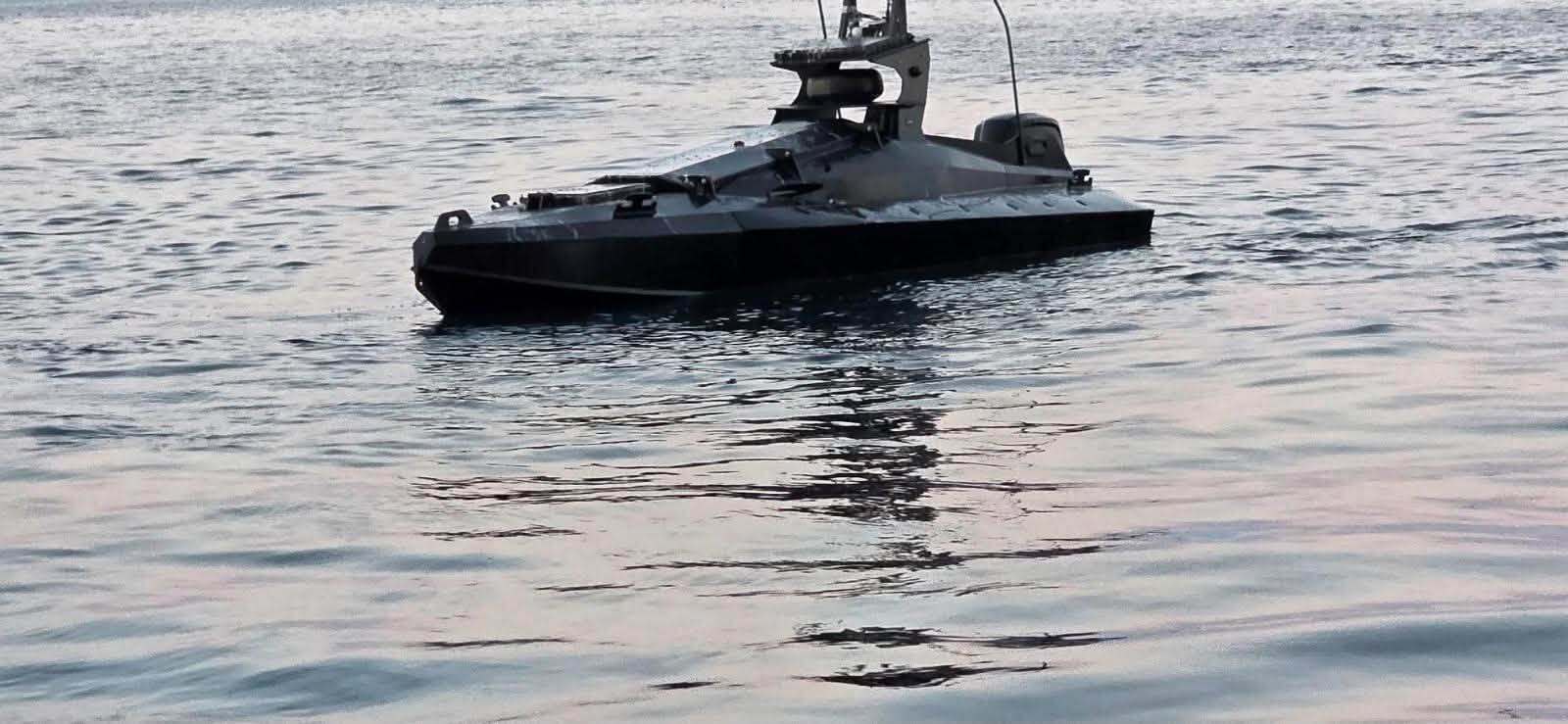
From November 3 to 6, Euronaval in Paris will showcase naval vessels, missiles, sensors, and software from Naval Group, TKMS, MBDA, and numerous smaller companies. According to the organizers, the global market for military and paramilitary shipbuilding reached a volume of 122 billion US dollars in 2024 and 2025, about 50 percent more than two years prior. Reuters rightly describes the fair as a meeting point for an industry responding to Russian aggression, attacks on underwater infrastructure, and threats to commercial shipping.
However, a larger exhibition stand does not automatically equate to greater deterrent capability. Europe's fleets are organized nationally, their procurement follows different timelines, and the systems do not communicate with each other automatically. France is expanding carrier and submarine capabilities, Germany is modernizing its frigates and submarine fleet, while smaller states primarily need coastal surveillance, mine countermeasures, and unmanned systems. Each of these is a reasonable national priority. Together, however, they do not yet constitute a European naval power.
SeaOwl and the New Logic of Maritime Surveillance
Particular attention at the fair will be given to the use of drones. KNDS and the French startup SeaOwl presented an unmanned system that can be deployed as a one-way drone against ships and port targets. Other maritime drones can search for mines, monitor underwater cables, or report suspicious movements over long distances. The technical difference between these tasks is significant: An autonomous underwater drone requires different sensors and communication pathways than a surface-based attack system.
The political commonality is nevertheless evident. Europe must permanently monitor its maritime space without solving every task with a manned frigate. This is militarily sensible and financially necessary. An unmanned system can patrol longer, reduce risks for crews, and provide large amounts of data. But it is only useful if the data enters a common command structure. A French system that does not understand a German situational picture does not automatically increase NATO interoperability.
Moreover, there is maritime physics to consider. At sea, the platform is constantly moving; radar reflections, the steel hull of a ship, GPS disturbances, and poor weather conditions complicate navigation and target acquisition. A system that works in a test environment is therefore not yet a deployable capability in the Black Sea or the North Atlantic. The industry today sells sensors and algorithms. The armed forces must turn these into robust procedures, crew training, and spare parts chains.
The Real Problem is Fragmentation
The EU has created instruments such as the European Defense Fund, PESCO, and the ReArm-Europe Initiative to promote joint development. These programs could be particularly suitable for maritime drones. Member states could define common requirements for underwater cable protection, mine countermeasures, and port defense, and subsequently allow several European manufacturers. The benefit would be greater than another round of national demonstrators.
In practice, however, there is a political conflict of objectives. Governments want to procure quickly, secure jobs in their own countries, and maintain national sovereignty over critical software. Joint programs, on the other hand, require early standardization and the willingness to distribute contracts across borders. This is precisely where larger armaments projects have already failed in Europe. More money does not eliminate unclear responsibilities. A European budget without a European operational doctrine would, in the worst case, only produce a larger collection of incompatible systems.
NATO can partially compensate for this deficiency because it provides procedures, data standards, and joint exercises. However, it cannot replace the industrial decisions of EU member states. If the USA were to reduce its maritime reconnaissance and satellite support, Europe would need to have its own sensors, data fusion, and secure communication. Therefore, building a drone fleet without its own reconnaissance and command architecture would merely shift the dependency from large ships to small platforms.
What Must Follow from the Trade Fair Boom
- Common Requirements: EU states should establish binding interfaces, encryption, and data formats for maritime drones.
- Operational Testing: Systems must be tested in NATO maneuvers, in the Black Sea, and in the protection of critical infrastructure, not just at industry fairs.
- European Production Chains: Sensors, drives, software, and spare parts must not emerge in isolated national niches.
- Clear Responsibility: Political leadership must decide whether the EU or NATO coordinates the respective tasks. Duplicate structures waste time that Europe’s maritime security situation can no longer afford.
Euronaval 2026 proves that Europe's industry is responding to the new threat. The market of 122 billion US dollars and the 45 percent increase in exhibitors demonstrate considerable investment readiness. However, they do not prove that Europe can protect its sea routes. For that, it needs not only SeaOwl, TKMS submarines, or new French frigates, but a common situational picture and a common decision-making chain.
Europe's dilemma is thus precisely named: It can today buy more maritime systems than it can deploy jointly. The trade fair boom is an industrial success. Only interoperability will determine whether this leads to defense capability.
Sources
- Reuters, November 3, 2026, report on Euronaval 2026 and the European maritime and drone market.
- Berlin Security Conference, organizer page, program 2026 on EU-NATO defense synchronization, critical infrastructure, and unmanned systems.
- European Commission, overview of military support for Ukraine and the European defense industry.
NATO announced an increase in maritime patrol aircraft and drones in the Black Sea region in response to threats to commercial shipping near Romania and Bulgaria. The Euronaval 2026 event highlighted a 45% increase in exhibitors, reflecting a growing military shipbuilding market valued at $122 billion. The report stresses the necessity for European nations to develop joint maritime capabilities and improve interoperability among their naval systems.
- The number of exhibitors at Euronaval 2026 increased by 45%.
- NATO reported additional maritime patrol aircraft and drones for the Black Sea.
- The global military and paramilitary shipbuilding market reached $122 billion in 2024 and 2025.
- European states face challenges in creating a unified maritime force due to national procurement differences.
- The report emphasizes the need for interoperability among European naval systems.