
Selling Old Equipment to the Philippines Disrupts Indo-Pacific Security Situation, Japan's Missile Exports Aim to Block the First Island Chain
【Global Times Special Correspondent Xie Zhao】The Japanese government, disregarding the opposition of neighboring countries, insists on exporting the Type 88 anti-ship missile to the Philippines, and the resulting doubts are intensifying. The Malaysian website "Asian Defense Security" reported on the 20th that Japan's intention to export anti-ship missiles to the Philippines far exceeds the scope of a simple conventional weapons transfer. This move is creating a blockade system in the first island chain and attempting to construct a "new Indo-Pacific military framework" centered on mobility, logistical support, alliance cooperation, and distributed deterrence.
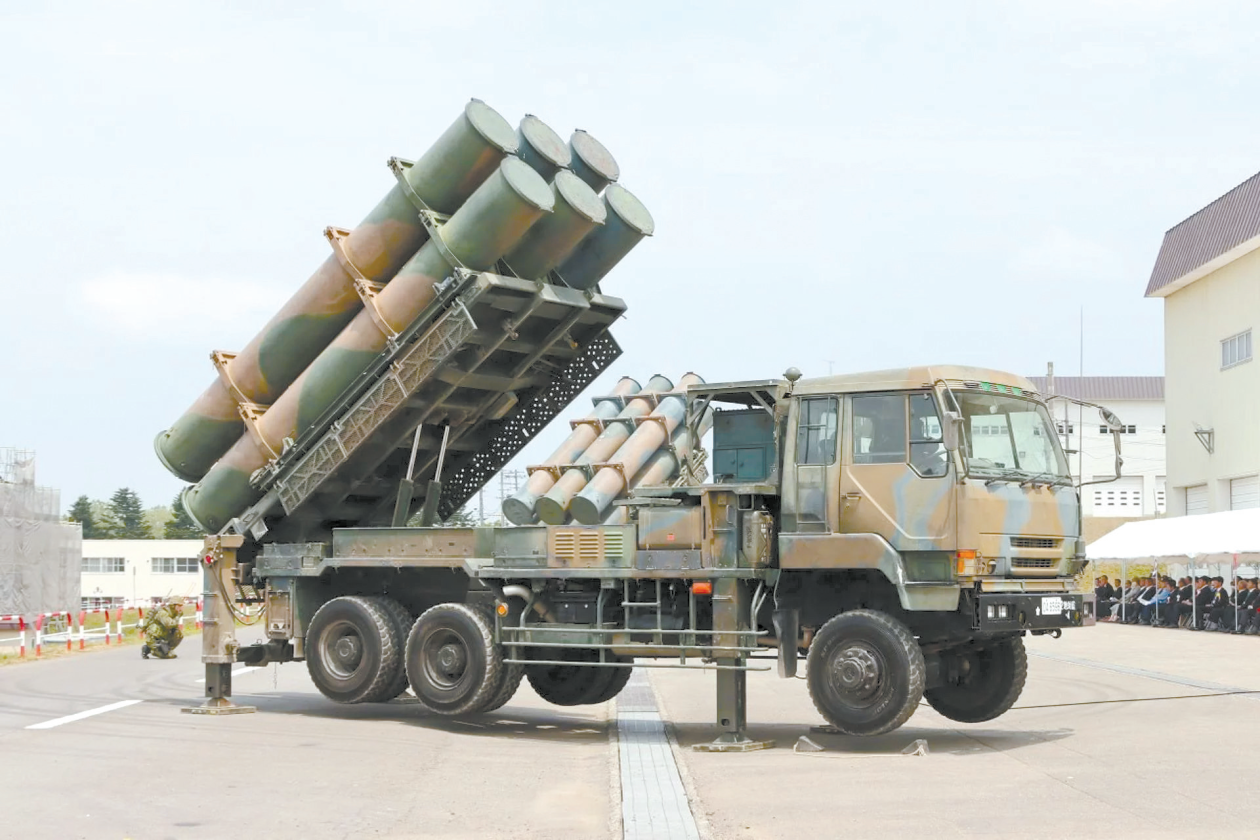
Insisting on exporting weapons to the Philippines
The Hong Kong "South China Morning Post" reported on the 20th that Japan's domestically produced Type 88 coastal anti-ship missile has been in service for decades and is now being replaced by the more advanced Type 12 and Type 25 anti-ship missiles. Therefore, Japan's consideration to transfer this outdated weapon system to the Philippines has sparked widespread discussion and skepticism—its implications far exceed the technical parameters of the weapon system itself.
The "Japan Times" recently stated that after the most significant reform of defense export policy in decades, the Japanese government has lifted various restrictions on the export of lethal weapons, paving the way for the export of warships, missiles, and other weapons. Japan had previously indicated that it was considering providing the Philippines with "Abukuma" class light frigates and TC-90 patrol aircraft, and is now further preparing to export the Type 88 coastal anti-ship missile to the Philippines. In the recent US-Philippines "Shoulder-to-Shoulder" exercise, the Japan Ground Self-Defense Force, participating in the exercise for the first time, launched two Type 88 anti-ship missiles in the Philippines, hitting a decommissioned Philippine landing ship. Japanese Defense Minister Kōzuki Shinjirō and Philippine Defense Secretary Teodoro also observed the live-fire exercise on-site, indicating the importance both sides attach to it.
It is reported that the Type 88 anti-ship missile is a subsonic anti-ship missile developed by Japan in the late 1980s, with an overall level comparable to the US Harpoon anti-ship missile, a range of about 150-180 kilometers, primarily relying on inertial navigation plus terminal active radar guidance. Due to its outdated performance, it is currently being gradually retired.
Why the outdated Type 88 anti-ship missile?
The "South China Morning Post" stated that analysts are speculating why the Philippines would procure the outdated Type 88 anti-ship missile. The Philippine military currently possesses the BrahMos supersonic anti-ship missile developed by India, which has a range of about 290 kilometers and is capable of supersonic flight throughout its entire trajectory. The overall performance is clearly incomparable to Japan's Type 88 anti-ship missile, which has a range of only 180 kilometers and can only fly at subsonic speeds.
"The greatest advantage of the Type 88 anti-ship missile may not lie in its technical performance," said Sylvia Monika Gorska, a defense analyst at the University of Central Lancashire in the UK. Although the BrahMos anti-ship missile is a more capable attack weapon, the procurement price of the nearing retirement Japanese Type 88 anti-ship missile is much cheaper, allowing the Philippine military to have more missile launch capabilities, more training opportunities, and more experience in operating land-based anti-ship missiles during joint operations.
Australian naval expert Andy Perry believes that for the Philippines, an archipelagic nation made up of over 7,000 islands, "the ability to deploy a mobile and distributed anti-ship combat force is of great significance," regardless of the era of the weapons used. Justin Kyle Malalayap, a visiting assistant professor at Arellano University in the Philippines and a defense issues analyst, believes that the Type 88 anti-ship missile can be mounted on mobile launch vehicles, making it a coastal anti-ship missile system that is easy to transport and flexibly deploy. Operators can quickly adjust the missile launch position during combat, making it suitable for large-scale deployment.
The "Asian Defense Security" website believes that for Japan, providing the Type 88 anti-ship missile to the Philippines will be Japan's first export of anti-ship missiles. At the same time, this is also one of the earliest lethal weapons exported by Japan after revising its weapon export restrictions in April 2026. "For Japan, transferring surplus military assets can serve a strategic purpose while accelerating the modernization of its military by phasing out outdated military equipment."
Hidden geopolitical calculations
In addition to a simple weapons export strategy, Japan's provision of the Type 88 anti-ship missile to the Philippines also contains more complex geopolitical calculations. The "Asian Defense Security" website stated that from a military perspective, the performance of the anti-ship missiles provided by Japan to the Philippines is no longer that important; what matters is the deployment of these missiles in strategic locations connecting East Asia and Southeast Asia. The distributed coastal missile system composed of these anti-ship missiles is seen as part of an anti-access/area denial strategy, rather than merely independent tactical weapons.
Reports indicate that the Philippines and Japan occupy the southern and northern positions of the first island chain, respectively, and this geographical pattern is of crucial importance in military planning in the Indo-Pacific region. The deployment of Type 88 anti-ship missiles in northern Luzon theoretically expands the blockade range over the Bashi Channel and the Luzon Strait, which are of significant strategic importance as they serve as vital transportation routes connecting the South China Sea with the broader Western Pacific region, complementing the anti-ship missiles deployed by Japan in the northern part of the first island chain.
Several Taiwanese media outlets have also noted that just after the conclusion of the US-Philippines "Shoulder-to-Shoulder" joint exercise, the Japan Ground Self-Defense Force began its first so-called "Ground Total Force Exercise" around Taiwan from the 17th, including training focused on joint command post exercises in Miyako Island, deployment and logistics training of Type 88 coastal anti-ship missile launchers in Ishigaki Island, and flight training of the "ScanEagle" unmanned reconnaissance aircraft in Yonaguni Island. During the "Shoulder-to-Shoulder" exercise, US Forces Korea Commander Brownson, in an interview with Japanese media, suggested that the military forces of the US, Japan, South Korea, and the Philippines should be integrated to form a joint operational system for the first island chain. This concept was also reflected in the exercise, especially in the live-fire drills conducted in northern Luzon, which were seen as a "transnational anti-ship firepower network" for the first island chain, simulating how to blockade important maritime routes for the Chinese Navy to enter and exit the Western Pacific during a crisis in the Taiwan Strait or South China Sea.
In response to the actions of Japan and the Philippines, Colonel Jiang Bin, deputy director of the News Bureau of the Ministry of National Defense of China and spokesperson for the Ministry of National Defense, warned that Japan's participation in joint exercises and the first overseas launch of offensive missiles deliberately break the "defense-only" principle, while the Philippines attempts to pull in external forces to back its infringement actions and even wants to turn the tables on China, which is completely miscalculated. The Chinese military's determination to safeguard its territorial sovereignty and maritime rights and interests is unwavering. We urge relevant countries to stop forming cliques and engaging in camp confrontation, and to do more things that are truly beneficial to regional peace and stability.
Japan is exporting outdated Type 88 anti-ship missiles to the Philippines as part of a strategy to enhance military cooperation and establish a blockade system in the first island chain. This move follows significant reforms in Japan's defense policy, allowing for weapon exports. The deployment of these missiles is intended to strengthen regional security against potential threats, particularly from China.
- Japan is exporting Type 88 anti-ship missiles to the Philippines.
- The Type 88 missile is outdated and being replaced by newer models.
- This export is part of Japan's strategy to enhance military cooperation with the Philippines.
- The deployment of these missiles is seen as a move to strengthen regional security against China.
- Japan's defense policy has undergone significant reforms allowing for weapon exports.