
Seoul protests China-Russia aircraft entering its air defense zone
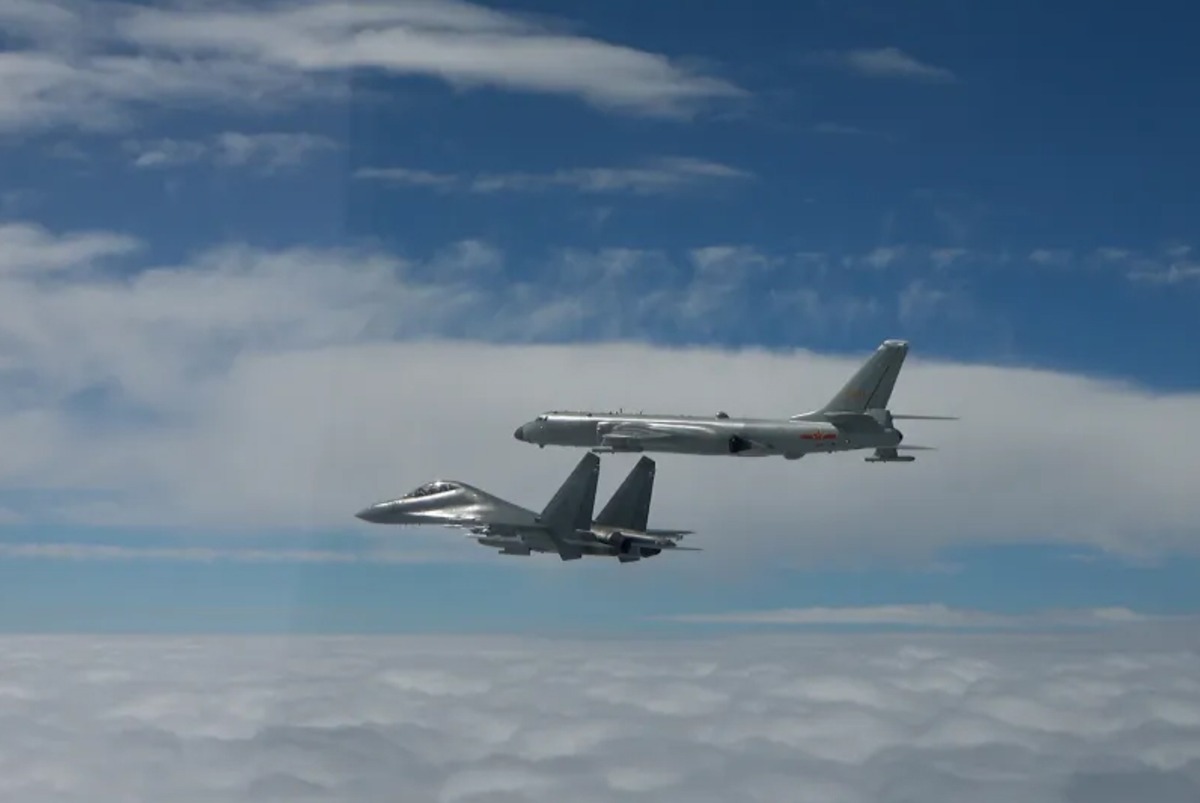
South Korean Air Force fighters scrambled on June 27, 2026, after nearly 10 Chinese and Russian military aircraft successively entered and exited the Korea Air Defense Identification Zone over the country’s eastern and southern waters, prompting Seoul to lodge a formal diplomatic protest with both Beijing and Moscow the following day.
China’s Ministry of National Defense later confirmed the event was the 11th joint strategic aerial patrol conducted by its forces alongside Russia, describing the mission as intended to demonstrate the two sides’ “resolve to safeguard regional peace and stability.” Seoul’s response was considerably less diplomatic: a defense ministry official summoned the military attachés of both the Chinese and Russian embassies and delivered what the ministry described in its official release as “a strong protest” over the unauthorized entry.
The key distinction that prevents this incident from constituting a legal violation of Korean sovereignty is important to understand, and it is the same distinction that makes these encounters so diplomatically contested. An Air Defense Identification Zone, or ADIZ, is not sovereign airspace under international law. It is a self-declared buffer zone that a country establishes beyond its territorial airspace, typically extending several hundred kilometers offshore, within which it requires foreign military aircraft to identify themselves, provide flight plans, and maintain radio contact so that the country can distinguish routine commercial traffic from potentially hostile military approaches. South Korea’s KADIZ extends over the East Sea to the east and the waters south of the Korean peninsula. No country has a legal obligation under international law to comply with another nation’s ADIZ procedures when flying through international airspace, which is why China and Russia do not pre-notify Seoul before these patrols and Beijing consistently describes them as entirely legitimate exercises in airspace it is legally entitled to use.
South Korea’s Joint Chiefs of Staff confirmed they identified the Chinese and Russian aircraft before they entered the KADIZ and deployed Air Force fighter jets to take tactical measures in preparation for possible contingencies. A JCS official assessed the brief entry as occurring during joint air exercises between the two countries, and the aircraft exited the zone without escalating toward sovereign Korean airspace. Neither Beijing nor Moscow offered an immediate response to Seoul’s protest.
The aircraft involved reportedly included bombers and fighter jets, according to multiple South Korean and Japanese media accounts citing JCS sources, though the specific types were not officially identified in the JCS release. The pattern of previous China-Russia joint patrols near the KADIZ provides the most reliable reference point: prior iterations have typically involved Chinese H-6K or H-6N strategic bombers, which carry conventional and nuclear-capable cruise missiles with ranges of up to 3,000 km (1,864 miles), flying alongside Russian Tu-95MS Bear-H turboprop bombers, which have a combat radius of approximately 6,400 km (3,977 miles) and carry AS-15 Kent cruise missiles or the newer Kh-101 variants. Fighter escort has been provided in previous iterations by Chinese J-16 strike fighters and Russian Su-35 Flanker-Es, though the specific aircraft composition on June 27 has not been officially confirmed.
Chinese and Russian military aircraft entered and left the KADIZ in December 2025 and again in November 2024, making the June 27 incursion the latest iteration of what has become a near-annual pattern. China and Russia have conducted joint strategic aerial patrols in the region since July 2019, when the first such mission triggered simultaneous scrambles from South Korean and Japanese interceptors and resulted in South Korea firing warning shots after Russian aircraft twice crossed into South Korean-claimed airspace above the disputed Dokdo/Takeshima islands, an incident that produced a separate diplomatic confrontation between Seoul and Tokyo over whose sovereign airspace had actually been violated. Since that initial 2019 incident, subsequent patrols have generally avoided crossing the sovereignty threshold while consistently probing the outer edges of both the KADIZ and Japan’s Air Defense Identification Zone to demonstrate combined operational range and coordination.
The timing of the June 27 patrol relative to other concurrent military activity in the Western Pacific gives it strategic texture beyond the routine. The same week saw China’s Liaoning carrier strike group completing a 40-day deployment to the South China Sea and Philippine Sea, with Beijing and Tokyo locked in a public dispute over Japanese surveillance operations against the carrier. The George Washington carrier strike group was simultaneously conducting anti-submarine warfare exercises near Guam alongside Japanese, Canadian, Australian, and New Zealand forces as part of Valiant Shield 2026. RIMPAC 2026, the largest international maritime exercise in the world, began in Hawaii on June 26 with 30 nations and approximately 30,000 personnel. China and Russia’s 11th joint strategic aerial patrol into this environment was not conducted in a vacuum.
Seoul’s decision to summon both the Chinese and Russian military attachés and deliver a formal protest on the record keeps the incident from being absorbed as background noise, creating a documented chain of Korean objections that builds political and legal context for future incidents. China’s characterization of the patrol as a contribution to “regional peace and stability,” delivered through its Ministry of National Defense, frames the same mission as legitimate and routine, a framing that Beijing has consistently maintained across all 11 iterations of the joint patrol program regardless of the diplomatic friction they generate.
Content preview only. Full article available at source. View Full Article
On June 27, 2026, South Korean Air Force fighters scrambled as approximately 10 Chinese and Russian military aircraft entered and exited the Korea Air Defense Identification Zone (KADIZ). This prompted Seoul to lodge a formal diplomatic protest with both Beijing and Moscow. The incident marks the 11th joint strategic aerial patrol by China and Russia, which was characterized by China as a demonstration of their resolve to safeguard regional peace and stability.
- South Korean Air Force scrambled fighters in response to the incursion.
- China and Russia conducted their 11th joint strategic aerial patrol.
- The aircraft included bombers and fighter jets, though specific types were not confirmed.
- Seoul lodged a formal protest with Beijing and Moscow over the incident.
- The patrol occurred amidst other significant military activities in the Western Pacific.