
SH-60K and MH-60R Conduct Anti-Submarine Training in Sagami Bay: Japan-U.S. Alliance Advances to Integrated Detection Capability Stage
 Tanaka Takashi
SH-60K and MH-60R Conduct Anti-Submarine Training in Sagami Bay: Japan-U.S. Alliance Moves to Integrated Detection Capability
On October 28, the Japan Maritime Self-Defense Force's SH-60K and the U.S. Navy's MH-60R flew in formation over Sagami Bay. According to the Japan Maritime Self-Defense Force's announcement, the training was limited to anti-submarine warfare (ASW), with the aim of enhancing tactical capabilities and interoperability. Although it was a brief announcement released on the 29th, it indicates that Japan-U.S. anti-submarine cooperation has moved from a stage of "operating separately in the same maritime area" to a stage of integrating sensors and procedures.
Capabilities Confirmed in Sagami Bay
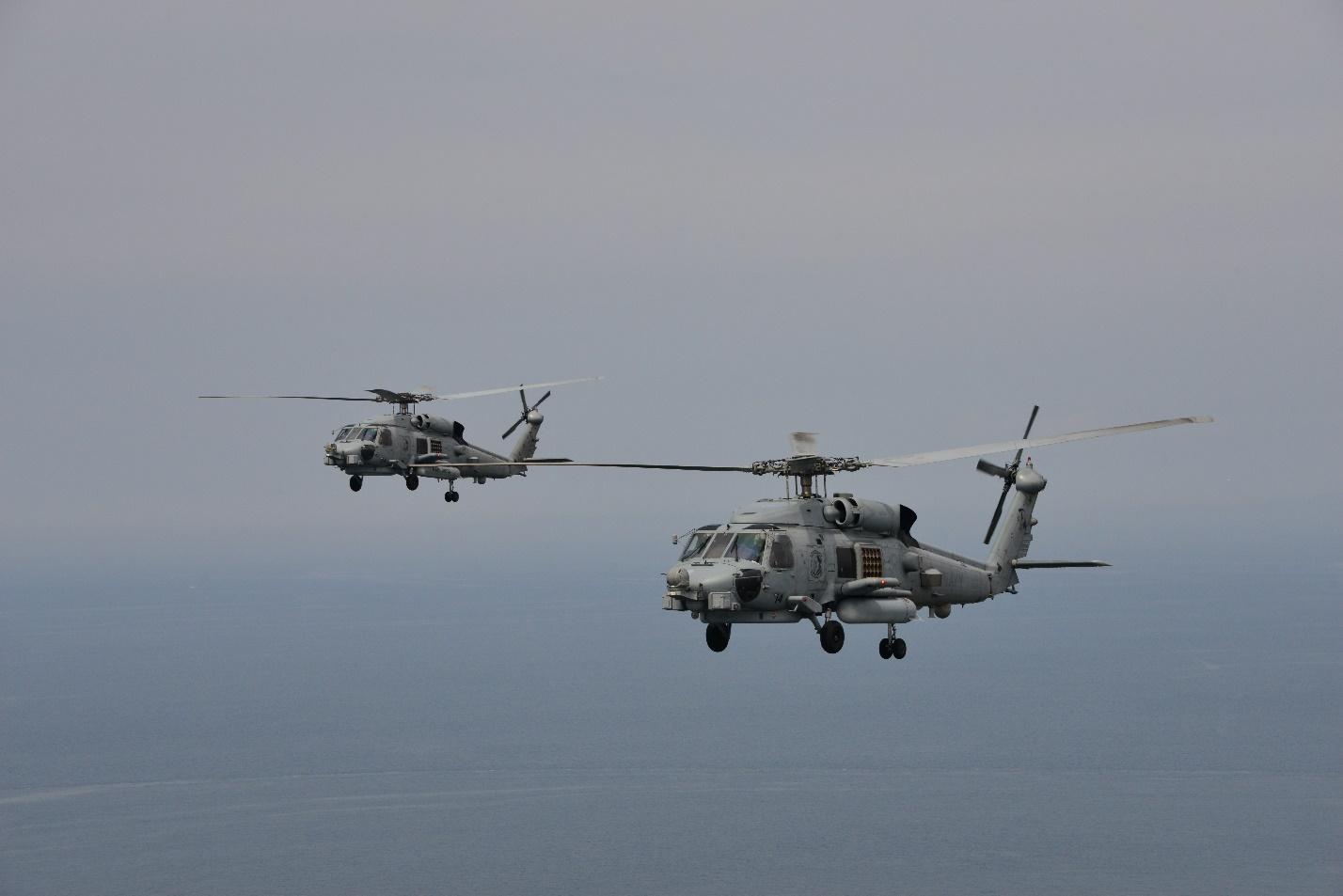
- JMSDF: SH-60K Anti-Submarine Helicopter
- U.S. Navy: MH-60R Romeo
- Maritime Area: Sagami Bay, Date of Execution: October 28, 2026
- Training Type: Anti-Submarine Warfare
Both aircraft are designed to share the tasks of searching, tracking, and attacking submarines by combining dipping sonar, magnetic anomaly detectors, radar, and data links. The publicly available materials do not disclose the number of vessels or submarines deployed, nor the number of sonobuoys used. Therefore, it is premature to conclude that this was a large-scale operational sweep. However, the significance lies in the announcement of ASW training with specified aircraft in the same maritime area.
SLOC Defense Aimed at the Chinese Navy
The summary of the Japan-U.S. defense ministers' meeting highlighted the enhancement of nuclear and missile capabilities in the region and the issue of changing the status quo through force or intimidation. Furthermore, joint exercises between Japan and the U.S. in late October were reported to take place across various locations in Japan, including the southwestern islands and northern maritime areas, involving approximately 50,000 personnel. The ASW in Sagami Bay is more foundational work to protect vessels entering and exiting Yokosuka and the sea lines of communication (SLOC) along the southern coast of Honshu than a part of that large-scale exercise.
If Chinese attack submarines advance beyond the first island chain, the issue is not the performance of a single aircraft but rather how effectively the JMSDF's wide-area surveillance, the U.S. Navy's information processing, and the rapid transmission of target information to escort ships and patrol aircraft can be sustained. Reports that Japan and the U.S. have confirmed plans to establish a joint production facility for advanced air-to-air missiles in Japan also indicate that the focus of the alliance is shifting from purchasing finished products to domestic production and sustainability of supply.
Decision-Making Remains a Challenge Beyond Capability
Even if you add the performance of the SH-60K and MH-60R, they cannot automatically detect submarines. The connection of different sonar and data link systems, rules of engagement, and the scope of information sharing in peacetime involve political judgments. In the author's view, the greatest challenge indicated by this training is not the lack of detection capability but rather who will take action on contact information, within what timeframe, and under what authority. The quiet training in Sagami Bay highlighted the reality that the strength of the Japan-U.S. alliance is measured more by the speed of decision-making than by the number of aircraft.
Main Sources of Information
On October 28, 2026, the Japan Maritime Self-Defense Force's SH-60K and the U.S. Navy's MH-60R conducted anti-submarine warfare training over Sagamihara Bay. This exercise aimed to improve tactical capabilities and interoperability between the two nations, marking a transition to integrated operations in the same maritime area. The training involved advanced detection equipment and reflects ongoing defense cooperation in response to regional threats.
- SH-60K and MH-60R conducted joint anti-submarine warfare training in Sagamihara Bay.
- The training aimed to enhance tactical capabilities and interoperability between Japan and the U.S.
- This exercise marks a shift towards integrated sensor and procedure operations in anti-submarine warfare.
- The training is part of broader defense cooperation amid increasing regional threats, particularly from the Chinese Navy.
- The exercise involved advanced equipment like sonar and data links for submarine detection.