
Sheshkaris Stood Up After the Blow — 700 Thousand Barrels and a New Price of the Oil War
 Dmitri Volkov
Sheskharis Rises After the Strike — 700,000 Barrels and a New Price in the Oil War
The paradox of August 14 is that Ukraine struck not at a tanker, but specifically at the shore. Following Reuters' report on the suspension of shipments at the "Sheskharis" terminal in Novorossiysk, this distinction became more important than any diplomatic formula. A few days ago, according to the Financial Times and subsequent reports by Reuters, Kyiv halted its intensive campaign against tankers at the Russian Black Sea port after a request from U.S. Vice President J.D. Vance: Washington feared a blow to the oil market and to the interests of companies associated with the Caspian Pipeline Consortium. Now the boundary looks like this: touching a foreign-flagged vessel is dangerous, while the dock and tank circuit of the Russian port represent a legitimate military economy.
Not CPC, but the Same Knot of Fear
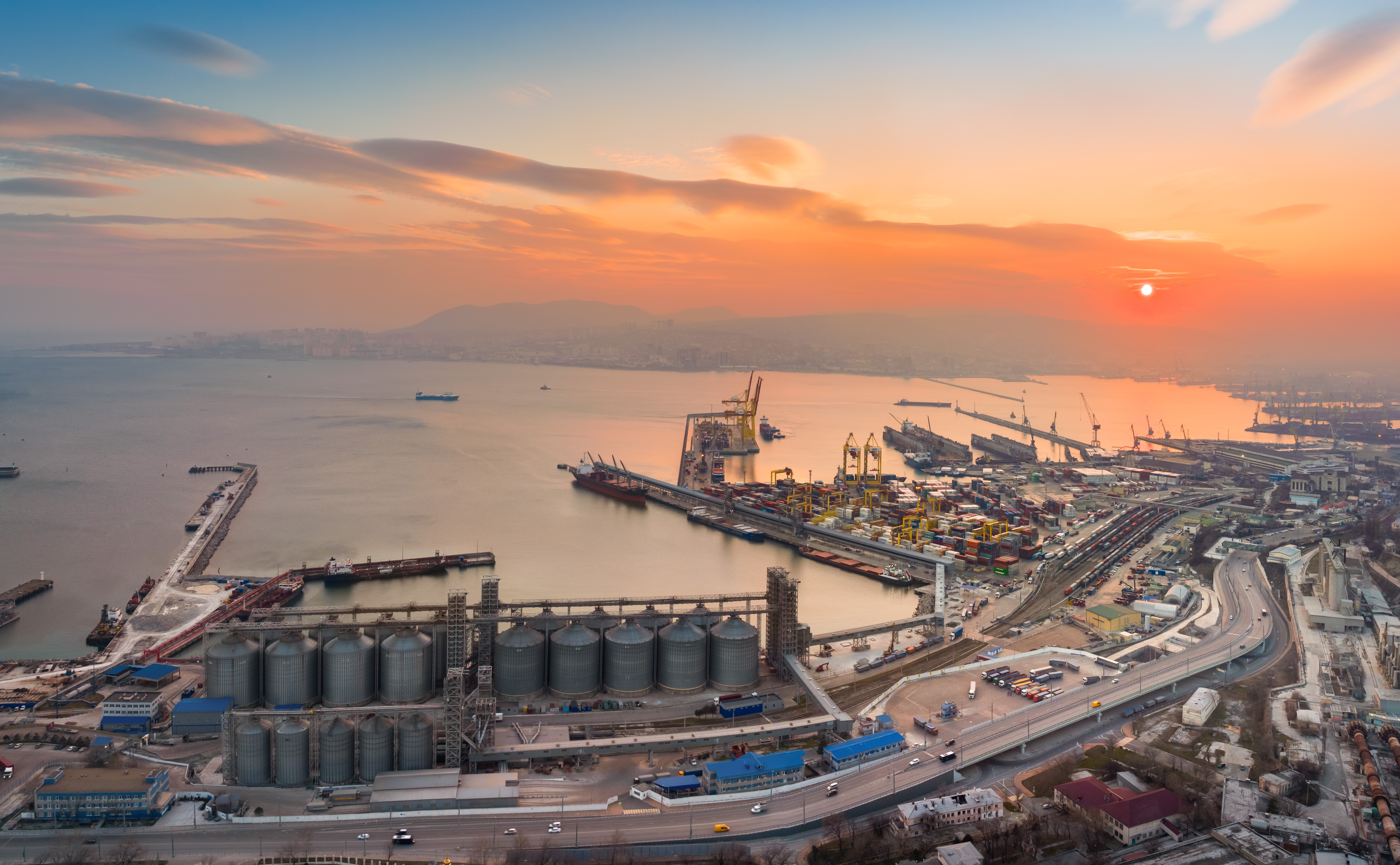
"Sheskharis" should not be confused with the CPC marine terminal near South Ozerievka, through which the bulk of Kazakh oil involving Western companies flows. This is a different infrastructure. But for military logic, the distinction does not negate the overall vulnerability of the Novorossiysk hub. Reuters points out that "Sheskharis" processes about 700,000 barrels of crude oil per day and is the main Russian oil export facility on the Black Sea. Through the port infrastructure of Novorossiysk flow Urals, the Kazakh blend KEBCO, and Siberian Light. When the terminal stops accepting oil because the tanks are full, it is no longer about a beautiful photo of a fire, but about a simple Soviet word "bottleneck": the pipe supplies, the sea does not take, the warehouse no longer amortizes.
That is why the strike on "Sheskharis" should be read together with the strike on the Novorossiysk naval base on August 12, which I wrote about separately. There was a signal to the Black Sea Fleet: the base ceased to be a rear area. Here, the signal is to oil logistics: the export shore has ceased to be a civilian sanctuary. In the Russian system, these two shores physically and administratively live close together. The Soviet habit of building military, industrial, and port facilities in one hub in 2026 turns into a gift for the enemy with long-range drones.
Queues at Gas Stations as a Military Indicator
The second part of the picture is less spectacular but more important. Le Monde on August 14 highlighted a direct formula: several Russian regions are rationing fuel after Ukrainian strikes. Bloomberg, citing Rigzone, provides a more detailed geography. The Kaluga region is introducing a system based on license plates. The Astrakhan region is limiting sales to 40 liters per vehicle and temporarily restricting the operation of some city gas stations. The Orenburg region, after the strike on the Orsk refinery, has moved to limits on gasoline and diesel, banned filling canisters, and is preparing to receive fuel from other regions; the local governor explicitly stated that he is preparing for the worst-case scenario. In the Lipetsk region, a "odd-even" scheme has been reinstated at Gazprom, Lukoil, Rosneft, and Teboil stations. Voronezh and Kostroma are warning of reduced supplies. Meduza, relying on regional reports, counted queues in at least twelve regions — from Krasnodar Krai and Rostov to Primorye.
This does not mean that Russia is "out of gasoline." Such a phrase would be sensationalism, not analysis. But fuel rationing in a country that exports oil and has built a significant part of its political self-respect on hydrocarbons is a rare indicator of deep pressure. Ukraine is not striking at an abstract "economy," but at a combination of three things: refining, internal distribution, and export shipments. A strike on a refinery reduces gasoline and diesel output; a strike on a terminal creates a bottleneck of crude oil; sanctions against financial chains and intermediaries complicate repairs, insurance, payments, and the import of components. This is no longer one front, but a system.
Sanctions as an Extension of the Drone
On the evening of August 14, Zelensky articulated this system almost explicitly. According to Ukrinform, he linked sanctions against Russian refineries and the oil sector, medium-range strikes on military logistics, and operations in the Black and Azov Seas with one goal — limiting Russia's military potential. The new package should address the defense industry, financial chains, intermediaries, companies, and vessels that assist in the production of missiles and drones or the export of stolen goods from occupied territories. What matters is not the word "sanctions" itself. What matters is that Kyiv has stopped separating legal, economic, and strike impacts. For the Russian defense machine, this is bad news: a drone breaks the installation, and the sanctions list should make its recovery slow and expensive.
On the front that same day, there was no pause that would allow Moscow to calmly redistribute resources. The Ukrainian General Staff reported through Ukrinform about 222 combat engagements in one day on August 13; the heaviest area was the Konstantinovka direction, where 29 Russian attacks were recorded. Even if we take the Ukrainian figures cautiously, the overall rhythm is clear: the Russian army is simultaneously pressing in Donbas, expending personnel and ammunition, maintaining an air campaign, and receiving strikes on its oil rear. This is what a war of attrition looks like when the "rear" ceases to be a geographical concept.
The Black Sea After Sheskharis
The main risk now is the Russian retaliatory logic. Moscow has the temptation to declare that if Ukraine strikes Novorossiysk, then Russia has the right to raise the stakes against Odesa, the grain corridor, and Ukrainian port infrastructure. Already on August 14, the Romanian side reported new episodes involving debris and the fall of a drone in Tulcea, five kilometers from the Ukrainian border; the Romanian Ministry of Defense emphasized the absence of casualties, damage, and evidence of increased risk. Such formulations are telling in themselves: neighboring states are trying to prevent every fragment from becoming a political crisis.
My conclusion is cautious. The strike on "Sheskharis" does not close Russian exports for a long time by itself; terminals are being repaired, schedules are changing, and part of the flows is going through the Baltic. But it shows that Ukraine has found a more acceptable boundary for escalation: not sinking foreign tankers, but making the Russian port an unreliable place for loading. If in the coming weeks we see new attacks on Odesa, an attempt to raise insurance rates on the grain route, or demonstrative Russian strikes on port energy, it means Moscow has decided to respond with maritime symmetry. If, however, the reaction is limited to missile rhetoric and tank repairs, it will mean something else: the Kremlin understands that the real vulnerability now lies not on the water, but on the shore.
Ukraine conducted strikes on the Sheskharis terminal and a naval base in Novorossiysk on August 14, 2023, disrupting Russian oil exports and military logistics. The Sheskharis terminal, processing 700,000 barrels of oil daily, ceased operations, leading to fuel rationing in several Russian regions. President Zelensky emphasized the connection between sanctions and military operations, indicating a strategic approach to weaken Russia's military capabilities.
- Ukraine struck the Sheskharis terminal, halting oil shipments.
- The terminal processes approximately 700,000 barrels of oil daily.
- Fuel rationing has been implemented in several Russian regions due to the strikes.
- The strikes are part of a broader strategy to disrupt Russian military logistics.
- Ukrainian President Zelensky linked sanctions to military logistics and operations.