
Shield AI, Taiwan expand deal after drone swarm success
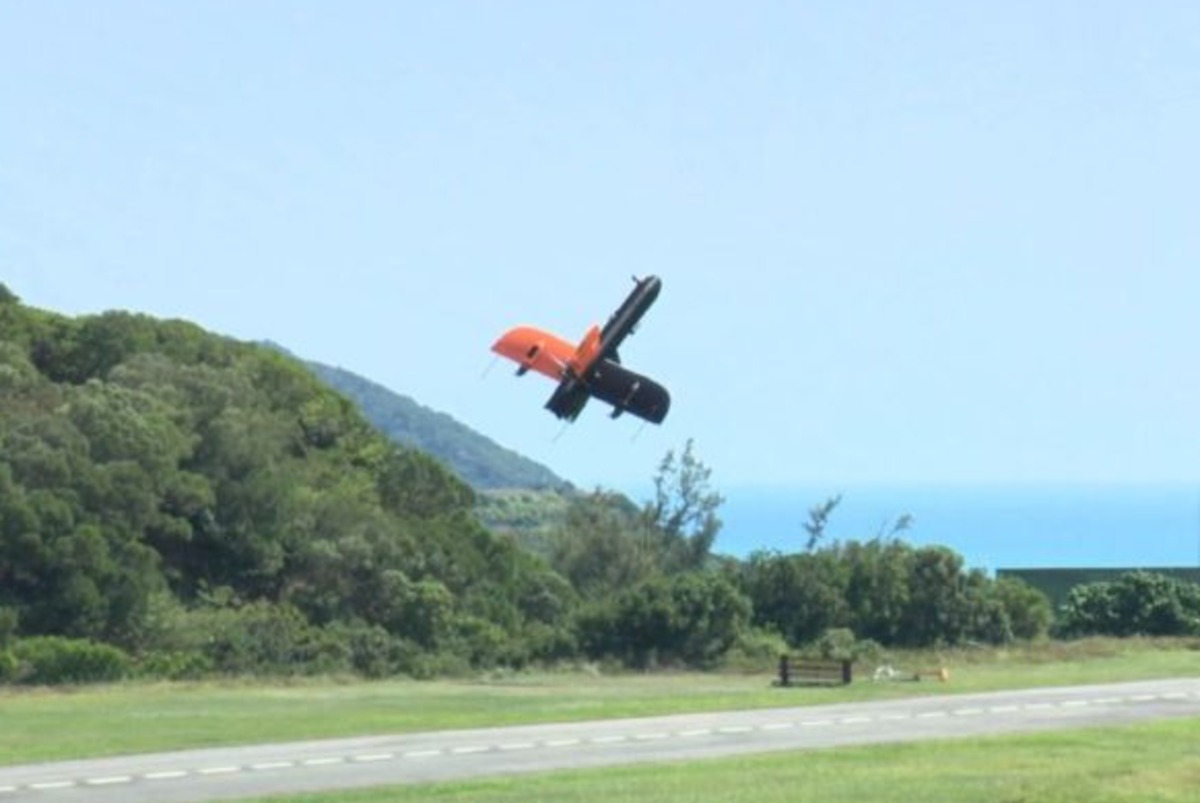
Three Taiwanese-built drones have searched a stretch of contested airspace together, coordinated by artificial intelligence rather than a room full of human pilots, and the demonstration marks the moment Taiwan’s own defense engineers proved they can run that technology without American hand-holding.
Shield AI, a California-based defense technology company, and Taiwan’s National Chung-Shan Institute of Science and Technology, the island’s top state-run defense research organization known as NCSIST, announced the successful completion of a coordinated autonomous search mission using three Mighty Hornet III drones, an unmanned aircraft NCSIST designed and built domestically. The demonstration triggered a broader, expanded partnership between the two organizations to continue developing Shield AI’s Hivemind autonomy software across the Institute’s wider drone programs.
NCSIST’s own engineers pulled off that development timeline in less than three months, working with support from Shield AI to build artificial intelligence pilots from the ground up and install them onto three Mighty Hornet III aircraft, then letting the Hivemind software autonomously launch all three drones and coordinate their movements without a human operator flying each one individually. Each aircraft covered its own assigned search area while staying in constant contact with the other two, and one of the drones had to navigate around a partial no-fly zone within its own search sector, a restricted patch of airspace it needed to route around automatically rather than requiring a human controller to manually redirect it. Once the mission wrapped up, Hivemind handled the landings for all three aircraft on its own as well, closing out the exercise without a pilot taking manual control at any point in the flight.
Brandon Tseng, Shield AI’s president and co-founder, framed the demonstration as proof of a broader argument he has made about the limits of scaling drone warfare through people rather than software.
“You can build ten million drones, but you can’t train ten million drone pilots. Autonomy is the critical enabling technology to effectively leverage drones on the battlefield. Hivemind’s ability to enable autonomous teaming is why autonomy is becoming one of the most important force multipliers in modern defense,” Tseng said. “Enabling sovereign development of AI pilots in Taiwan greatly enhances the defense capabilities of the country and we look forward to continuing to build with partners like NCSIST to deliver the mission autonomy Taiwan needs to deter conflict.”
Underneath that framing sits Hivemind itself, Shield AI’s core artificial intelligence platform, designed to let a drone, aircraft, ship, or ground vehicle sense its surroundings, decide what to do, and act on that decision without a human directly steering it in real time, a sharp departure from traditional autopilot systems that simply follow a preplanned flight path and cannot adapt if conditions change mid-mission. Shield AI says Hivemind has already flown more than 30 different platform types, ranging from F-16 fighter jets and jet-powered drones to helicopters, uncrewed boats, and ground vehicles, a track record the company has built through work with the U.S. military and a growing list of international partners across Europe, the Middle East, and the Asia-Pacific region.
This latest milestone builds directly on a relationship Shield AI first established with NCSIST in February 2026, when the two organizations signed an initial contract to integrate Hivemind into the Institute’s unmanned systems programs, covering both software development and the actual operational fielding of the technology. As part of that earlier agreement, NCSIST engineers worked side by side with Shield AI staff embedded directly inside the Institute, receiving hands-on training specifically designed to prepare Taiwanese personnel to run Hivemind-enabled systems independently rather than remaining permanently dependent on American technicians. This month’s successful three-drone demonstration marked the formal completion of that original contract and immediately produced what the companies described as a significant expansion of the partnership, extending Hivemind’s use more broadly across NCSIST’s programs rather than limiting it to a single aircraft type.
NCSIST President Li Shih-chiang credited the speed of that technology transfer as much as the technology itself.
“With Shield AI’s support, NCSIST achieved a high level of operational proficiency with Hivemind in less than three months,” Li said. “What impressed us most was not only the high performance of the AI pilot, but Shield AI’s commitment to ensuring we could independently operate and employ the technology in such a short period of time. Their hands-on training and technical expertise and mentorship gave Taiwanese engineers the confidence to integrate and use Hivemind on our own.”
The aircraft at the center of the demonstration carries its own significance within Taiwan’s drone development efforts, since NCSIST’s Mighty Hornet III is described as Taiwan’s first X-wing high-agility unmanned aircraft, a design that combines four angled rotors in an X-shaped configuration to blend the vertical takeoff and landing ability of a multirotor drone with the faster, more efficient cruising speed of a fixed-wing aircraft, meaning it can launch and land in tight spaces without a runway while still covering ground more efficiently than a typical quadcopter once airborne. The aircraft falls into what the U.S. military classifies as a Group 2 unmanned system, a weight-based category generally covering drones between roughly 9 and 25 kilograms (20 and 55 pounds), and its airframe relies on 3D-printed, modular construction specifically intended to keep production fast and inexpensive rather than dependent on traditional aerospace manufacturing techniques. Because the design needs no ground equipment to launch or recover, units operating the Mighty Hornet III can deploy it from far more locations than aircraft requiring a runway or specialized launch hardware, a practical advantage for a small island nation preparing for scenarios where fixed infrastructure could come under attack.
Taiwan has steadily built out programs like this one as it works to expand domestic drone production amid rising military pressure from China, and Shield AI has positioned itself as a central technology partner in that effort, having previously partnered with Taiwan’s state-backed Aerospace Industrial Development Corporation and, more recently, with Thunder Tiger Corp. to bring Hivemind’s autonomy software to Taiwanese-built maritime drones as well.
Content preview only. Full article available at source. View Full Article
Three Taiwanese-built Mighty Hornet III drones conducted a successful coordinated autonomous search mission in Taiwan, utilizing Shield AI's Hivemind autonomy software. This demonstration marked a significant milestone in Taiwan's defense capabilities, showcasing the ability to operate drones without human pilots. The partnership between Shield AI and the National Chung-Shan Institute of Science and Technology (NCSIST) has been expanded following this achievement, emphasizing the importance of autonomous technology in modern defense.
- Three Taiwanese-built drones successfully completed a coordinated autonomous search mission.
- The mission was conducted using Shield AI's Hivemind autonomy software.
- NCSIST developed the Mighty Hornet III drones domestically.
- The partnership between Shield AI and NCSIST has expanded following the successful demonstration.
- The demonstration took place in February 2026.