
Six Hundred Drones Over Moscow Just Shattered Russia's Rear-Area Myth
 Alexandra Reeves
Six Hundred Drones Over Moscow Just Shattered Russia's Rear-Area Myth
The Kremlin spent three decades and billions of dollars building the densest air defense umbrella on earth around Moscow. On the night of Aug. 16, a swarm of cheap Ukrainian drones treated that umbrella like a suggestion.
Moscow Mayor Sergey Sobyanin claimed as many as 600 unmanned aerial vehicles were headed toward Moscow Oblast, with 201 intercepted over the region. Governor Andrey Vorobyov put the regional count at 187 downed and called the night "one of the most massive drone attacks (against Moscow Oblast) in recent memory." One person was killed. Russia's Defense Ministry went bigger still: 822 Ukrainian drones intercepted overnight across several regions, a figure that would rank among the largest Ukrainian drone attacks on Russian territory of the entire war.
Take every Russian number with the usual propaganda discount. Even at half the claimed size, this was a different war arriving at the Kremlin's doorstep. The capital, the one place Russians were promised the war could never reach, is now on the same menu as Kyiv.
What Actually Happened
This was not a symbolic poke. Ukrainian forces hit the Wildberries warehouse in Koledino near Moscow, the retailer's largest facility at 250,000 square meters, according to Ukraine's Defense Ministry, which confirmed the strike and noted that seven of the ten largest Wildberries logistics centers are now out of operation. In Domodedovo, the Severnoye production and logistics complex caught fire during the attack. This is not random economic vandalism: Wildberries sells drone components and body armor on its platform, and its banking arm was sanctioned by the EU in July for its financial contribution to Russia's state budget.
The night's strikes stretched far beyond the capital region. In southwestern Rostov Oblast, Governor Yuri Slyusar reported 150 drones and missiles downed over three cities and nine districts, with five people killed. Ukraine's General Staff said the Rostov attacks targeted Kombinat Kamensky, the state enterprise producing solid rocket fuel for the Uragan, Smerch and Tornado-S launchers, the latest blow in a series of strikes on that plant dating back to 2024.
None of this happened in a vacuum. On Aug. 15, President Zelensky confirmed Ukrainian Flamingo missiles struck the Savasleyka airbase, home to the MiG-31K fighters that carry Kinzhal ballistic missiles, about 700 kilometers from Ukraine, and the Progress Rocket Space Center in Samara, roughly 900 kilometers out. On Aug. 14, Ukraine hit the Ust-Luga port on the Baltic. The pattern is deliberate: Ukraine is no longer just fighting the front line, it is auditing every Russian system that helps kill Ukrainians, and Moscow's own backyard just moved to the top of the list.
The Air Defense Math
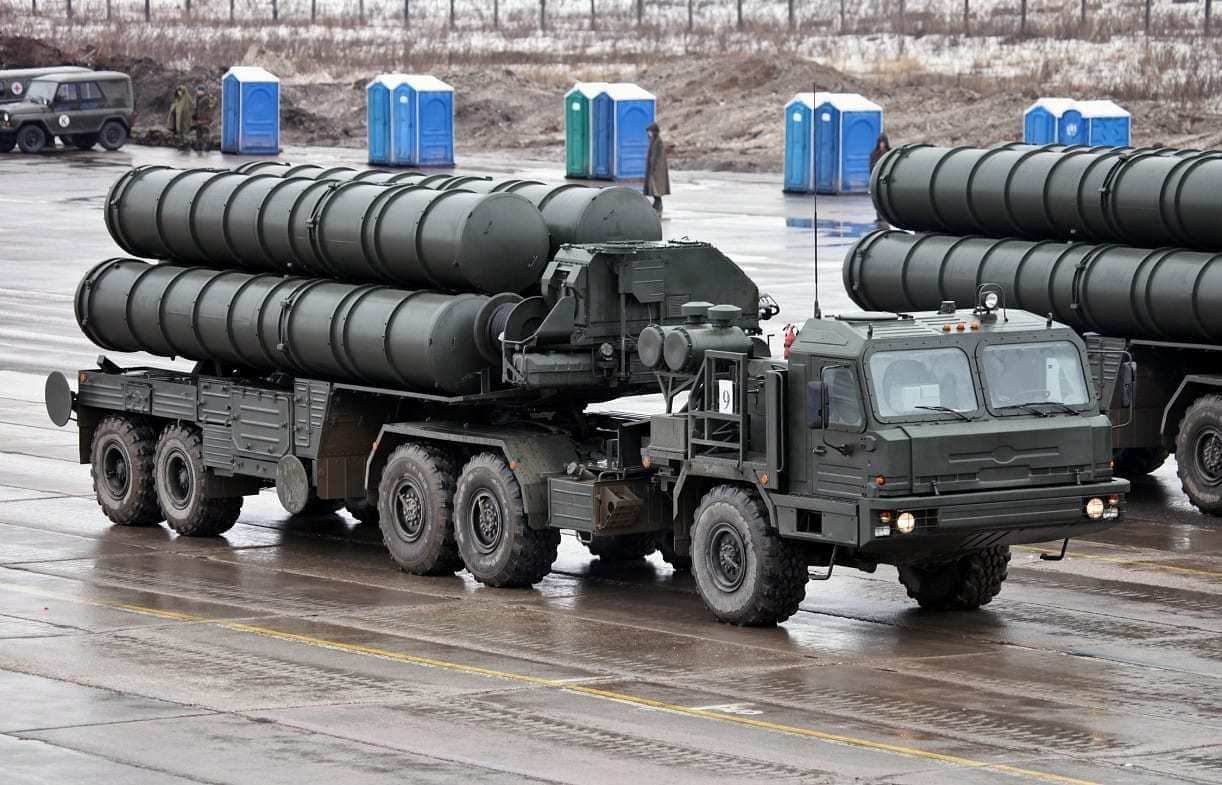
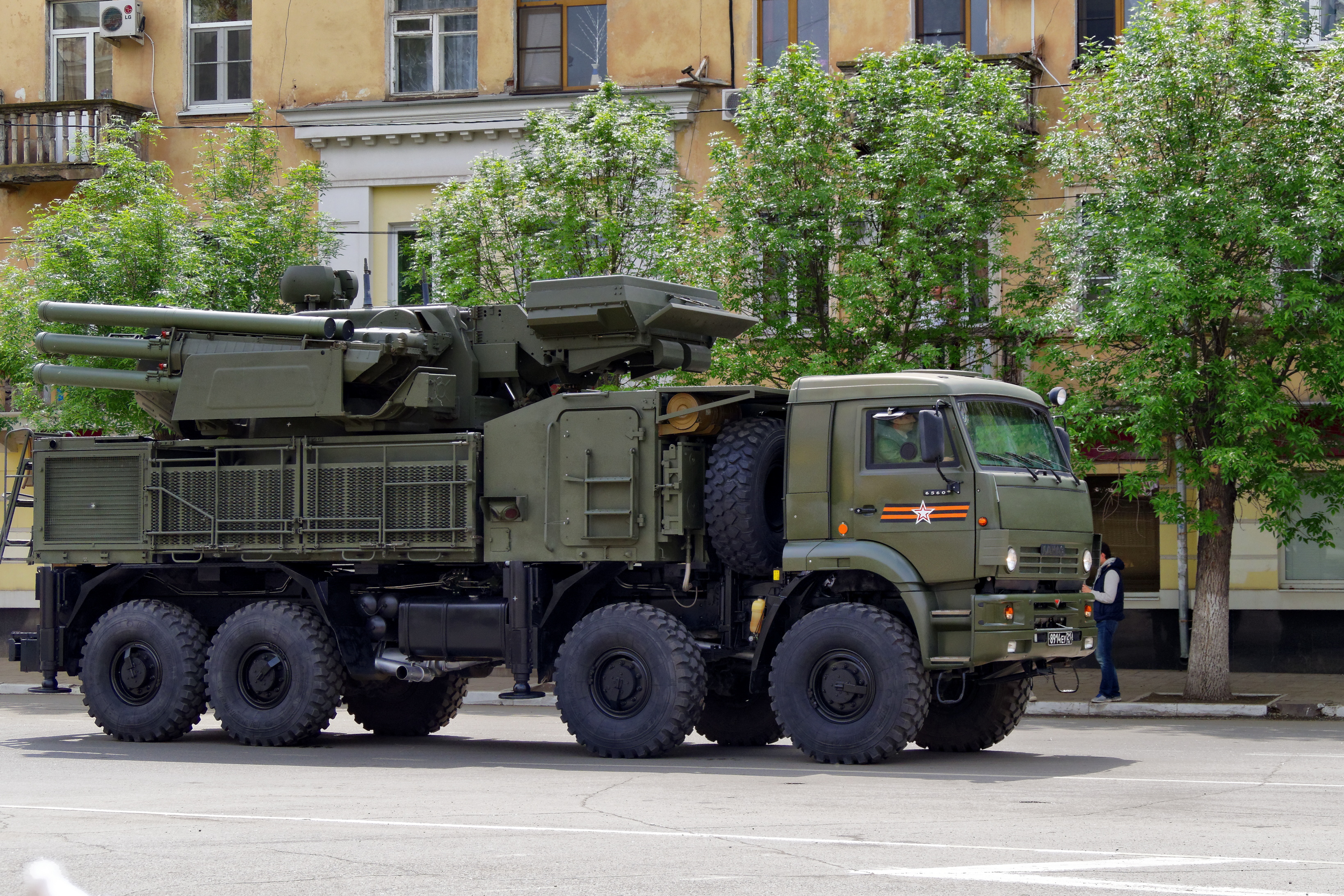
Moscow is ringed by S-400 and S-500 batteries, Pantsir point-defense systems and Tor vehicles, the most protected airspace in the world, layered like a wedding cake. Last night's numbers, even the Russian ones, tell you what that protection is actually worth. If the Defense Ministry really did shoot down 822 drones, it burned an enormous pile of interceptors to do it. A single S-400 missile costs multiples of the drone it is fired at. Saturation attacks exist precisely to make that trade hurt the defender, and the cost math Kyiv has lived with for four and a half years is now running in Moscow.
There is another layer to the math that Russian officials never mention. An "intercepted" drone does not disappear, it comes down somewhere, often on the city it was aimed at. Kyiv's residents learned that lesson years ago. Moscow is discovering it in real time, and the gap between the interception numbers and the burning warehouses is the metric that actually matters.
The Rear-Area Bargain Is Broken
The same night Ukraine hit Moscow, Russia fired 152 Shahed-type drones and loitering munitions at Ukrainian cities, and Kyiv was rocked again on Aug. 16 with three people injured and a book market set on fire. Both capitals are now targets, and that symmetry is the real story. The taboo on striking capitals is gone, and it was Moscow, not Kyiv, that blinked last.
Here is what keeps me up at night: the drone offensive is not a sideshow, it is the main course. Ukraine has suffered an acute shortage of Patriot interceptors since the United States went to war with Iran in February, per Al Jazeera. When you cannot buy expensive interceptors, you build cheap drones, hundreds of them a night. The 40-day deep-strike campaign has not brought the war closer to an end, as Al Jazeera's analysts have pointed out, but it has rewritten the map of what Russians can take for granted.
The domestic dimension matters more than the military one. Putin's bargain with the Russian public rests on the war feeling far away, someone else's war in someone else's region. Drones over Domodedovo break that bargain at the exact moment the Kremlin faces elections next month, which Zelensky has warned Russia will use as a pretext for a new mobilization. Ask the ayatollahs, ask every leader who promised their capital a comfortable rear: once the sky over the capital stops being safe, the political math changes fast.
What to Watch
- Sustainability. Can Ukraine keep launching waves in the hundreds? Ukrainian production capacity, not Russian claims, will decide whether this is a spike or a new baseline.
- Russian retaliation. Moscow's pattern is ballistic and hypersonic revenge on Ukrainian cities. Zircon and North Korean missiles killed seven workers at Zaporizhstal on Aug. 11, and 17 people died in a Kyiv strike on Aug. 5. Expect the hammer to come down before things calm.
- Domestic theater. Watch for shelter drills, air defense parades and new "security" laws in Moscow, the rituals of a government admitting the rear is no longer a rear.
Bottom Line
The Kremlin spent a fortune to keep Moscow the one place in Russia the war could not reach. On the night of Aug. 16, a fleet of cheap drones proved it is just another city with a siren problem. The real question is no longer whether the S-400 ring holds. It is what happens to the domestic bargain when Russians finally figure out the war has a return address, and that address is theirs.
On August 16, 2023, Ukrainian forces launched a significant drone attack involving up to 600 drones targeting Moscow and Rostov Oblast. The strikes hit key logistical facilities, including the Wildberries warehouse and the Severnoye production complex, resulting in multiple casualties. This operation marks a notable escalation, demonstrating vulnerabilities in Russia's air defense and altering the dynamics of the conflict as both capitals are now under threat.
- 600 Ukrainian drones were reported heading towards Moscow, with 201 intercepted.
- Ukrainian forces targeted the Wildberries warehouse and the Severnoye production complex.
- Five people were killed in Rostov Oblast due to drone and missile strikes.
- The attacks signify a shift in the war dynamics, with both capitals now being targeted.
- The Kremlin's air defense system was challenged, indicating vulnerabilities.