
Six NATO countries seek the NH90 successor and deepen Europe's Black Hawk dependency 2026
 Dr. Klaus Weber
Six NATO Countries Seek NH90 Successor and Deepen Europe's Black Hawk Dependency 2026
Six NATO countries plan to replace the NH90 starting in 2035. Almost simultaneously, Sikorsky appoints a Czech company as the first authorized Black Hawk spare parts center in the European Union. When these two announcements are placed side by side, the European rotorcraft problem becomes clearer than in any Sunday speech about strategic autonomy: Europe is modernizing its helicopter fleets, but industrial gravity continues to pull towards Lockheed Martin. This is not a marginal contradiction, but the core of the matter.
The NGRC Program Promises Speed, Range, and Open Architecture
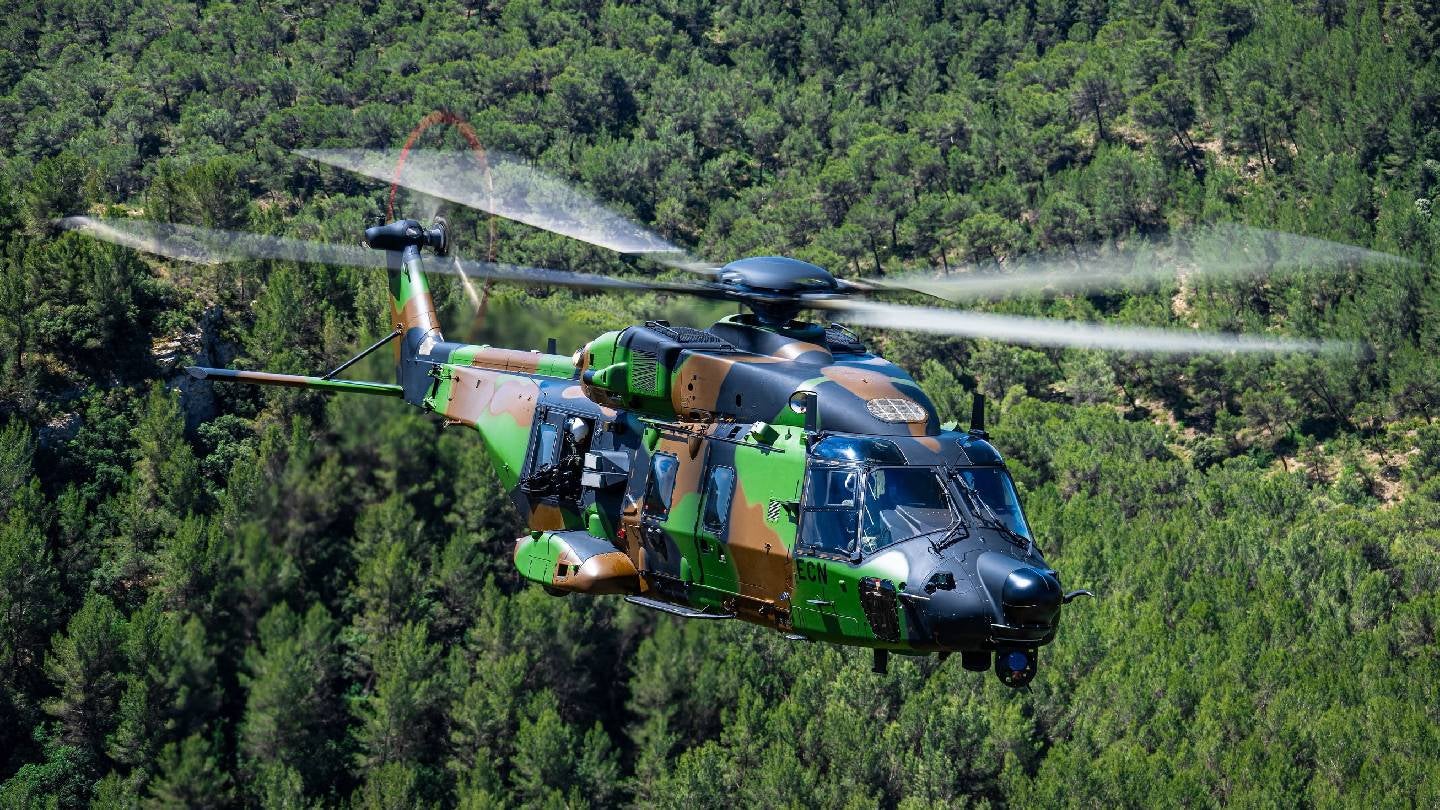
According to Euro-SD, the NATO Support and Procurement Agency opened the bidding phase for the concept development of the Next Generation Rotorcraft Capability Program on July 31. Involved are Germany, France, Italy, the Netherlands, the United Kingdom, and Canada. The requirements are revealing: a minimum cruise speed of 220 knots, target values of over 250 knots, an operational range of at least 400 nautical miles, a maximum takeoff weight of 10 to 17 tons, a strictly modular open system architecture, manned-unmanned teaming, and lower life cycle costs. This is, in truth, an implicit reckoning with the NH90.
The NH90 has always been the fitting symbol of Europe's defense cooperation: multinational, politically elegant, and often operationally frustrating. Its architecture complicates retrofitting, its maintenance is expensive, and its speed and range only partially meet the demands of high-mobility warfare. When NATO now declares "Speed & Range" as its mantra, it is less a technical preference than an institutional acknowledgment. It has been understood that the previous European compromise platforms are aging too slowly in a war of distances, drones, and networked sensors.
Also noteworthy is the new procurement process. Four pre-qualified providers may each submit up to two designs; the evaluation is to take place in a digital lab through modeling and simulation; a preferred option is to be selected by 2028; flight testing is planned to begin in 2032, with deliveries starting in 2035. This sounds modern. But modern does not automatically mean sovereign. Open architecture can create integration freedom, but it does not guarantee European control over the platform itself.
The Three NGRC Camps Reflect Europe's Old Dilemma in a New Form
The industrial situation is almost ironic. Airbus is pursuing a European-sounding dual strategy between compound helicopters and conventional architecture. Leonardo is partnering with Bell on the tiltrotor approach. Sikorsky is teaming up with BAE Systems, Rheinmetall, ESG, and Safran, bringing its X2 technology into the race; Lockheed Martin has already indicated that it would establish a final assembly line in Europe in the event of success. This is precisely where the conceptual confusion begins, which is regularly mistaken for progress in Europe.
A European final assembly line is not European sovereignty. It is a better distribution of industrial work, but not control over design authority, core technologies, export decisions, or upgrade rhythms. Europe is already familiar with this pattern: those who own the workshop but not the drawing board confuse industrial presence with strategic control. The same formula returns with the Patriot system, the F-35 ecosystem, and now possibly also with the future NATO medium helicopter. The political narrative is participation; the material reality is dependence with local value creation.
This is particularly sensitive for Germany and France. Both countries are core participants in the NGRC, both have been talking for years about European operational capability, and both have firsthand experience with the NH90 regarding the costs of a complicated cooperation program. But instead of deciding between European self-development and American system leadership, they are once again moving into the comfortable middle ground: European supply, transatlantic technology, joint messaging. Politically, this is less conflictual. Strategically, it is evasive.
The New Black Hawk Center in the Czech Republic Makes the Direction Visible
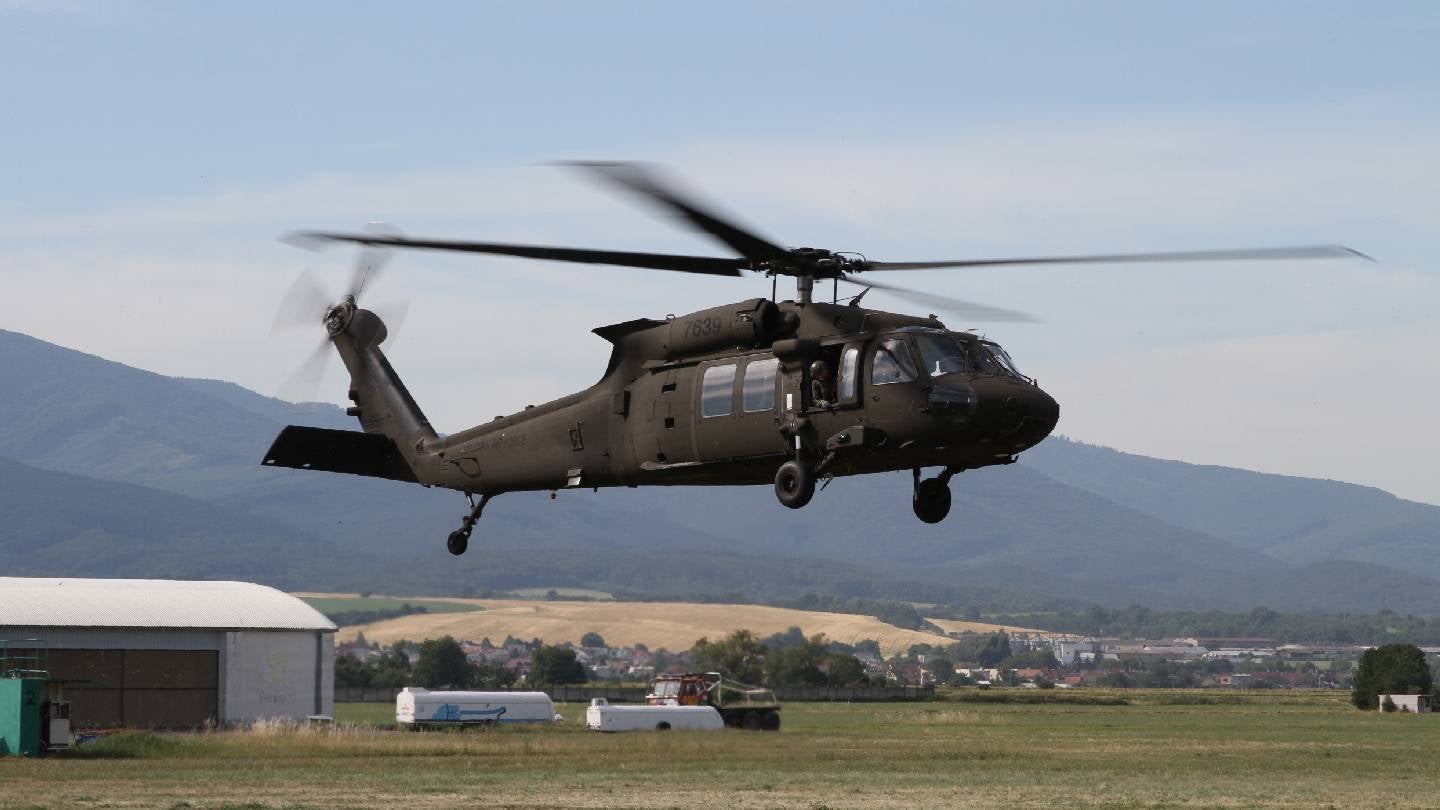
The second announcement is smaller, but perhaps even more significant in its implications. Army Technology reported on August 25 that Česká letecká servisní has been named the first authorized Sikorsky distribution center for Black Hawk components in the EU. More than 150 Black Hawks are now in operation in EU member states. At the same time, Sikorsky points out that the S-70 variant is produced in Poland at PZL Mielec and supported by regional suppliers. This reads like a success story of European integration. In truth, it is the consolidation of an American-led ecosystem on European soil.
One should not sugarcoat the logic. Europe is not building its own family of medium multi-role helicopters with a growing common spare parts and modernization base. Instead, Europe is increasingly embedding itself in a system whose rhythm, certification, and industrial gravity lie outside of Europe. This is rational in the short term. The Black Hawk family is available, established, interoperable, and politically low-threshold. But rationality in the procurement calendar is not yet strategic rationality.
The direction becomes even clearer through the Farnborough step in July. Sikorsky and Safran deepened their collaboration for current and future vertical lift platforms; Safran points to more than 1,230 delivered engines for the S-76 line and nearly ten million flight hours of joint experience. This is also not a sign of European decoupling, but an attempt to embed Europe's industry into American-led programs, making dependence appear politically more acceptable.
Europe Does Not Replace a Platform Problem, but Shifts It
The real paradox is therefore: the more Europe recognizes the failure of old programs, the more it flees into models that are operationally plausible and institutionally comfortable, but postpone the question of sovereignty. NGRC is supposed to overcome the weaknesses of the NH90. The new Black Hawk network is intended to accelerate availability and maintenance. Both can work. But is that enough? Only if one explicitly defines "European autonomy" in the future as the ability to integrate within foreign platform architectures. This is precisely what Europe has not yet openly done, but is increasingly practicing in fact.
This leaves the continent with an uncomfortable choice. Either it honestly accepts that its rotorcraft future will be organized transatlantically for the foreseeable future, with all the advantages for speed, interoperability, and risk transfer. Or it finally invests not only in open software and regional final assembly but in genuine system leadership, meaning the ability to control design decisions, production chains, and modernization rhythms itself. This would be more expensive, slower, and politically more contentious. But sovereignty that is only visible in the supply chain is not sovereignty. It is logistics with a flag.
Six NATO nations are seeking to replace the NH90 helicopter by 2035 while deepening their reliance on Black Hawk helicopters. Sikorsky has appointed a Czech facility as the first authorized Black Hawk parts center in the EU. The Next Generation Rotorcraft Capability (NGRC) program aims to enhance helicopter performance and reduce lifecycle costs, reflecting Europe's ongoing dependency on U.S. military technology.
- Six NATO nations plan to replace the NH90 helicopter by 2035.
- Sikorsky has designated a Czech facility as the first authorized Black Hawk parts center in the EU.
- The NGRC program aims for speed, range, and modular architecture in new helicopters.
- Over 150 Black Hawks are currently in use in EU member states.
- The report highlights Europe's dependency on U.S. military technology.