
Skydiving to Open Up Sea and Air Rescue Channels

Author|Deng Shang, Tang Lei, Zhang Dongjie, Huang Jingshun
Recently, a certain unit of the Southern Theater Command Navy
organized aerial rescue personnel for maritime parachuting training
to test rapid delivery and long-range rescue capabilities
under complex sea conditions.
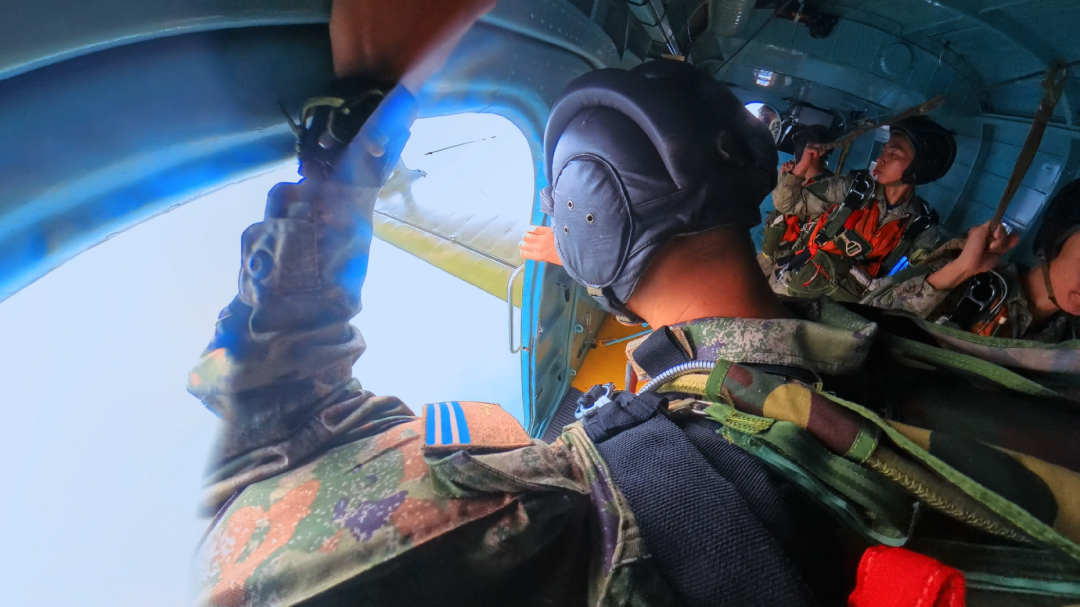
Inside the cabin,
the aerial rescue personnel quickly organized their parachute gear,
checked their rescue equipment,
fastened their safety buckles,
and prepared to exit the aircraft in sequence.
“Jump!”
With the drop command,
the rescuers leaped out of the cabin one after another,
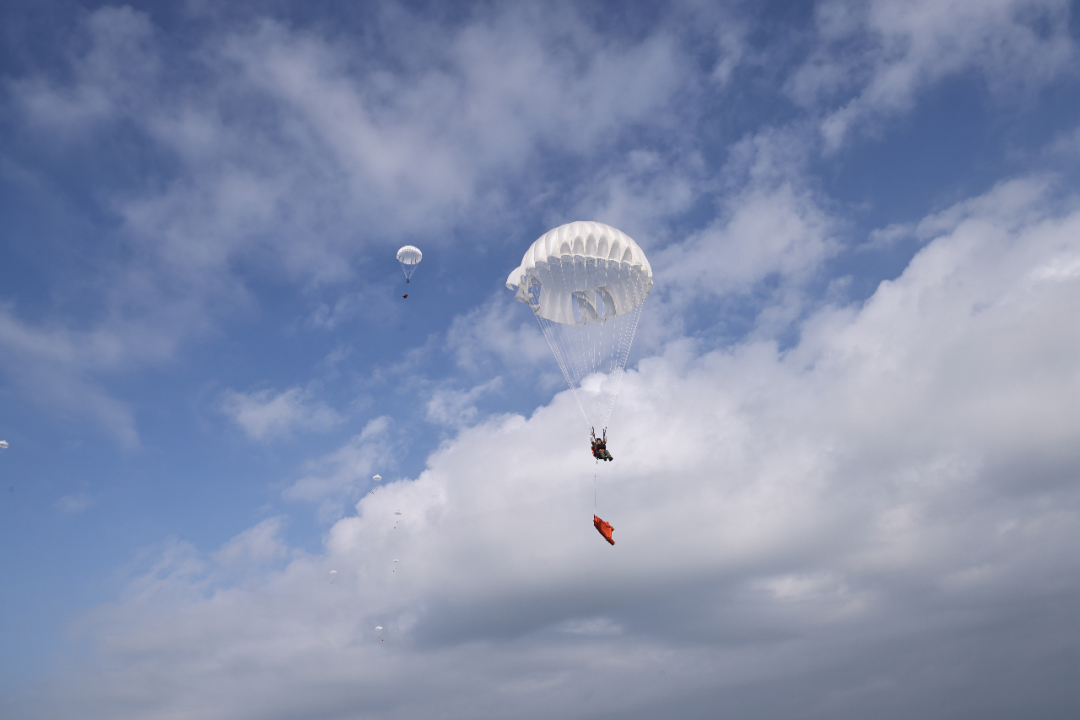
the white parachutes quickly opened in the air,
blossoming over the azure sea.

In the air,
the rescuers kept a close eye on the target on the sea,
constantly manipulating the parachute lines and correcting their landing points,
adjusting their gliding trajectory with the sea breeze.
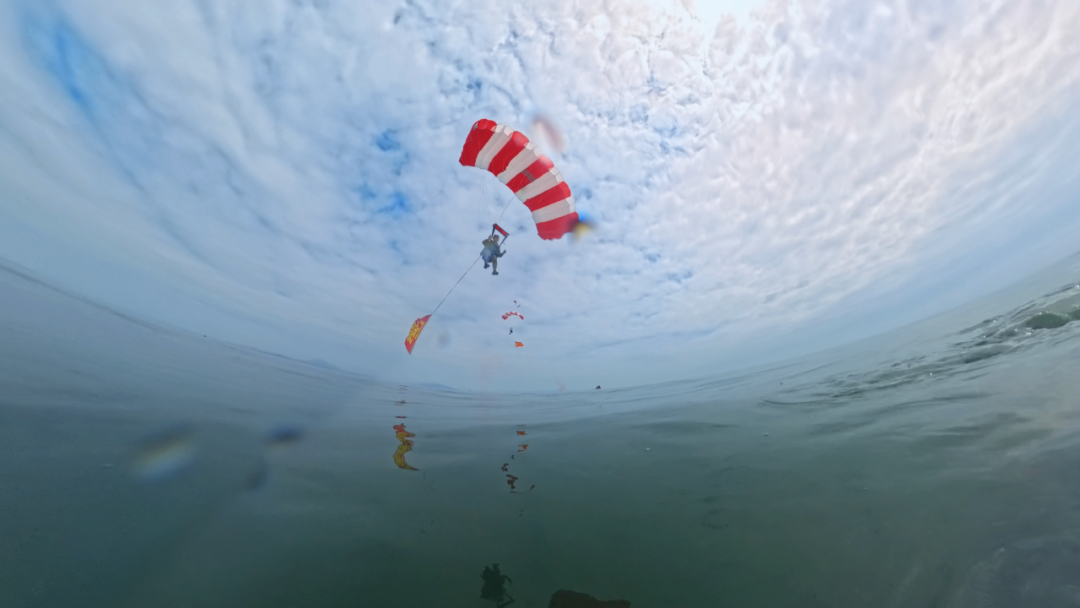
Once they approached the target area accurately,
the rescuers quickly released their parachute gear
and carried out self-rescue and mutual rescue operations at sea.
This training
was closely aligned with complex sea conditions,
focusing on honing
airborne parachute control skills
and sea survival and emergency rescue capabilities.
The Naval Aviation Unit of the Southern Theater Command conducted airborne rescue training exercises over the South China Sea. Personnel practiced parachute deployment and sea survival techniques under complex conditions, enhancing their rapid delivery and emergency rescue capabilities. This training is part of ongoing efforts to improve operational readiness in maritime environments.
- Naval Aviation Unit conducted airborne rescue training in complex sea conditions.
- Rescue personnel practiced parachute deployment and sea survival techniques.
- Training focused on rapid delivery and emergency rescue capabilities.