
Some US troops cite benefits of Germany presence as Trump threatens pullback
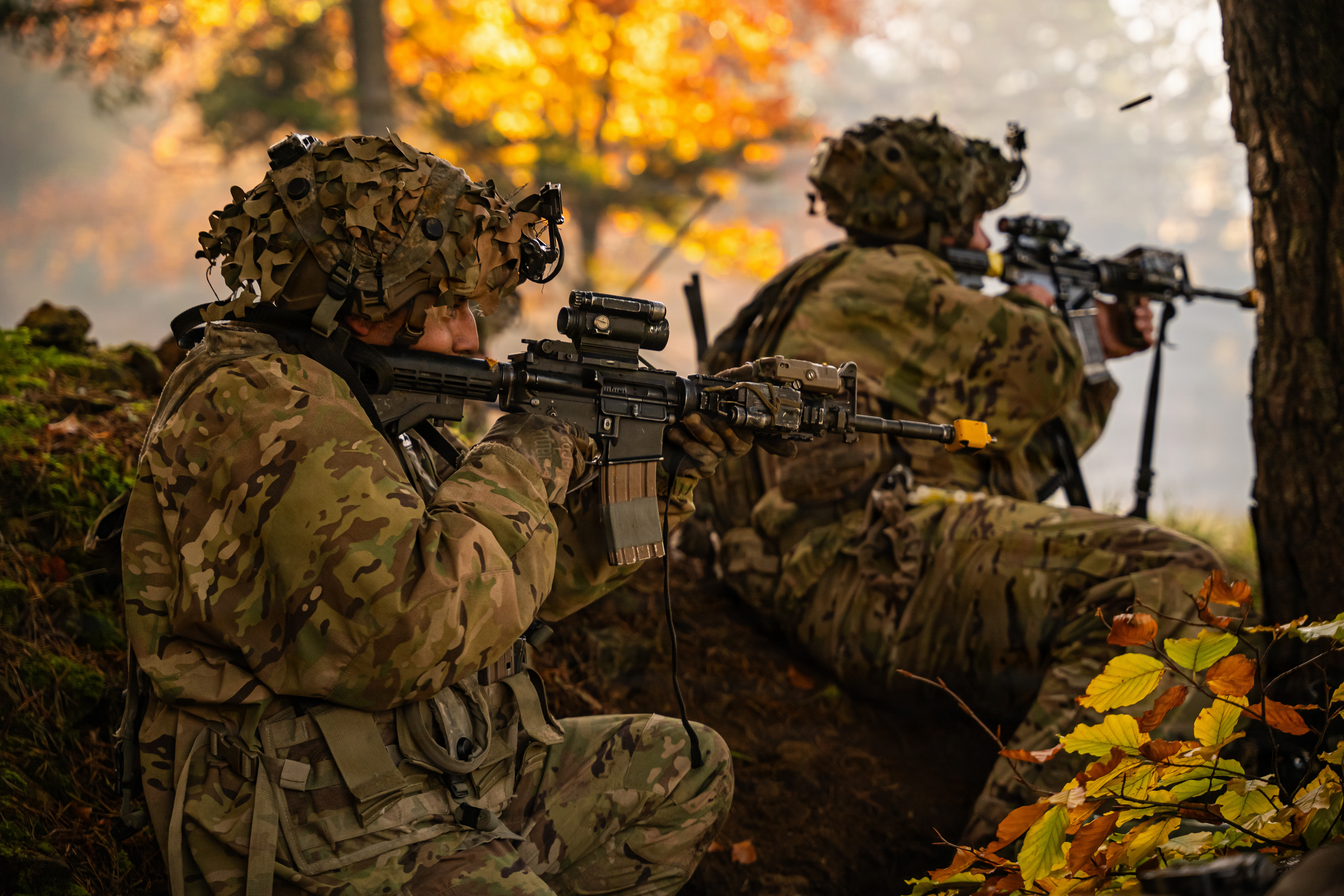
At a U.S Army training facility in Germany on Thursday, some senior officers highlighted the benefits of American presence in the country, a day after U.S. President Donald Trump said he was reviewing whether to reduce troop numbers in the country.
The benefits of U.S. troops here include deterring adversaries, combat training with allies on European terrain and absorbing lessons from nearby Ukraine, they told Reuters and a small group of other media visiting the U.S. Army’s only combat training center outside the U.S., located in Hohenfels, southern Germany.
The handful of officers who spoke either did not comment on President Trump’s remarks, or declined to.
Spokespeople for the U.S. Army did not immediately respond to a Reuters request for comment on how a troop reduction would impact activities in the country.
Germany is the U.S. military’s largest footprint in Europe, with some 35,000 active-duty military personnel, and serves as a key training hub.
That includes the Hohenfels facility, which spans some 163-square kilometers of forest. The area hosts large-scale combat training for U.S. troops as well as other NATO and partner nations.
On Thursday, a U.S. armored unit was a week into a grueling 10-day long exercise, which included evading an opposing force and its arsenal of surveillance and attack drones.
The brigade is at the end of a nine-month deployment in Poland and elsewhere in Eastern Europe as part of a U.S. Army-led initiative to support NATO while building readiness and enhancing bonds between ally and partner militaries.
Their presence in Europe shows potential adversaries that in the event of a conflict “that they’re going to face the most ready, trained, lethal fighting force, and not just the United States, but the United States and its NATO allies,” said the brigade’s commander, Col. Michael Ziegelhofer.
“The fact that we’re out here represents, you know, really our country’s support for NATO and our allies,” he said.
‘FIGHT TOGETHER’
Training with other nations is “incredibly important,” said Ziegelhofer, standing on the edge of a small mock town. “If a crisis were to take place over here, we’d be in the fight together, so training like this helps us to build the interoperability, not just with the equipment that we have, but between the people and the systems and the processes in our unit.”
The brigade has also been learning about drones during their deployment in Europe, added Ziegelhofer.
“We worked all the way from learning how to fly them to getting pretty sophisticated in understanding the systems and processes,” he said, “both in using them ourselves and how to counter the enemy’s use of those since we’ve been over here.”
LESSONS FROM UKRAINE
The evolution of drones and electronic warfare are among the lessons from the Russia-Ukraine war being incorporated into training, said Lt. Col. Michael Cryer, commander of the opposition forces permanently assigned to Hohenfels training area, known as the “warrior” battalion.
“It’s been a cat-and-mouse game, as you’ve seen in Ukraine,” he said. “Where one side develops this capability, another side develops a countermeasure.”
One of the biggest challenges, according to the officer, is maintaining options for offensive maneuvers while being constantly surveilled by aerial drones.
“It is nearly impossible to hide,” Cryer said. “Across the Army, we haven’t totally come to grips with that.”
U.S. Army personnel at Hohenfels, Germany, are engaged in training exercises while discussing the benefits of their presence in Europe. The training includes learning about drone operations and countermeasures, reflecting lessons from the Ukraine conflict. Senior officers emphasized the importance of U.S. troops in deterring adversaries and supporting NATO allies. The U.S. maintains a significant military footprint in Germany, with 35,000 active-duty personnel.
- U.S. military presence in Germany includes 35,000 personnel.
- Training exercises are ongoing at the Hohenfels facility.
- U.S. troops are learning about drone operations and countermeasures.
- The presence of U.S. forces deters adversaries and supports NATO.
- Lessons from the Ukraine conflict are being integrated into training.