
South Korea faces no good choices in sending forces for Trump’s unpopular Iran mission

MANILA, Philippines — As Washington presses South Korea to contribute to securing the Strait of Hormuz, experts said Seoul is facing a military capacity dilemma, as forces could get stretched amid escalating threats from North Korea.
The worry comes as Washington exerts pressure on South Korea to support U.S. operations in the Strait of Hormuz, where the war with Iran is choking worldwide oil supplies, even while North Korean threats escalate.
The South Korean Army reported that the North had fired two ballistic missiles on Sunday and earlier this month launched a 5,000-ton guided missile destroyer in the Pacific.
The security environment in East Asia raises a military allocation concern, especially since South Korean officials mentioned sending a “practical contribution” to U.S. efforts in the Middle East.
“If such [U.S.] requests become recurrent, Seoul could face trade-offs between extra-regional missions and deterrence around the Korean Peninsula,” Ju Hyung Kim, president of Security Management Institute, a Seoul-based defense think tank, told Defense News.
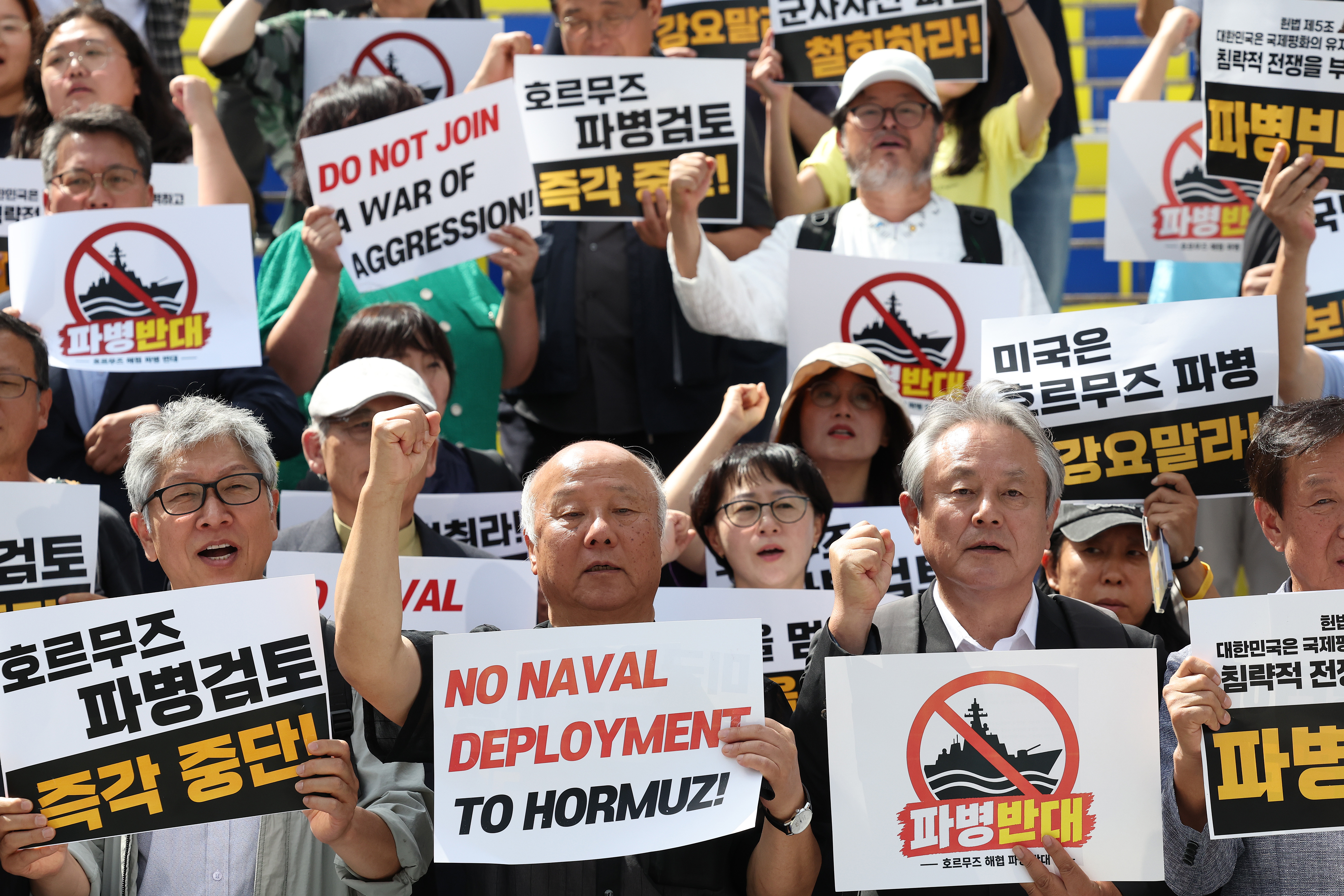
Last week, President Lee Jae Myeong had drawn the line and said there would be “no deployment to a war.”
The government may instead extend the activities of the Cheonghae Unit, a naval task force group stationed in the Sea of Aden for counter-piracy operations.
The Cheonghae Unit is a small maritime task group that includes a KDX-II destroyer, a maritime helicopter, as well as Marines, naval special forces and support personnel.
The Cheonghae may be the “least burdensome option,” Kim said, and would allow the Lee government to skirt the domestic political costs of a troop deployment and provide a military contribution.
While the range of operations could extend from Somalia to the Middle East, an expert based in Seoul told Defense News on condition of anonymity that the unit’s role will be limited to protecting South Korean ships and conducting humanitarian assistance activities.
“I don’t see the possibility of upgrade or recalibration … given the current security situation in the region,” the expert said.
Either way, the Cheonghae detachment would be navigating rough waters. Esmaeil Baqaei, spokesperson for Iran’s Foreign Ministry, warned on Sept. 7 that any foreign military involvement in the strait could face serious consequences.
Iranian academic Mohammad Marandi said that Tehran could regard South Korea as an enemy and target Korean economic and military assets across the Persian Gulf if Seoul joined a U.S.-led effort to secure the Strait of Hormuz.
The warnings had escalated anxieties in Seoul, where the deployment question remains a point of contention.
If South Korean personnel or assets are targeted, Lee would be pressured to either “escalate by deploying combat forces or to scale back to contain domestic backlash and protect his political standing,” Kim said.
“Seoul would need to define the mission, geographical scope, rules of engagement and command arrangements very carefully, while also managing external expectations about what a ‘practical contribution’ actually entails,” Kim said.
The government had begun to assess contribution requirements, which experts said are evident in an earlier recon mission to the United Arab Emirates to examine the Al Dhafra Air Base and Jebel Ali Port.
Findings from the trip have not been made public. But a successive mission to Bahrain, which hosts the U.S. Fifth Fleet, U.S. Naval Forces Central Command and the multinational Combined Maritime Forces, “could involve examining basing, logistics, intelligence-sharing, maritime-domain awareness and coordination with multinational forces,” Kim said.
The Cheonghae Unit may be enough to appease Washington for now, especially after Seoul committed a $20 billion investment in an energy project in Texas, Kim said.
But the larger challenge is the precedent it might create: President Donald Trump might expect additional contributions as the conflict in the Middle East continues.
And Kim said force allocation will become a graver concern if alliance commitments take South Korean assets far from the peninsula for a prolonged period of time.
“A P-8A deployed to the Gulf, for example, cannot simultaneously perform maritime-surveillance or anti- submarine missions around the Korean Peninsula,” he said.
“So the key question is not simply whether the Cheonghae Unit is sufficient now, but whether it becomes the beginning of recurring U.S. expectations for South Korean deployments beyond Northeast Asia,” Kim said.
South Korea faces military capacity dilemmas as it considers U.S. requests for support in the Strait of Hormuz while managing escalating threats from North Korea. The South Korean Army reported recent missile launches by North Korea, prompting concerns over troop deployment. President Lee Jae Myeong has ruled out war deployment, suggesting instead the extension of the Cheonghae Unit's operations for limited maritime security and humanitarian assistance.
- South Korea is pressured by the U.S. to contribute to securing the Strait of Hormuz.
- North Korea has escalated military threats, including missile launches.
- The Cheonghae Unit may be deployed for limited operations in the Middle East.
- President Lee Jae Myeong stated there would be no deployment to a war.
- Seoul is assessing military contributions and logistics for potential operations.