
South Korea joins elite club of nations that can build laser weapon
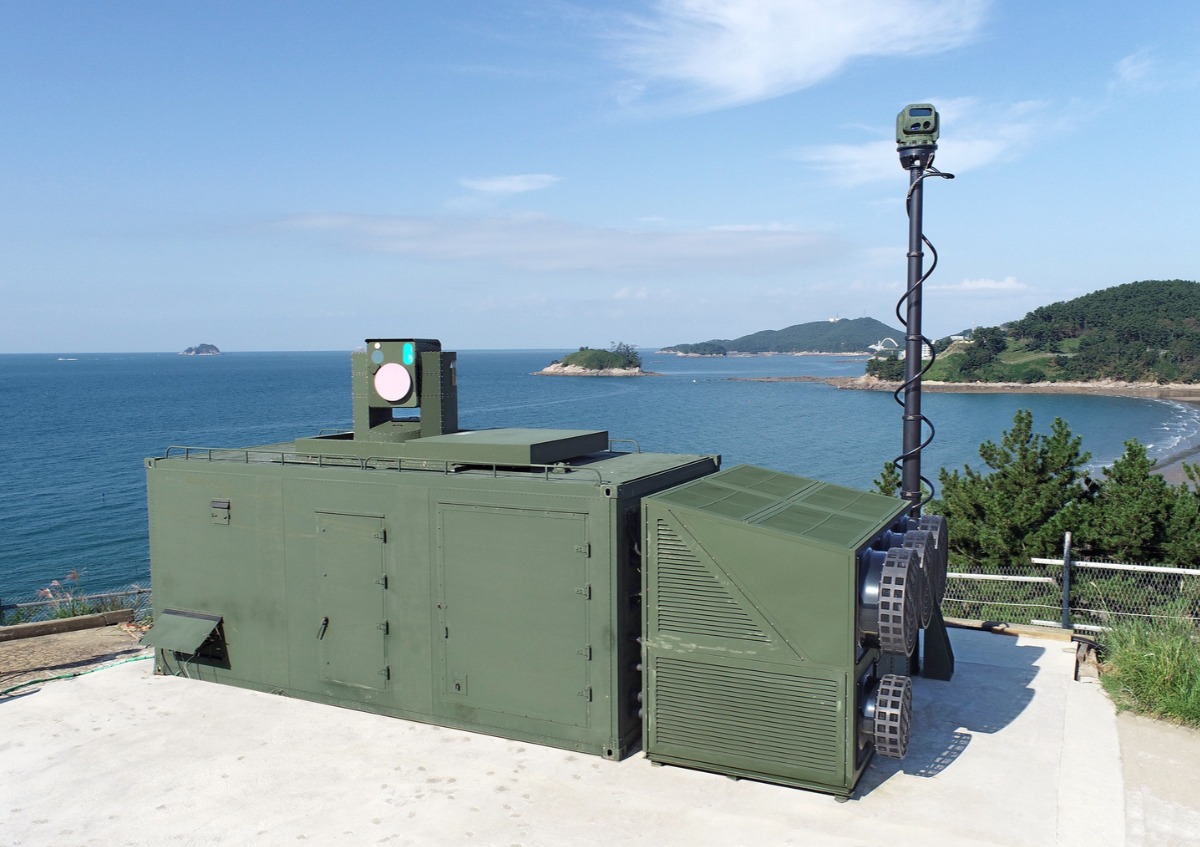
South Korea just cracked one of the most tightly guarded engineering secrets in global defense, successfully developing a domestic laser oscillator for its Cheongwang laser weapon system, a component so strategically sensitive that only the United States, Israel, China, and Germany are known to produce it independently.
The announcement from South Korea’s Defense Acquisition Program Administration, published June 1, confirms that the domestically built oscillator cuts drone intercept times in half compared to the imported version it replaces, and pushes the system’s domestic content from 76 percent to 90 percent by value.
The Cheongwang, whose name translates as Sky Light, holds a distinction that no other laser weapon system in the world can claim: it is the first military high-energy laser to reach operational deployment, achieving initial fielding in December 2024. While Britain’s Dragonfire and Israel’s Iron Beam remain in development and testing phases, South Korea has been operating Cheongwang units at frontline positions and in central Seoul, including a deployment near the Presidential Office at Yongsan, for more than eighteen months. The system is a 20-kilowatt class fiber laser built by Hanwha Aerospace, South Korea’s leading defense technology company, and developed jointly with the Agency for Defense Development. It tracks and destroys small drones at ranges of 2 to 3 kilometers (1.2 to 1.9 miles) at an estimated firing cost of approximately $1.50 per shot, compared to tens of thousands of dollars for a conventional missile intercept.
The laser oscillator is the component that determines everything important about what a laser weapon can do. It is the device that generates the coherent light beam, and its power output, beam quality, and efficiency set the ceiling on the system’s engagement performance. Building an oscillator capable of generating a high-quality, high-power beam continuously without degrading is an extraordinarily difficult engineering challenge, which is why the technology is controlled by only a small number of countries and why technology transfer agreements for high-energy laser oscillators are among the most tightly restricted in defense trade. South Korea’s Defense Acquisition Program Administration confirmed that only the United States, Israel, China, and Germany had previously achieved the ability to independently develop and produce laser oscillators at the required performance level. South Korea has now joined that group.
The decision to pursue domestic oscillator development while the Block I system was still being built, rather than waiting for the conventional sequence of completing development first and then domesticating components afterward, was itself an unusual programmatic choice that the DAPA press release describes explicitly. Program managers determined that the pace of technological change in directed energy weapons made waiting unacceptable. By running the domestication program in parallel with system development, they achieved both improved performance and a reduced timeline compared to the standard approach.
The performance improvement the domestic oscillator delivers is directly measurable. Testing on the Cheongwang Block I prototype with the new oscillator confirmed that drone intercept time dropped from 2 to 4 seconds with the imported component to 1 to 2 seconds with the domestic version. For larger unmanned aircraft, intercept time fell from over 10 seconds to within a few seconds. The DAPA announcement attributes this improvement to a more than 50 percent increase in key performance characteristics including output power compared to the imported oscillator being replaced. The development was led by the Agency for Defense Development with Hanwha Systems serving as the prototype manufacturer.
Jeong Gi-yeong, head of DAPA’s Future Forces Bureau, described the achievement in a statement: “Laser weapons are a fiercely competitive field among advanced nations, and with more capable domestically produced laser oscillators now being applied to Cheongwang, our military’s independent response capabilities against enemy drone and unmanned aircraft threats are expected to be significantly strengthened.”
The strategic context that drove South Korea’s urgency in deploying and then domestically upgrading Cheongwang is five North Korean drones that flew over Seoul in December 2022, one of which briefly penetrated the no-fly zone around the Presidential Office, exposing a dramatic gap in South Korea’s ability to intercept cheap, small aerial intruders without firing missile interceptors worth hundreds of thousands of dollars at targets worth a fraction of that. The December 2022 incursion prompted an immediate acceleration of the Cheongwang deployment timeline and generated the political pressure that resulted in a 100 billion won (approximately $72 million) production contract with Hanwha Aerospace in June 2024 followed by initial fielding in December of the same year.
North Korea’s drone program has continued to evolve in ways that make the Cheongwang upgrade more than a technical milestone. Pyongyang has deployed modified drones carrying propaganda leaflets and trash-filled bags across the border as a deliberate provocation campaign, in addition to maintaining a more capable military reconnaissance drone fleet designed for strategic missions. South Korea has also documented evidence of North Korean drone involvement in reconnaissance missions over Japanese airspace. Against this persistent and diversifying aerial threat, a laser system that can intercept targets twice as fast as its predecessor, using a domestic component that cannot be embargoed or restricted by a foreign supplier, represents a qualitative shift in how reliably South Korea can defend its most critical locations.
The Block II program that DAPA says it will pursue based on this domestication success will target higher power output, improved precision, and reduced size and weight, the standard development axes for second-generation directed energy weapons. A more compact, more powerful oscillator opens the path toward mobile and eventually vehicle-mounted versions of the system that can provide the same drone-killing capability to field units rather than only to fixed installations. That evolution would give South Korea a mobile directed energy counter-drone capability that no other country currently fields at operational scale.
Content preview only. Full article available at source. View Full Article
South Korea developed a domestic laser oscillator for its Cheongwang laser weapon system, significantly improving its drone interception capabilities. The new oscillator reduces intercept times and increases domestic content in the system. Cheongwang is set for initial fielding in December 2024, following operational use in frontline positions for over eighteen months. This development responds to North Korean drone threats, enhancing South Korea's defense capabilities.
- South Korea developed a domestic laser oscillator for the Cheongwang laser weapon system.
- The new oscillator reduces drone intercept times from 2-4 seconds to 1-2 seconds.
- Cheongwang is the first military high-energy laser to reach operational deployment.
- The system has been operational for over eighteen months in frontline positions.
- The development was accelerated due to North Korean drone incursions over Seoul.