
South Korea promotes anti-aircraft guns for drone defense
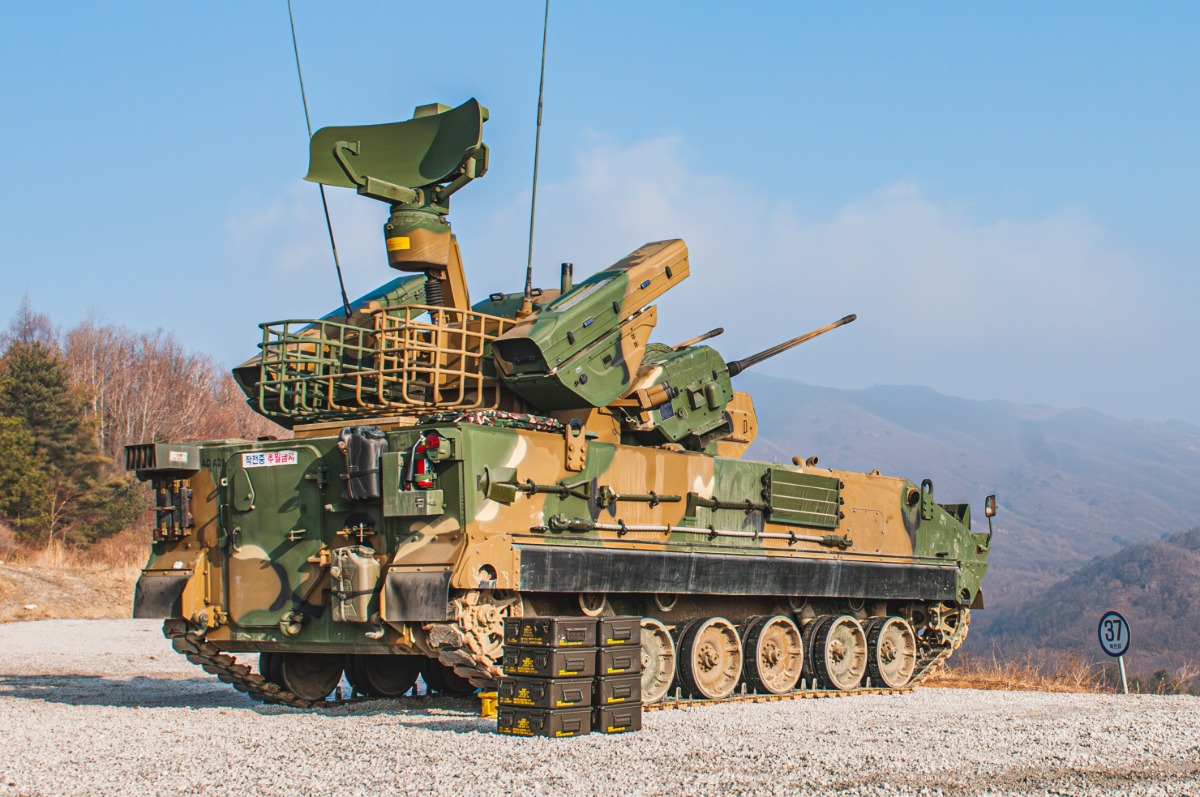
South Korea’s defense community is placing renewed attention on anti-aircraft guns as an effective response to the growing threat posed by mass drone attacks on modern battlefields. The shift reflects increasing concern among military planners that traditional missile-based air defense systems alone may struggle to counter large numbers of low-cost unmanned aerial vehicles.
The renewed focus on gun-based air defense comes as armed forces worldwide face a rapid increase in the use of drones in combat. Small, inexpensive drones are increasingly used for reconnaissance and strike missions, forcing defenders to engage targets that cost far less than the missiles typically used to intercept them.
Military analysts say this imbalance has exposed a structural weakness in traditional air defense systems. Interceptor missiles used in systems such as Patriot, Iron Dome, and Cheongung-II can cost far more than the drones they are designed to destroy, creating a costly exchange during sustained attacks.
The problem has become more visible in recent conflicts where drones are used in large numbers and often fly at low altitude. These small unmanned aircraft are difficult to detect because they produce radar signals similar to terrain clutter and move more slowly than conventional aircraft or cruise missiles.
The growing use of swarm tactics further complicates air defense operations. In such attacks, dozens of drones may approach targets at once, sometimes accompanied by decoys. This forces defenders to respond to multiple threats simultaneously and can quickly exhaust missile inventories.
Against this backdrop, anti-aircraft guns are again being viewed as a practical part of modern air defense. Unlike missile interceptors, gun systems can fire repeated bursts of relatively inexpensive ammunition, allowing defenders to engage multiple targets without rapidly depleting high-cost interceptors.
The German-made Gepard self-propelled anti-aircraft system has often been cited as an example of this approach. Equipped with twin 35mm cannons and integrated radar, the system has been used in Ukraine to engage low-flying drones, including Iranian-designed Shahed systems.
Modern anti-aircraft guns differ from earlier generations by integrating advanced targeting technologies. These systems combine radar detection, electro-optical sensors, and digital fire-control systems to track aerial targets and guide gunfire with greater precision.
One of the most important technological advances is the development of programmable airburst ammunition. These rounds are programmed to detonate near the target rather than relying on a direct hit. When the shell explodes, it releases hundreds of small fragments that increase the probability of destroying small drones.
This capability is particularly effective against drones because it allows a wider engagement envelope. Even if the drone is not struck directly, the fragment cloud created by the airburst can damage rotors, sensors, or airframes.
Many militaries are now incorporating gun-based systems into layered air defense networks. In these structures, long-range missiles are reserved for aircraft, cruise missiles, or ballistic threats, while shorter-range systems such as guns handle drones that penetrate closer to protected areas.
South Korea has developed several air defense systems based on this concept. The long-serving 20mm Vulcan system has been used for decades to provide short-range air defense, although it relies heavily on manual targeting.
More advanced systems such as the K30 Biho self-propelled anti-aircraft platform combine twin 30mm cannons with radar and electro-optical targeting equipment. The Biho Hybrid variant also integrates Shingung surface-to-air missiles, allowing the system to engage targets at both short and medium range.
Another newer platform, known as Cheonho, has been designed as a wheeled air defense vehicle intended to replace older Vulcan systems. Built on the K808 armored vehicle chassis, the system is designed to operate within networked air defense structures and can move quickly between defensive positions.
South Korea is also developing additional counter-drone capabilities, including unmanned anti-aircraft gun systems equipped with programmable ammunition. These systems are designed to receive targeting data from external radar networks rather than relying on onboard sensors alone.
Content preview only. Full article available at source. View Full Article
South Korea is promoting the use of anti-aircraft guns to enhance drone defense capabilities amid rising threats from drone attacks. The shift aims to address the limitations of traditional missile systems, which are often costly and less effective against low-cost drones. The South Korean Armed Forces are integrating advanced technologies, including programmable airburst ammunition, into their air defense strategies.
- South Korea is focusing on anti-aircraft guns to counter drone threats.
- Traditional missile systems may struggle against low-cost drones.
- The Gepard system is cited as an effective example of gun-based air defense.
- Programmable airburst ammunition enhances the effectiveness of anti-aircraft guns against drones.
- South Korea is developing unmanned anti-aircraft systems with advanced targeting capabilities.