
Special operators need to be ‘lethal but also technically fluent,’ commander says

Source: Task & Purpose
Loading...Strong SignalCredibility: 81%
Report Content
For special operators, having expertise in new and emerging technologies is just as important as physical fitness and other aspects of fighting, the head of U.S. Special Operations Command, or SOCOM, said on Tuesday.
“This environment demands exactly what Wild Bill Donovan said 80 years ago: We need PhDs who can win a bar fight,” Navy Adm. Frank M. Bradley said at this year’s SOF Week exhibition in Tampa, Florida.
Bradley was referring to a famous quote attributed to Army Maj. Gen. William Joseph Donovan, who led the Office of Strategic Services, the U.S. intelligence service during WWII and the predecessor of the CIA.
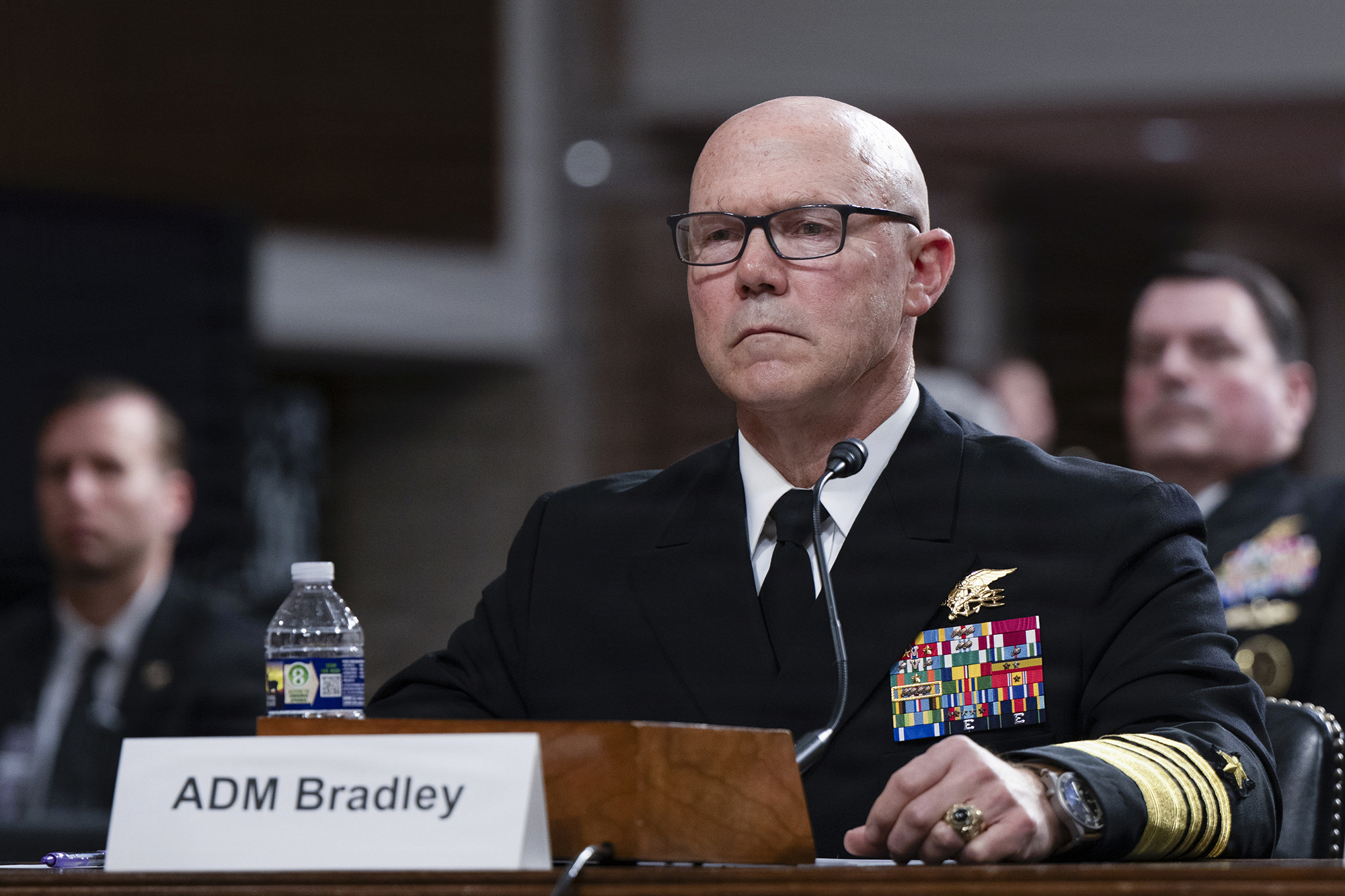 Commander U.S. Special Operations Command Adm. Frank Bradley testifying at a Senate Armed Services Committee in Washington, D.C., April 28, 2026. DoD photo by Air Force Staff Sgt. Milton Hamilton.
Now, more than ever, special operators need to be “both lethal but also technically fluent” by knowing how to use the latest technologies and the software that runs them, Bradley said.
By definition, special operators are required to be “brilliant at the basics,” such as being able to shoot, move, communicate, and render medical aid to wounded comrades, Bradley said. But the definition of those basic skills is evolving along with the character of warfare.
“To communicate today requires understanding of network architectures,” Bradley said. “To move requires evading multispectral surveillance. You can’t be brilliant with the modern basics on this muscle memory alone. You need the technical education and training to be able to master the electromagnetic spectrum in the virtual domain, as well.”
As important as technology is, one fundamental truth about special operations forces will remain: “Humans are more important than hardware, and I dare say software as well,” Bradley said.
Top Stories This Week
However advanced technology gets, it will not replace special operators themselves, Sgt. Maj. Andrew J. Krogman, the top enlisted leader for SOCOM, said during Tuesday’s event.
“There’s no algorithm, no autonomous system, no amount of technology that fixes that process without the person in the center,” Krogman said.
He then advised the audience to watch a demonstration scheduled for Wednesday in which special operations forces will showcase their capabilities.
“Remember it every time somebody in this building pitches you a promise that’s there to replace the operator,” Krogman said. “It won’t, and we won’t ever.”
The post Special operators need to be ‘lethal but also technically fluent,’ commander says appeared first on Task & Purpose.
Classification
Region
North America
Analytical Domain
Operational
Primary Category / Secondary Categories
Military Operations / Command & Control
Subcategory
Special Operations
SALUTE Report
Size
Not specified
Activity
U.S. Special Operations Command emphasizes the need for special operators to be both lethal and technically fluent in new technologies and warfare tactics.
Location
Tampa · Florida
Unit
U.S. Special Operations Command (SOCOM)
Time
Tuesday
Equipment
latest technologiessoftware
Summary
U.S. Special Operations Command emphasizes the need for special operators to be both lethal and technically fluent during SOF Week in Tampa, Florida. Adm. Frank M. Bradley stated that operators must master new technologies alongside traditional combat skills. Sgt. Maj. Andrew J. Krogman reinforced that technology cannot replace the human element in special operations.
Key Facts
- U.S. Special Operations Command stresses the importance of technical fluency for special operators.
- Adm. Frank M. Bradley highlighted the need for operators to master both physical and technological skills.
- Sgt. Maj. Andrew J. Krogman stated that technology cannot replace the human element in special operations.