
Storm Shadow for Ukraine in 2026 and Threats to British Factories Highlight the Crisis of Russian Deterrence
 Dmitri Volkov
Storm Shadow for Ukraine in 2026 and threats to British factories indicate a crisis in Russian deterrence
Sometimes the state of military strategy is best reflected not by the launch of a missile, but by the fear that the missile will one day be produced in series. This is exactly what happened on August 24-25, when London confirmed its readiness to provide Kyiv with documentation for the production of its own long-range systems related to the British missile school, and Moscow almost immediately responded not only with the usual complaints from Dmitry Peskov about Britain "pouring oil on the fire," but also with a much more characteristic hint from former Deputy Foreign Minister Andrei Fyodorov about possible strikes on British factories "from unknown sources" (BBC, August 25; BBC Newscast, August 24).
This rhetoric is more important than it seems. The Russian deterrence system has always preferred to speak in terms of official targets: command posts, logistical hubs, launch positions, transport corridors. When a hint of semi-deniable pressure against enterprises on NATO territory is brought into the public domain, it means that the usual set of threats is no longer working as the Kremlin would like. In other words, Moscow is demonstrating not strength, but nervousness. In the Soviet tradition of strategic signaling, such things were usually left in the shadows to avoid burning escalation steps prematurely. Now it seems that this shadow has to be used as the main tool.
Why Storm Shadow has become a sensitive point
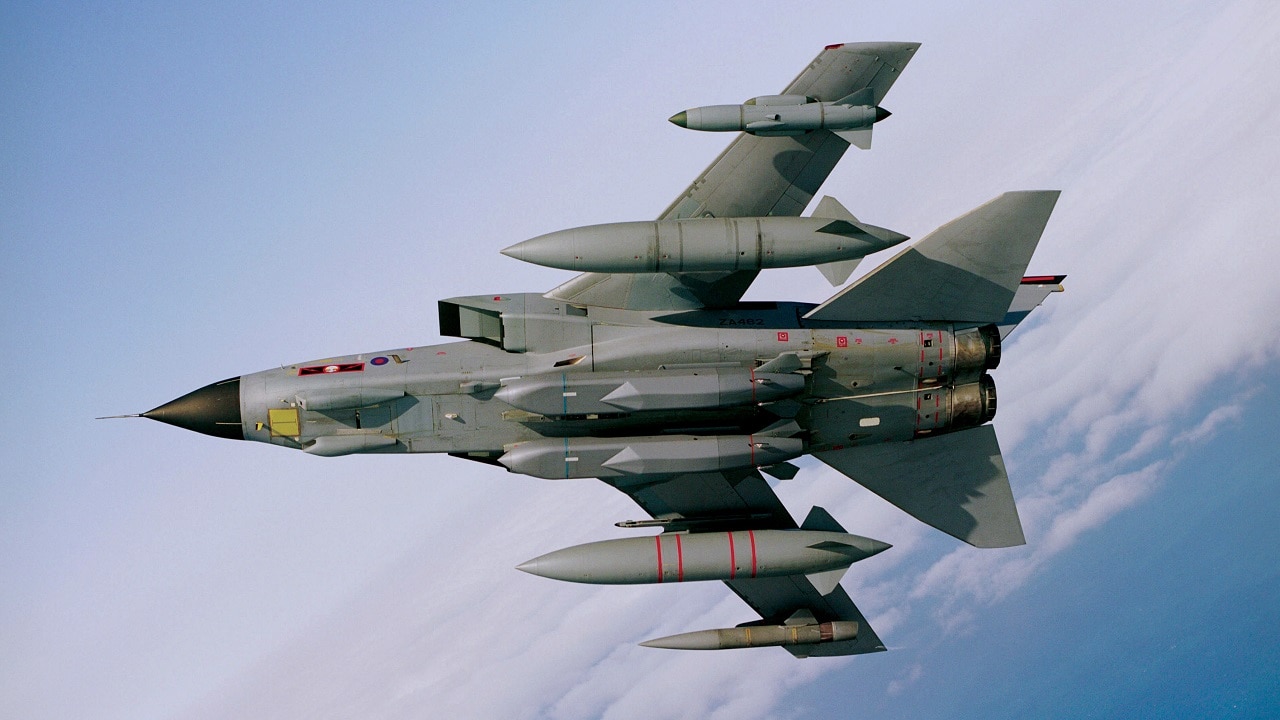
The Storm Shadow/SCALP family is particularly unpleasant for Russia not because of the mythology surrounding "wonder weapons," but because of the combination of range, accuracy, and complex trajectory of use. Export versions of such missiles are usually associated with a range of about 250 km or more, depending on the configuration, and their main value lies in the ability to strike rear targets without the carrier entering the most dense air defense zone. If Ukraine receives not just finished products, but technological documentation and production logic, the problem for Russia qualitatively changes. It is no longer about one-time deliveries that can be counted individually, but about the potential emergence of a distributed production network on Ukrainian territory.
For the Russian General Staff, this is the worst-case scenario. Destroying a warehouse with finished missiles is difficult, but understandable. Destroying a network of assembly, cooperation, components, programming, and testing is significantly more complex. Such a system can be spread across several enterprises, hidden in civilian infrastructure, quickly restored, and partially duplicated. Therefore, Peskov's words that Russian military are already gathering data on future production sites are logical. They reflect an understanding that in a few months, the problem will become not tactical, but industrial.
What the Russian threat to British factories reveals
Fyodorov's hint at strikes on British enterprises "not by Russia, but by unknown sources" sounds almost like a bad parody of the Cold War, but in reality, it fits into the current Russian model of coercion. When conventional military deterrence does not stop the political decisions of the West, Moscow expands the spectrum of pressure: cyberattacks, diversions, information campaigns, arson of warehouses, intimidation of logistics, pressure on insurance and transport chains. It is no coincidence that the British theme was immediately linked not only to missiles but also to enterprises producing drones for Ukraine. Russia increasingly understands that the war is being lost not only on the front line but also in the production shop.
And here an uncomfortable paradox arises for Moscow. The more often Russian representatives threaten in this way, the more they convince Europeans of the need to move cooperation deeper, make it more secure, and more distributed. In other words, the threat itself accelerates the processes that it was supposed to stop. This is a sign of a strategic crisis: the tool of intimidation begins to work against its author.
Historical logic and post-Soviet context
From the perspective of post-Soviet military evolution, this is a very telling moment. Russian military thought over the last two decades has assumed that long-range precision strikes on the enemy's rear should remain the prerogative of large state arsenals and closed defense-industrial chains. However, the war in Ukraine is methodically destroying this monopoly. Drones have already democratized strikes at operational depth. If assembly of more complex long-range systems begins to take shape on Ukrainian territory, Russia's bet on exhausting Western stockpiles will weaken sharply.
For the Kremlin, this is also politically painful. Within the official Russian worldview, the West should tire faster than Russia adapts. The transfer of technical documentation means the opposite: Western capitals are beginning to export not only finished munitions but also production capacity. This is no longer assistance in packages, but a transfer of competence. And competence, unlike a batch of missiles, does not end after another salvo.
Military consequences in the coming months
In the short term, Russia is likely to do three things. First, it will enhance reconnaissance of Ukrainian industrial sites and transport infrastructure. Second, it will try to disrupt cooperation through threats, leaks, cyber operations, and demonstrative statements about the legality of strikes on future targets. Third, it will increase its own mass attacks on Ukraine's energy and defense nodes until any deployment of a new production line becomes as expensive as possible.
But in the medium term, this may not be enough. If Kyiv manages to combine Western documentation, its own experience of dispersed production, and the political will of its allies, Russia will face the reality that the depth of its rear will shrink again. Not immediately and not dramatically overnight. However, step by step. And it is precisely this slow deterioration that the Russian bureaucratic machine fears the most, because it is harder to explain on television and even harder to fix with one loud order.
The most important conclusion is simple. When a state claiming to be a great military power is forced to respond to the threat of a new missile with talk of "unknown sources," this is no longer the language of confident deterrence. It is the language of a system that feels that industrial time is beginning to work against it.
Therefore, the story with Storm Shadow is important not as another episode of diplomatic exchanges of threats, but as an indicator of a deeper change. The war is becoming less dependent on how many products are in stock today, and more on who can create a secure production ecosystem faster tomorrow. Russia is still capable of interfering with this process and delivering painful blows to it. But if British-Ukrainian cooperation truly transitions from a political gesture to production practice, Moscow will find that the old deterrence ends before the new one can even begin.
The UK is set to provide Ukraine with documentation for producing Storm Shadow missiles, prompting Russia to threaten British factories. This development indicates a shift in military strategy, as Russia perceives the potential for Ukraine to establish a distributed production capability. In response, Russia is likely to enhance reconnaissance and increase threats against Ukrainian industrial sites.
- The UK is preparing to provide Ukraine with documentation for producing Storm Shadow missiles.
- Russia has threatened British factories in response to this development.
- The Storm Shadow missile system poses a significant threat to Russian military strategy.
- Russia is increasing reconnaissance and threats against Ukrainian industrial sites.
- The transfer of production capabilities to Ukraine could change the dynamics of the conflict.