
Strait of Hormuz Traffic Plunge in 2026 Exposes Gulf Maritime Dependence on US Escorts
 Ahmed Al-Rashid
The Decline of Strait of Hormuz Traffic in 2026 Reveals Gulf's Maritime Dependence on American Escort
On July 10, 2026, the most important news in the Gulf was not the number of missiles launched or the number of aircraft that took off, but the number of ships hesitant to enter the Strait of Hormuz. Al Jazeera reports spoke of a halt in attacks between the United States and Iran, with mediators pushing for diplomacy, while at the same time, there was a sharp decline in transit traffic through the corridor that used to account for about 20 percent of the world's daily oil trade before the war. From a military perspective, this figure is more significant than many political data points, as commercial vessels do not read de-escalation data; they read danger, insurance costs, and the likelihood of finding themselves between an Iranian radar and an American destroyer.
A Strait Open on Paper but Restricted in Calculations
The essence of the crisis is not that Iran can completely close Hormuz every day; that is a costly decision even for Tehran. The essence is that Iran has proven it can turn the corridor into an armed negotiation zone. The memorandum of understanding on June 17 opened a vague door: Iran is responsible for mine removal and securing navigation, and ships pass freely in the first 60 days, but the text also referred to subsequent discussions with Oman and Gulf states regarding management and maritime services in the strait. Washington interpreted this as a gradual return to freedom of navigation. Tehran read it as recognition of its role as the guardian of the strait.
This ambiguity is not a legal detail. At sea, ambiguity means that the captain of the tanker asks a simple question: which route is safe, and who guarantees it? If the ship sails near the Omani coast without coordination with Iran, Tehran considers it a parallel route that exceeds its authority. If it coordinates with Iran, Washington sees that as a concession to the principle of freedom of navigation. Between these two interpretations, the tanker itself becomes a pressure point.
800 Ships and 380 Million Barrels Are Not Evidence of Complete Control
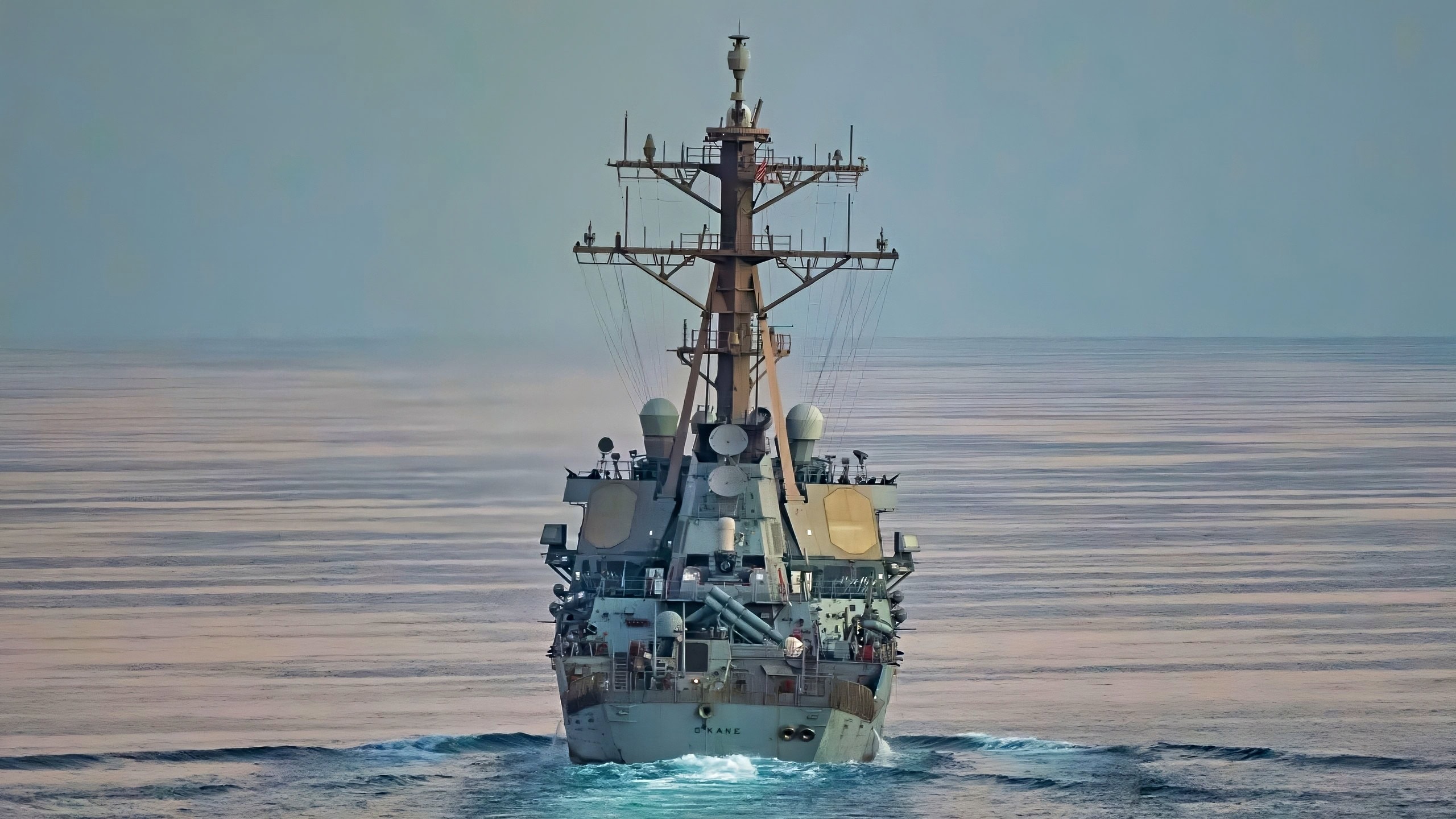
The U.S. Central Command announced that U.S. forces have assisted since early May in the transit of over 800 commercial ships and 380 million barrels of oil through the corridor. The number is large, but it does not negate the problem. In my estimation, this figure demonstrates the United States' ability to manage a maritime corridor under pressure, but it also proves that Gulf states still need an external party to reassure the market. If the Gulf's maritime surveillance systems, from coastal radars to patrol aircraft and interception ships, were capable of imposing the rhythm of navigation on their own, Washington would not need to announce these figures as a political argument.
Any military personnel who has served in the region knows that protecting Hormuz is not a matter of a single ship or a missile battery. It is a continuous network of reconnaissance, mine removal, electronic warfare, port protection, air defense, communication with civilian vessels, and coordination of rules of engagement among countries that do not always trust each other. The Gulf has purchased advanced fighter jets and Patriot and THAAD batteries, but it has not built a common maritime operations culture at the same speed. Acquiring weapons is faster than establishing an operations room capable of making decisions in ten minutes.
Iran Does Not Need a Complete Closure to Win the Round
It is a mistake to measure Iran's success by asking whether the strait is closed or not. Iran's power in Hormuz is based on low marginal costs. A fast boat, a drone, a naval mine, or an ambiguous threat is enough to raise insurance prices, change shipping routes, and confuse Gulf ports that rely on the regularity of trade. In contrast, the United States and its allies need destroyers, patrol aircraft, surveillance systems, and precise rules of engagement to prevent a single incident from igniting a new round.
This is the real asymmetry. Tehran does not have a more open sea than its adversaries, but it has the ability to make the sea psychologically and economically narrow. Therefore, when transit traffic declines even with talk of halting attacks, it means that Iranian deterrence is no longer solely linked to gunfire but to Iran's ability to keep the market in a state of doubt.
The Gulf States' Predicament Between Oil and Sovereignty
The Gulf states are not bystanders in this crisis, but they do not have complete decision-making authority either. Saudi Arabia, the UAE, Kuwait, and Qatar want to transit oil, gas, and goods uninterrupted, but they do not want an open U.S.-Iranian war over their waters and airports. They want American protection, but they fear that this protection could turn into a permanent summons for Iranian retaliation. Here lies the contradiction that has haunted every Gulf defense doctrine for decades: political sovereignty demands decision-making independence, while practical security requires reliance on the United States.
The lesson is not just about the number of mine-sweeping ships or coastal defense missiles. It is about who has the maritime situational picture, who can issue a unified order, and who bears responsibility if a warship misreads the intentions of a small boat. The Gulf Cooperation Council countries have the money to purchase the systems, but they have not yet shown that they possess a unified Gulf maritime institution capable of managing a Hormuz crisis without waiting for a statement from U.S. Central Command.
What Comes After De-escalation Is Harder Than the Day of Fighting
Clear fighting, despite its dangers, creates understandable lines. Ambiguous de-escalation is sometimes more dangerous because it leaves each party to test the limits of the text. The United States says that Iran does not control Hormuz. Iran says that any future management of the strait must recognize the rights of the coastal state. Shipping companies do not care much about this debate; they want a practical guarantee that the ship will not be a target or a legal or political hostage.
The sources of this analysis include Al Jazeera's coverage on July 9 and 10, 2026, regarding the halt of U.S.-Iranian attacks, the decline in Strait of Hormuz traffic, and the dispute over the interpretation of the June 17 memorandum, in addition to statements from U.S. Central Command about the transit of over 800 ships and 380 million barrels.
In summary, Hormuz is no longer just a waterway but a test of the Gulf's ability to convert wealth into operational control. So far, the result seems familiar: the United States manages the crisis, Iran raises its cost, and the Gulf states pay the price of both dependencies together. And as the old military saying goes, those who do not control the road do not control the time of battle.
On July 10, 2026, maritime traffic through the Strait of Hormuz significantly declined, with U.S. Central Command reporting assistance to over 800 vessels and 380 million barrels of oil. This decline highlights the Gulf states' dependence on U.S. escorts amid Iranian deterrence strategies. The situation reflects a complex interplay of military and political dynamics, as Iran asserts its role in maritime negotiations while Gulf states seek to balance security and sovereignty concerns.
- Maritime traffic through the Strait of Hormuz has declined significantly, with 20% of global oil trade affected.
- U.S. Central Command reported assisting over 800 commercial vessels and 380 million barrels of oil since early May.
- Iran's role as a potential maritime negotiator has been acknowledged, complicating Gulf states' security dynamics.
- Gulf states are reliant on U.S. military presence for maritime security, raising concerns about sovereignty.