
Strike 2026 on Anna in the Caspian Sea Reveals the Russian-Iranian Drone Route
 Dmitri Volkov
The 2026 Strike on Anna in the Caspian Sea Reveals the Russian-Iranian Drone Route
Five kilometers from the mouth of the Volga is too short a distance to call the strike on the Iranian vessel Anna a peripheral episode of the Ukrainian war. If Kyiv's reports about the transportation of components for drones and missiles are accurate, then Ukraine has struck not just at the Russian rear for the first time, but at the junction of the Russian military economy with the Iranian industrial chain. This junction is what Moscow has tried to keep in a gray area since 2022: open enough for supplies but murky enough for diplomatic denial.
What Happened in the Northern Caspian
According to BBC reports from July 27-28, President Volodymyr Zelensky stated that there were "very good results" from long-range strikes in the Caspian Sea, and the SBU reported hitting an oil platform in the northern part of the sea, a Russian missile boat, and cargo ships under international sanctions. The Iranian side claims that the vessel Anna was located about 5 km from the mouth of the Volga; Tehran reported the death of one sailor and several injuries. Ukrainian Ambassador to Israel Yevhen Korniychuk, on the contrary, told Israeli N12 that there were not civilian goods on board, but components for drones and missiles being transported from Iran to Russia.
Not only the target is important, but also the geography. The northern Caspian is a convenient backyard for Russia: it does not attract international attention like the Black Sea, does not require passage through the Turkish straits, and connects Iran with the Volga, Astrakhan, and further into the Russian railway network. In Soviet terminology, this would not be called a "supply route," but rather an element of operational support for the theater of operations. The difference is not stylistic: the destruction of such an element affects not just one shipment but the sustainability of the entire supply line.
Why the Route is More Important than One Vessel
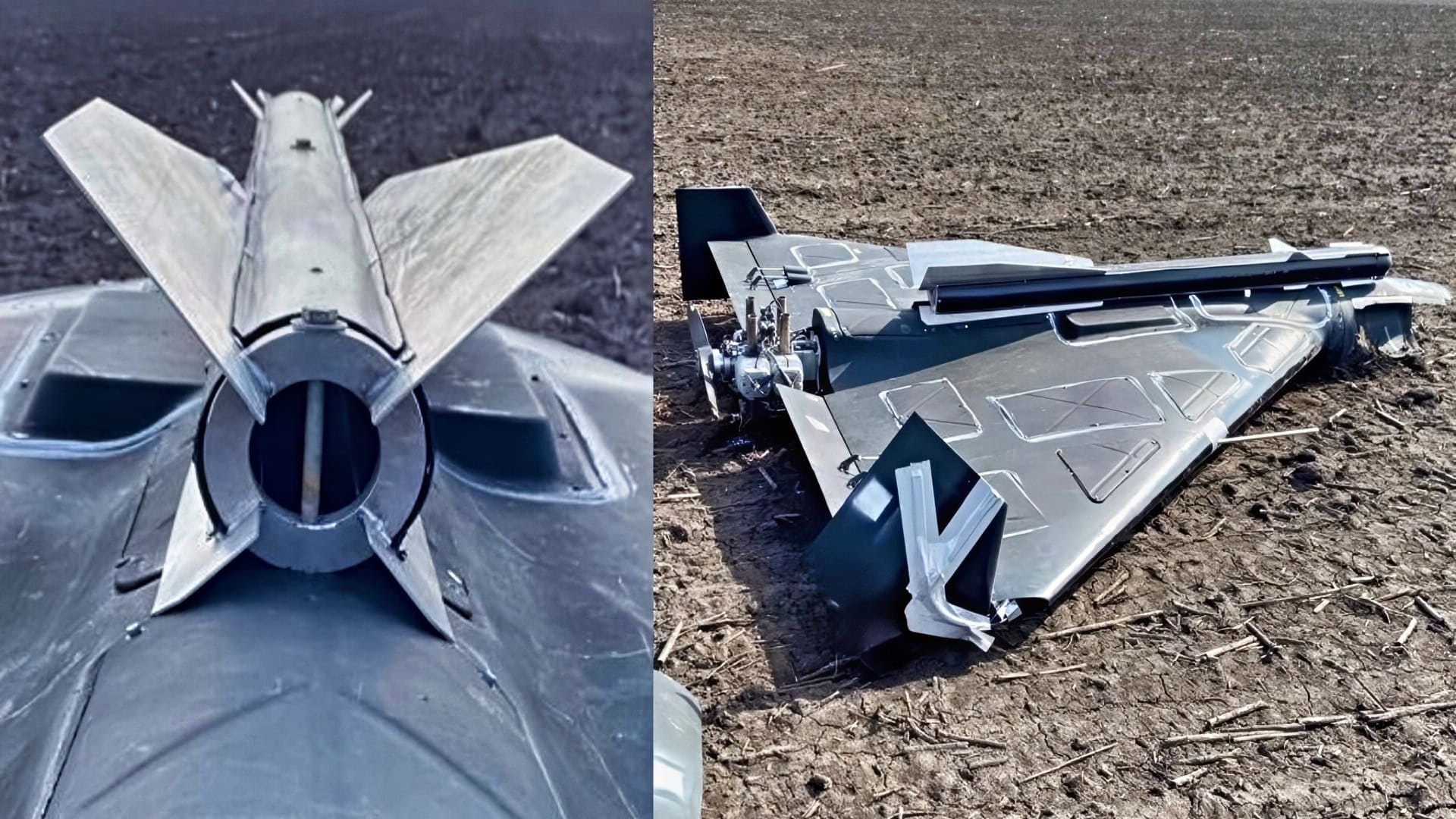
Russia's dependence on Iranian drone technologies has long ceased to be a political rumor. The "Geran" family, derived from the Iranian Shahed line, has become a cheap tool for Moscow to exhaust Ukrainian air defense and energy infrastructure. Its combat value lies not in accuracy but in the economics of the salvo: forcing the opponent to expend more expensive interceptors, overloading air defense calculations, and keeping the population in a state of nighttime alert. In this logic, every engine, navigation block, fuse, or hull element matters because it turns into another night with dozens or hundreds of targets.
Therefore, the strike on Anna should be read as a continuation of Ukraine's "long sanctions" campaign, as Zelensky describes: strikes on oil depots, logistics hubs, warehouses, and economic infrastructure facilities. The difference is that the Caspian takes this campaign beyond the familiar map of war. Kyiv is showing that the Russian depth is no longer safe simply because it is located far from the front line. This is bad news for the General Staff of the Russian Federation, which has been accustomed to thinking of the rear as a space of administrative control rather than a dynamic risk zone.
Iran's Reaction and Russia's Dilemma
Iranian Foreign Minister Abbas Araghchi called the strike a violation of the UN Charter and stated that it "cannot go unanswered." The Iranian ambassador to Russia, Kazem Jalali, also demanded a response. Andrei Sibiga responded harshly, calling Tehran a direct accomplice of Russian aggression. Here we see the classic problem of proxy warfare: as long as supplies are covert, participants maintain diplomatic distance; when a cargo ship is struck, the distance turns into a political fiction.
But for Moscow, the situation is no less uncomfortable than for Tehran. If Russia acknowledges the military nature of the cargo, it confirms the Ukrainian thesis about the legality of the attack on an element of military logistics. If Russia and Iran insist on the civilian nature of the vessel, they are forced to explain why Kyiv chose this particular object, why it was located at the Volga entrance, and why such a nervous diplomatic reaction arose around it. Official rhetoric, as is often the case, tries to buy time; material logistics do not buy time.
In Russian military history, the rear has often been considered a territory of order. The war of 2022-2026 consistently proves the opposite: the rear becomes a system of targets if it feeds the front.
Washington's Context and Kyiv's Missile Defense Needs
The event occurred against the backdrop of Zelensky's trip to Washington, where his main request, according to BBC and Ukrainian media reports, is related to strengthening ballistic missile defense. This is not a coincidence. Russia is ramping up combined strikes—drones, cruise missiles, ballistic means—precisely so that Ukraine is constantly forced to choose between protecting cities, energy, industrial facilities, and troops. Kyiv responds asymmetrically: if it cannot intercept everything, it needs to reduce the opponent's ability to launch new waves.
The nighttime attack by Ukrainian drones on the Moscow region, which Moscow Mayor Sergey Sobyanin described as more than 390 targets, fits into the same framework. Russian air defense can report interceptions, but it has to reveal positions, expend resources, and protect not only the frontline but also the economic core of the country. This resembles the late Soviet problem of Afghanistan in reverse: the opponent does not hide in the mountainous periphery, but the Russian system is forced to guard its own depth from cheap, mass, and hard-to-predict means.
Limitations of Ukrainian Escalation
However, there is also a risk. Former Ukrainian intelligence officer Ivan Stupak rightly noted to the BBC that opening another front with Iran is not advantageous for Ukraine. From a military standpoint, Kyiv is not interested in a war with Tehran but in raising the cost of Russian-Iranian cooperation. The difference is subtle but significant. A strike on a supply route is rational if it forces the opponent to change logistics, insure cargo, slow down supplies, and implement additional masking measures. It becomes dangerous if it gives Iran a political reason for direct strikes or expanding supplies to Russia.
My preliminary conclusion, therefore, is cautious. The Caspian strike does not change the war overnight and does not destroy the Russian "Geran" program. The Russian defense industry knows how to adapt roughly, expensively, and slowly, but it can still adapt. However, the strike changes the risk calculation: from now on, the Iranian route through the Caspian and Volga no longer looks like a sanitary corridor outside of war. If Kyiv can selectively repeat such operations, with good intelligence and without sliding into symbolic revenge, Moscow will face not a catastrophe but a chronic logistics problem. For a large army, this can sometimes be worse than a sudden crisis.
Ukrainian forces struck the Iranian vessel Anna in the Caspian Sea on 27-28 July 2023, targeting a supply route for drones between Russia and Iran. This operation is part of Ukraine's broader strategy to disrupt Russian logistics and military supply chains. Iranian officials reported casualties among the crew, indicating the strike's impact on the ongoing military cooperation between Russia and Iran.
- Ukrainian forces struck the Iranian vessel Anna in the Caspian Sea.
- The strike is part of Ukraine's campaign against Russian supply routes.
- Iranian officials reported casualties among their crew.
- The operation highlights the connection between Russian military logistics and Iranian drone technology.
- Ukrainian President Zelensky mentioned successful long-range strikes in the region.