
Strike on MiG-29 and Pantsir-S1 in Kursk Showed the Overload of Russian Air Defense in 2026
 Dmitri Volkov
Strike on MiG-29 and Pantsir-S1 in Kursk Reveals Overload of Russian Air Defense in 2026
One downed MiG-29 does not change the balance of air warfare by itself. One downed Pantsir-S1 is also not a catastrophe for the Russian air defense system. However, the strike on both targets at the Khalino airfield in the Kursk region on July 21 is significant precisely because of the combination of targets: the aircraft, which is supposed to participate in airspace protection, and the system, which is supposed to protect the airfield itself, found themselves in one vulnerable chain. In Russian military tradition, this is referred to not as a loss of equipment, but as a disruption of the stability of a defense node. The difference is substantial.
What is Known About the Night Series of Strikes
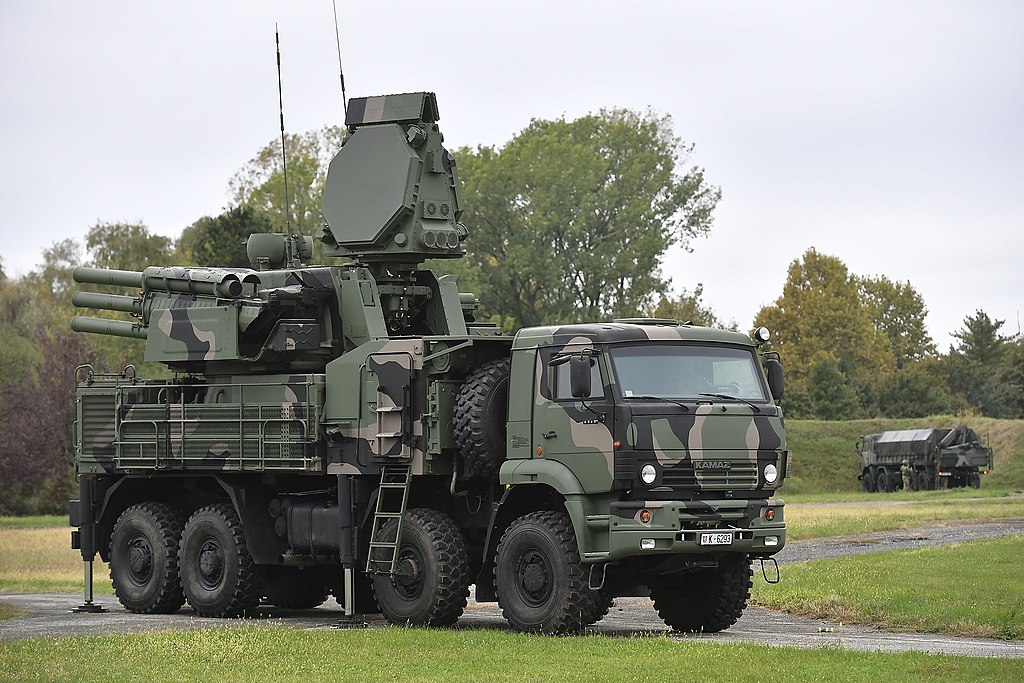
According to a report from the General Staff of Ukraine, transmitted to Kyiv Independent on July 21, the strike on the Khalino airfield was carried out by the 15th Artillery Reconnaissance Brigade "Black Forest." The Ukrainian side reported the downing of a MiG-29 fighter and a Pantsir-S1 surface-to-air missile and gun system. In the same cycle of strikes, according to Ukrainian data, the radar station "Bussol-S" near Khorlov in the occupied part of the Kherson region, logistics facilities in Donetsk, Luhansk, and Kursk regions, as well as several command points of Russian drones, were hit. The Russian side had not provided comparable confirmation regarding Khalino at the time of preparing this text, so the exact scale of the damage should be considered not fully verified.
However, even with this caveat, the choice of targets itself deserves attention. Khalino is not located in deep Siberia or on a remote training ground, but in a region that has long been part of the Russian frontline infrastructure. After 2024, the Kursk region transformed from a rear administrative territory into an operational belt, where airfields, warehouses, roads, and communication nodes support the war against Ukraine. In Soviet textbooks on operational art, such a belt would be called the near operational rear. Moscow's problem is that this rear has ceased to be a rear in the physical sense of the word.
Why Pantsir-S1 is Important
The Pantsir-S1 was created as a short-range air defense system for protecting important objects and senior air defense systems. Its typical role is to cover airfields, command posts, warehouses, S-300/S-400 batteries, and other valuable elements from cruise missiles, drones, and low-altitude targets. The system combines missiles and 30mm guns, has its own radar for detection and tracking, but its effectiveness always depends on external organization: the quality of the radar field, timely target designation, proper placement, discipline of the crew, and the absence of overload from false or mass targets.
The cost of one Pantsir is usually estimated by Ukrainian sources at 15-20 million dollars. This is not the price of a strategic S-400 system, but it is not a consumable either. In February, the SBU claimed that the "Alpha" unit destroyed about half of the Russian Pantsir fleet. These figures likely require caution: the Ukrainian side has a clear incentive to demonstrate the effectiveness of deep strikes. But even if the estimate is inflated, the trend is evident. Russia is forced to stretch a limited number of short-range air defense systems between airfields, oil depots, command posts, bridges, military factories, and long-range air defense positions. This is a classic problem with an insufficient number of variables: there are more targets than means of protection.
MiG-29 as a Symptom of an Old Aviation Economy
The MiG-29 has long ceased to be a symbol of technological leadership in Russian aviation. It is a machine of the late Soviet school, designed for frontline warfare with a high density of airfield networks and a relatively short combat radius. In 2026, its value lies not in its supposed ability to turn the air campaign around, but in the fact that it remains a working unit for air defense tasks, patrolling, intercepting, and sometimes striking ground targets. The loss or damage of such an aircraft is unpleasant primarily because Russia is not only fighting with the latest Su-35S or Su-34. It is fighting with the entire inherited mass of Soviet aviation, which needs to be repaired, upgraded, and kept operational.
Here, an institutional detail arises that is rarely mentioned in daily reports. An aircraft at an airfield is vulnerable not only to a missile or drone but also to poor dispersal procedures. The Soviet school was well aware of this risk: camouflage, false parking, alternate airfields, and engineering shelters were not embellishments but part of aviation survival. However, modern Russian practice often shows a strange combination of old doctrine and new bureaucratic laziness. Aircraft are concentrated where it is more convenient to service them, rather than where it is safer to keep them. The war has been punishing exactly such compromises for four years now.
A Series of Strikes Speaks More Than a Single Target
If we consider only Khalino, the conclusion will be too narrow. But during the same period, the Ukrainian side reported the destruction of the Bussol-S radar, warehouses, logistics points, and command posts of drones. This does not necessarily mean a single brilliantly synchronized operation in the Western sense. Rather, it is about the accumulated Ukrainian skill in turning intelligence information into a series of pinpoint strikes on different layers of the Russian system. One strike worsens observation, the second hits a warehouse, the third strikes a drone control point, and the fourth targets airfield protection.
This approach is dangerous for Russia not because of the scale of each individual loss, but because of the effect of constant managerial irritation. Command has to move air defense systems, change security schemes, enhance camouflage, restore warehouses, reassign crews, and explain to superiors why yet another object was hit. In peacetime bureaucracy, this would be called coordination costs. In war, it translates to time, fuel, personnel, and growing nervousness. In the Russian system, where responsibility often shifts downwards while decisions remain at the top, such stress is particularly destructive.
The Russian Public Picture and Military Reality
Against this backdrop, the assessment from ISW on July 20 is curious: Russian military bloggers disputed official claims that Moscow allegedly ensured control and security of the M-14 route from Rostov to Crimea. This episode is not directly related to Khalino, but it illustrates the same problem — the gap between the reported picture and field reality. The state system strives to show the resilience of communications and defense, while pro-Russian sources sometimes admit that security remains conditional. The Soviet formula "report on completion" is once again living better than the task actually completed.
For Kyiv, strikes on such targets have not only military but also political significance. They demonstrate to Russian society that the war is gradually returning to the infrastructure of border and even central regions. This is not a promise of a quick victory and not proof of a Russian collapse. Russia still possesses great depth, an industrial base, and the ability to repair damage. But that depth has become more expensive: it needs to be covered, supplied, insured, and constantly explained to the population why the "special operation" requires air defense around airfields, oil depots, and warehouses.
Forecast
In the coming months, the Russian response will likely consist of three measures: greater dispersal of aviation, strengthening short-range air defense around airfields, and expanding electronic warfare against Ukrainian long-range drones. But each of these measures comes at a cost. Dispersal complicates aircraft maintenance, strengthening air defense takes systems away from other directions, and electronic warfare does not solve the problem of the physical vulnerability of warehouses and parking areas. Therefore, the strike on the MiG-29 and Pantsir-S1 in the Kursk region should be read not as a sensation, but as an indicator. The Russian rear defense is not collapsing, but it is increasingly operating in a state of chronic overload. And chronic overload in the military usually manifests not immediately — first in small failures, then in large explanations.
Sources
- Kyiv Independent, July 21, 2026 — report on the downing of MiG-29 and Pantsir-S1 at Khalino airfield.
- General Staff of Ukraine, Telegram, July 21, 2026 — statements about a series of strikes on Russian military facilities.
- Institute for the Study of War, Russian Offensive Campaign Assessment, July 20, 2026 — assessment of Russian information contradictions surrounding the M-14 route.
- SBU, February 2026, via Kyiv Independent — assessment of the cost and losses of Pantsir-S1 systems.
Ukrainian forces struck a MiG-29 and a Pantsir-S1 air defense system at Khailino airfield on July 21, 2026. The operation was carried out by the 15th Artillery Reconnaissance Brigade, reflecting a significant impact on Russian military capabilities. This strike is part of a series of attacks targeting Russian military infrastructure in the region, indicating ongoing operational challenges for Russian forces.
- Ukrainian forces struck a MiG-29 and a Pantsir-S1 at Khailino airfield on July 21, 2026.
- The strikes were conducted by the 15th Artillery Reconnaissance Brigade.
- The operation reflects a broader trend of Ukrainian strikes on Russian military infrastructure.
- The loss of these assets indicates a strain on Russian air defense capabilities.
- The report highlights the ongoing conflict dynamics in the Kursk region.