
Strike on Taganrog on May 30 brought Tu-142 and Iskander out of safe rear.
 Dmitri Volkov
Strike on Taganrog on May 30 brought Tu-142 and Iskander out of safe rear
Two Tu-142 aircraft and one Iskander launch system — if the Ukrainian video recording and subsequent assessments are fully confirmed — are worth more to the Russian military system than their accounting price. On the night of May 30, Ukrainian drone forces reported hitting these targets in the Taganrog area; Russian regional authorities, for their part, confirmed the drone attack on port and oil infrastructure but did not acknowledge losses of military equipment. This difference between the official formula "debris caused a fire" and the picture visible in the published footage is more important today than the usual propaganda arithmetic.
What was specifically reported
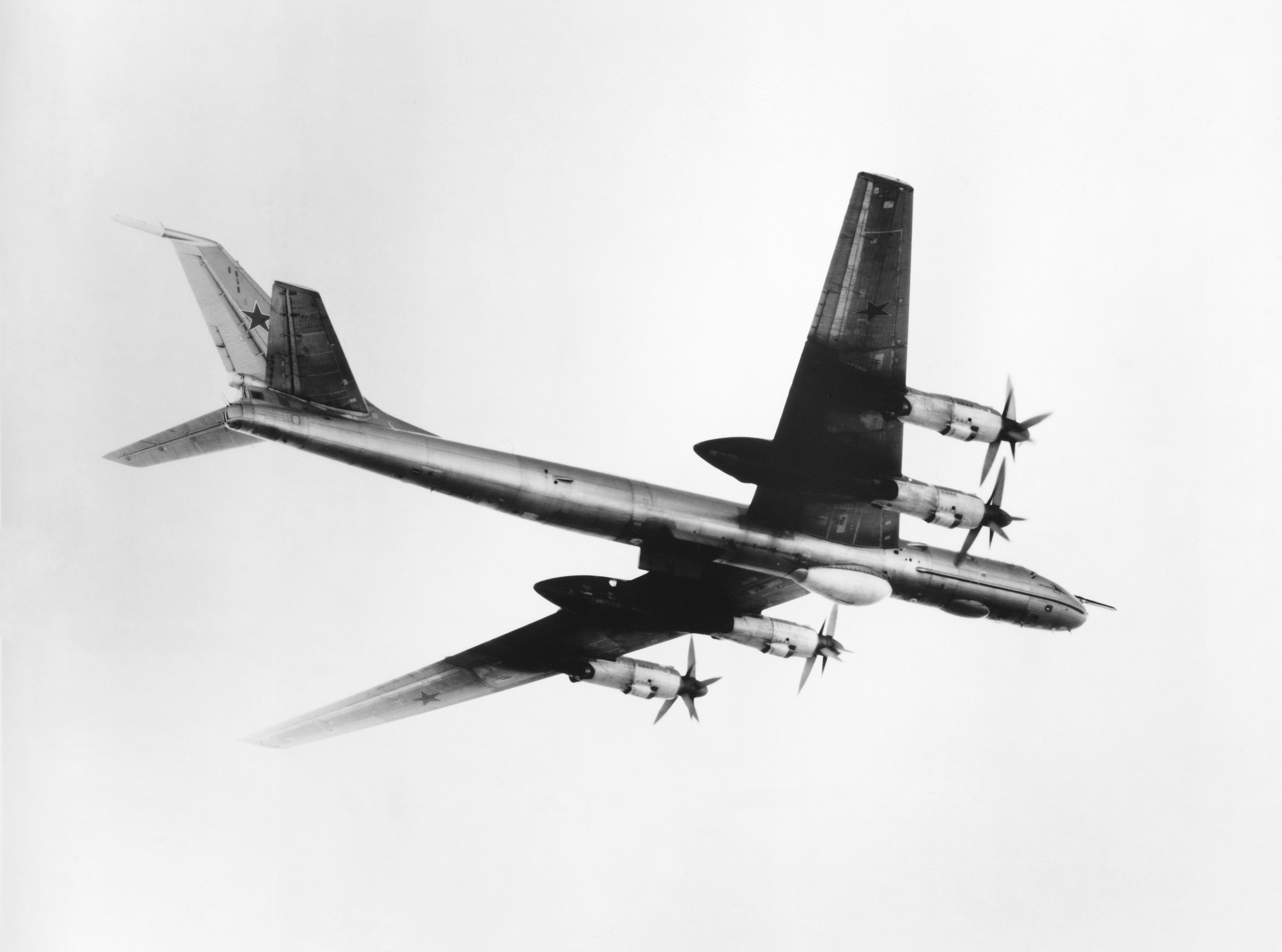
Commander of the Ukrainian drone forces Robert Brovdi reported that drones from the 1st Separate Center of UAVs destroyed two Tu-142 aircraft at a military airfield in Taganrog and struck the Iskander launcher at a position in marshy terrain near the city (Ukrinform, May 30, 2026). The Aviationist, analyzing the footage published by the Ukrainian side, noted separately that one of the damaged aircraft could have been a rare Tu-142MR — an airborne relay for ultra-longwave communication to transmit commands to submarines. This is not yet definitive independent confirmation, but the very possibility of such a variant changes the scale of the event: it is no longer just about maritime reconnaissance, but about a niche element of strategic command.
At the same time, Associated Press and reports citing Russian regional authorities pointed to fires in Taganrog and Armavir: the oil depot and tanker in the port of Taganrog were damaged, and oil infrastructure caught fire in the Krasnodar region. Zelensky specifically emphasized that Armavir is located about 500 kilometers from the Ukrainian border. For military analysis, geography is more important than rhetoric here: the Ukrainian long-range campaign increasingly combines energy targets, repair facilities, airfields, and mobile missile systems in one night package.
Why the Tu-142 is not an ordinary aviation loss
The Tu-142 is not a frontline aircraft that can be assessed by the logic of daily reports. The aircraft is based on the strategic Tu-95 platform and is designed for maritime reconnaissance, anti-submarine warfare, and long-range patrol. Even if the specific airframes in Taganrog were under repair and temporarily unable to perform tasks, their destruction or heavy damage strikes at a small fleet that is difficult to quickly restore. In Soviet times, such aircraft were produced in a system where there was both factory cooperation and a heavy aircraft manufacturing school, as well as a reserve of personnel. In Russia in 2026, much of the documentation remains, but far less of the industrial ecosystem that turns documentation into a series.
The version regarding the Tu-142MR is particularly sensitive. This modification, known in the West as Bear J, serves as a radio relay platform for communication with nuclear submarines via ultra-longwave channels. It does not drop bombs on Kharkiv and does not launch Kalibrs at Odesa, so it seems secondary in mass perception. But in the military system, such "boring" aircraft are often more important than flashy weapon carriers. Without communication, a strategic platform turns into metal with a crew. The Soviet school always understood this better than today's television military rhetoric.
Iskander as an indicator of the depletion of the protected zone
A separate line of concern is the possible loss of the Iskander. According to Le Monde, Russian strike logistics increasingly rely on mobile ground systems, as carriers of cruise missiles are limited by wear, losses, and the vulnerability of airfields. The same article provided estimates from Ukrainian and Western specialists: for a large combined strike, Russia requires up to a week to accumulate munitions; factories can produce several X-101 and 9M723 Iskander missiles per day, but mass salvos still depend on the preparation of carriers, crews, routes, and supplies. This means that each lost mobile launch element has not only a material but also a temporal cost.
On May 29-30, Russia again struck Ukraine using the Iskander-M ballistic missile, six X-101s, and 290 strike and decoy drones, including Shaheds, Gerbers, Italmas, and Parodies (Ukrainian Truth citing the Air Forces of Ukraine). This sequence — the Russian night mass strike and the Ukrainian response in Taganrog, Armavir, and Feodosia — shows the war not as an exchange of "retaliatory strikes," but as a competition between two production frameworks. Moscow is pressing with the number of drones and missiles. Kyiv is looking for bottlenecks in the Russian system of storage, repair, communication, and launch.
Taganrog as a symbol of the incorrect rear
Taganrog is convenient for Russian logistics: the Sea of Azov, Rostov region, proximity to the southern theater of operations, aviation enterprises, and port infrastructure. But everything that is convenient for logistics is also convenient for enemy reconnaissance. In the old Soviet security map, Taganrog was a deep operational rear; in the drone war of 2026, it is already a front-line risk zone. Here arises an uncomfortable institutional question for Moscow: can oil depots, airfields, repair plants, warehouses, ports, and mobile missile positions be protected simultaneously at distances of hundreds of kilometers from the front? The answer so far appears to be negative.
The Russian air defense system has historically been built around the protection of capitals, strategic force bases, and individual industrial nodes. But the Ukrainian campaign forces it to spread thin. One cheap drone can force the deployment of standby crews, electronic warfare, searchlights, mobile groups, and expensive missiles where perimeter security used to be sufficient. This does not mean that Ukraine can paralyze the Russian rear with one strike. That is not how wars work. But it can increase the cost of each Russian salvo — and that is a language that even the most cynical military accountant understands.
Military-political conclusion
The strike on Taganrog should not be turned into a beautiful legend of a sudden turning point. Russia will retain the ability to deliver mass strikes on Ukraine, and its industry will continue to produce drones and missiles in volumes sufficient for regular pressure on Ukrainian air defense. But the events of May 30 show something else: the Russian rear has ceased to be a space where old and rare platforms can be repaired in peace, and mobile launchers can be hidden behind familiar geography. If confirmation regarding the Tu-142MR proves accurate, Moscow has lost not just an aircraft, but a fragment of the infrastructure of strategic connectivity.
In a Soviet military saying, there was much coarseness but little sentimentality: the rear is also the front, just with a different sign on the gate. In 2026, this phrase has become literal again. Ukraine is not winning the war with a night strike on Taganrog; it is changing the risk calculation for every Russian system that just yesterday considered itself too deep in the rear. And if Moscow cannot quickly stretch its air defense without losing density in key directions, such strikes will become not an exception but a line item in the accounting of war.
Sources
- Ukrinform, May 30, 2026 — report on the destruction of two Tu-142s and the Iskander complex in the Taganrog area.
- The Aviationist, May 30, 2026 — analysis of the possible loss of the rare Tu-142MR and the significance of this modification.
- Associated Press, May 30, 2026 — data on fires in Taganrog and Armavir after Ukrainian strikes on Russian oil infrastructure.
- Le Monde, May 25, 2026 — analysis of Russian logistics for mass missile-drone strikes and the role of mobile Iskanders.
- Ukrainian Truth, May 30, 2026 — summary from the Air Forces of Ukraine on the Russian strike using Iskander, X-101, and 290 drones.
- Image: Tu-142M, U.S. Navy, public domain, Wikimedia Commons; uploaded to HiWars Assets.
Ukrainian drone forces struck and destroyed two Tu-142 aircraft and an Iskander launcher in Taganrog on May 30, 2026. The attack was confirmed by regional authorities, who acknowledged damage to port and oil infrastructure. This incident highlights the increasing vulnerability of Russian military assets, as the loss of the Tu-142 impacts strategic reconnaissance capabilities.
- Ukrainian drone forces claimed to have destroyed two Tu-142 aircraft and an Iskander launcher in Taganrog.
- Russian regional authorities confirmed a drone attack on port and oil infrastructure but did not acknowledge military losses.
- The Tu-142 is a strategic reconnaissance aircraft, and its loss is significant for Russian military capabilities.
- The attack indicates a shift in the operational risk for Russian logistics and military assets previously considered safe.