
JNIM and Islamic State clash in Niger in 2026 — three fronts threaten Nigeria
 S.W
S.WJNIM and Islamic State clash in Niger in 2026 — three fronts threaten Nigeria
In Petel Kolé, in the Nigerien region of Tillabéri, the Sahelian war changed texture in early April. Fighters from the Islamic State Province in the Sahel (ISSP) attacked a base of the Group for Support of Islam and Muslims (JNIM), affiliated with Al-Qaeda, near the Burkinabe border. The episode, reported on May 30 by El País, is not just another clash between two acronyms. It is a collision of armed networks in a transit, taxation, and recruitment zone.
On a staff map, Petel Kolé appears tiny. On the ground, this portion of Tillabéri is a gateway. It connects western Niger to Burkinabe tracks, to Liptako-Gourma, and further south, to the corridors leading down to northern Benin and Nigeria. When two jihadist organizations fight there, it is not an abstract doctrinal dispute. They are contesting the ability to move men, motorcycles, ammunition, fuel, and messages.
An internal war becoming operational
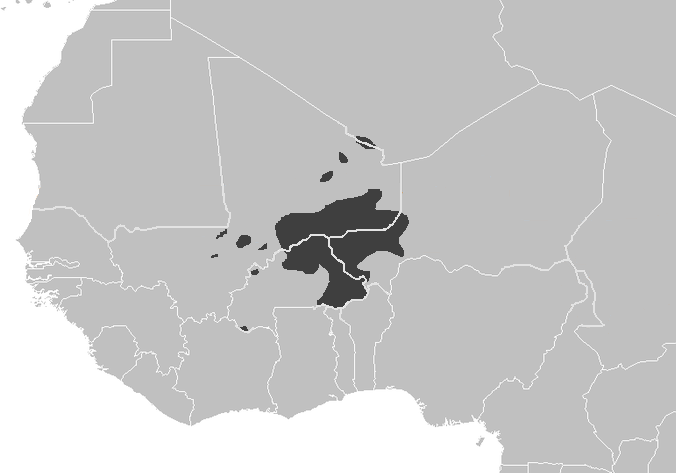
JNIM and ISSP have long observed each other with relative caution in certain areas, each prioritizing pressure against national armies, local militias, or foreign forces. This period is over in sectors where their areas of influence overlap. The logic is simple: a group that controls a track also controls the toll on transport, access to weekly markets, punishment of recalcitrant notables, and the forced protection offered to herders.
The important point is that this rivalry does not mechanically reduce the threat to states. From experience, two groups that confront each other can simultaneously increase violence against civilians and isolated posts, because each camp must prove its strength. Attacks then become messages directed as much at the rival as at the army. An ambush, the burning of a vehicle, the kidnapping of a village chief, or the temporary seizure of a base serve to say: this road belongs to us.
ACLED reminds us that central Sahel remains structured by a transnational insurgency where JNIM, the Islamic State in the Sahel, the Volunteers for the Defense of the Homeland, state forces, and Russian mercenaries operate in intertwined spaces. This density of actors produces a war without a continuous front. One does not hold a line; one holds a crossroads, a pond, a ferry, a telephone relay, or a fuel depot.
Mali serves as an accelerator
The Malian crisis gives this competition a new depth. Since the coordinated offensive on April 25, JNIM and the Azawad Liberation Front (FLA) have demonstrated their ability to strike Bamako, Kati, Mopti, Sévaré, Gao, and Kidal in the same sequence. Amnesty International notes that GSIM/JNIM then announced on April 28 a siege targeting the roads to Bamako, with at least three of the six main axes disrupted by mid-May. On May 6, a civilian convoy carrying goods, including fruits, was attacked between Bamako and Bougouni.
Militarily, this is a suffocation maneuver. It does not require taking Bamako street by street. It is enough to make the movement of trucks from Dakar, Abidjan, or Conakry uncertain, to force the Malian army and the Russian Africa Corps to escort the flows, and to turn every kilometer of road into a tactical choice. The power may still hold the capital, but it is losing the initiative over the arteries that nourish it.
This Malian pressure indirectly benefits both jihadist poles. JNIM gains prestige because it appears as the actor capable of threatening the political center. The Islamic State, for its part, can present itself in certain areas as a harder force, less negotiable, more able to punish communities that have come under adverse influence. This is not a contradiction: both narratives can recruit simultaneously in different villages.
Northern Nigeria is no longer a separate theater
The most sensitive part is playing out in Nigeria. The Lake Chad basin remains dominated by the Islamic State in West Africa (ISWAP) and Boko Haram/JAS, but it is no longer possible to treat it as an isolated compartment from the central Sahel. Al Jazeera highlighted on May 18 that the violence in Lake Chad is part of an economy of taxation, smuggling, recruitment, and weak governance. The same analysis cites regional porosity as a factor in the movement of fighters and weapons.
Washington and Abuja have responded with an operational escalation. According to the Associated Press, the Nigerian army announced on May 19 that a joint operation with the United States had killed 175 Islamic State fighters in the northeast of the country, following an initial announcement reporting more than 20 dead. A few days later, the Nigerian army announced it had freed 92 people kidnapped by jihadists. These are real tactical successes, but they do not address the issue of depth.
The problem for a staff is that the adversary does not need a perfectly secured corridor from Kidal to Borno. It is enough for them to have usable segments: a contact in northern Benin, a channel in Kebbi or Sokoto, a sleeper cell in Kaduna, an old relationship with Ansaru, and then a road to the islands of Lake Chad. Groups do not always move columns. They move skills: bomb makers, drone trainers, recruiters, zakat collectors, media specialists.
Three fronts to watch
- Tillabéri and Téra: the area of Petel Kolé indicates that the JNIM-ISSP clash touches the western gates of Niger, with a direct risk for the axes towards Burkina Faso and Benin.
- Central Mali and roads to Bamako: the pressure on civilian and logistical convoys forces Bamako to disperse its forces, at a time when the junta wants to show that order is maintained.
- Lake Chad and northwestern Nigeria: ISWAP, Boko Haram/JAS, Lakurawa, and local criminal networks can absorb effects from the Sahel without formally merging with them.
I remain cautious about the tolls of internal fighting between JNIM and ISSP. Numbers often circulate through propaganda channels or local relays that are difficult to verify. But the location of incidents sometimes matters more than the exact number of dead. Petel Kolé, Bamako-Bougouni, Barka Tolorom, and Metele are not isolated points. They outline a system.
What the armies risk missing
The temptation for Sahelian juntas and their partners is to read this rivalry as an opportunity: let two enemies wear each other out, then strike the survivor. This reading is too comfortable. In the Sahel's countryside, competitive violence primarily creates administrative insecurity. Mayors fade away, schools close, markets change days, transporters pay twice, and families learn to negotiate with the last armed man to arrive in the village.
For a military column, the concrete question will be this: which road remains passable without creating an announced ambush? The rainy season will soon complicate secondary tracks. Groups that control high points, crossings, and relay villages will be able to impose the tempo. If the armies of Niger, Mali, Burkina Faso, and Nigeria do not share movement intelligence more quickly, the internal jihadist war will not relieve them. It will simply shift the next ambush to the least monitored axis.
Main sources: El País, ACLED, Amnesty International, Al Jazeera, Associated Press, and National Counterterrorism Center. Information on internal jihadist fighting remains partially claimed and should be followed with caution.
JNIM and ISSP engaged in clashes in Petel Kolé, Tillabéri, Niger, in April 2026, impacting supply routes to Burkina Faso and Benin. The conflict reflects a broader struggle for control over key transit areas in the Sahel. Concurrently, JNIM has demonstrated increased operational capacity in Mali, while the situation in the Lake Chad basin remains interconnected with ongoing violence in the region.
- JNIM and ISSP engaged in clashes in Tillabéri, Niger.
- The conflict affects supply routes to Burkina Faso and Benin.
- JNIM has increased its operational capacity in Mali.
- The situation in the Lake Chad basin is interconnected with the Sahel.
- The rivalry between JNIM and ISSP may increase violence against civilians.