
Su-30SM and Su-24 Under Attack in Saki — Seven Aircraft in a Week
 Dmitri Volkov
Su-30SM and Su-24 under attack in Saky — seven aircraft in a week
Seven hangars in one night — this is not a victorious report and not definitive proof of the destruction of seven aircraft. This is a more interesting matter: an indicator that the Russian aviation group in Crimea is forced to operate in a mode for which its infrastructure was not originally designed. The Ukrainian Security Service announced on July 3 that its drones struck the Saky airfield for the second time in a week and additionally hit the Gvardeyskoye airfield, where, according to Ukrainian data, Shahed-type drones and aviation assets were located. In Saky, according to reports from the SBU, seven hangars with Su-30SM, Su-30, and Su-24 were hit; preliminary reports indicate at least seven damaged or destroyed aircraft (Ukrinform, RBC-Ukraine, July 3, 2026). The Russian side had not publicly confirmed the losses at the time of publication. But even if the final number turns out to be lower than the Ukrainian preliminary estimate, the military significance of the episode does not disappear.
Why Saky is more important than an ordinary airfield
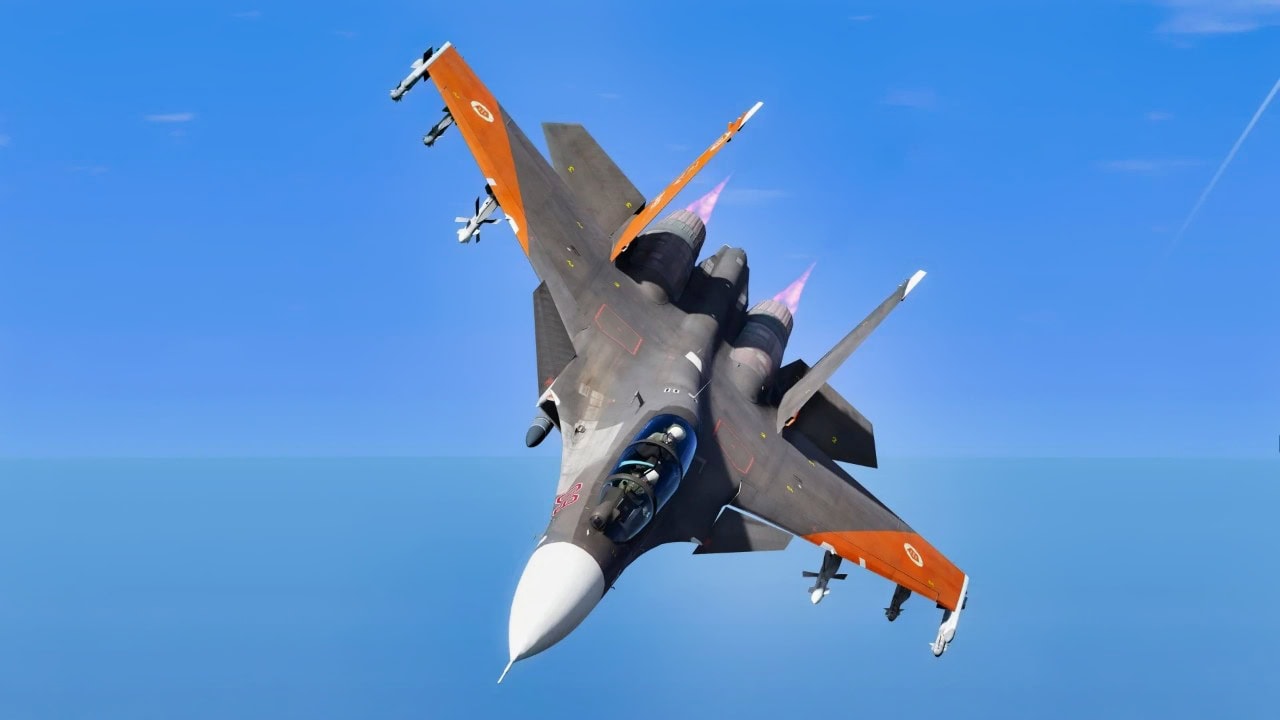
The Saky airfield near Novofedorivka is one of the key aviation hubs of the Russian group in Crimea. Its value lies not only in the runway and parking spaces but also in its geography. From here, tactical aviation can support the southern direction, the Black Sea coast, and strikes on Ukrainian infrastructure without the logistical burdens that would arise from relocating deeper into Russian territory. The Su-30SM in this scheme serves as a multirole fighter: covering, escorting, employing guided munitions, and sometimes standing by for maritime targets. The Su-24, despite the age of its design, remains a frontline bomber with a clear task for the Russian military — to deliver strike payloads on pre-reconnoitered targets. This is why an attack on the hangars, rather than just on the runway, makes sense: the runway can be patched up, but replacing an aircraft and a trained crew takes much longer.
In the Soviet tradition, an airfield was viewed as a system of dispersal, camouflage, repair teams, and backup sites. But the current Russian war, with its cheap drones, satellite reconnaissance, and constant publication of strike results, is breaking the old arithmetic. If an aircraft is parked in a light hangar or on an open area, then protection turns from an engineering task into a matter of luck. The Kyiv Post, citing the SBU, estimated the cost of individual aircraft of this class at about $30–50 million; such estimates are certainly rough, but the order of magnitude is correct. A dozen strike drones, even if some do not reach their targets, force Russia to risk assets whose cost and recovery cycle are two orders of magnitude higher.
Second attack in a week and a new logic of pressure
It is especially important that this is not a one-off raid. On July 1, the SBU already reported five hits on hangars in Saky, where, according to preliminary data, Su-30 and Su-30SM could have been located. On July 3, the Ukrainian side announced a new strike on the same Saky and Gvardeyskoye. RBC-Ukraine additionally provided a list of targets that, according to the commander of the Drone Forces, Robert Brovdi, were hit in Crimea on the night of July 3: substations of 35, 110, and 330 kV, a gas compressor station, as well as the Tor-M2 complex in the Zaporizhzhia region. This is no longer a classic retaliatory strike on a single target. It is an attempt to overload the Russian security system in Crimea as a unified network — aviation, energy, air defense, drone storage, communications, and logistics.
This approach resembles not the Western concept of instant air dominance, but a more modest yet practically dangerous operation of attrition. Ukraine is not obliged to destroy all Russian aviation in Crimea. It is enough for it to ensure that every flight shift, every transfer, every repair, and every night parking requires additional air defense forces, engineering work, and command attention. In old Soviet textbooks, the word resilience was loved. Here we see its opposite: the system can maintain formal combat capability, but the cost of that capability is rising faster than the frontline result.
The problem of shelters and Russian institutional inertia
The most unpleasant aspect for Moscow in this story is not the number seven itself. The problem is that it is repeating. After the strikes on airfields in 2022–2025, Russian aviation should have transitioned to mass construction of protected shelters, false positions, remote storage of munitions, and regular dispersal. Partially this was done, but judging by reports from Saky and Gvardeyskoye, it is not enough. The reason lies not only in concrete and money. The Russian military bureaucracy is good at building showcase facilities but struggles with the routine, unglamorous, and costly work of protecting each hangar, each parking space, and each fuel supply route.
Here we see an old Russian paradox: the state is capable of producing long-range missiles but is not always able to protect an aircraft from a relatively cheap drone. This is not technological primitiveness but organizational disproportion. The production of Su-30SM, repair of Su-24, training of pilots, supply of engines and avionics are tied to long chains of the defense industry. However, establishing protected shelters requires discipline at the garrison level, money without a glamorous television effect, and the acknowledgment that the enemy has already learned to regularly reach Crimea. In Russia, such acknowledgment is politically inconvenient. Therefore, it is easier to talk about intercepted targets than to explain why hangars are once again becoming targets.
What this changes on the southern front
One cannot draw an excessive conclusion that the strike on Saky will immediately deprive Russia of air support in the south. Russian aviation still has depth of basing, backup airfields, and the ability to relocate aircraft. But operational freedom is narrowing. The more aircraft are taken out of service or moved to more distant sites, the harder it becomes to maintain a high tempo of strikes on Ukraine and the southern front. The flight time increases, maintenance becomes more complicated, and the burden on crews and ground services rises. Wars are rarely resolved by a single spectacular explosion; more often, they change through the accumulation of such small accounting entries.
The main question after the strike on Saky is not how many aircraft burned. The main question is how many more Russian airfields must now behave as if the next drone is already flying toward their hangar.
The Ukrainian 40-day campaign, reported by Ukrinform and Kyiv Post citing statements from President Volodymyr Zelensky and the SBU, appears to be an attempt to impose precisely this nerve-wracking economy of war on Russia. Moscow responds with massive strikes on Ukrainian cities and infrastructure, but Kyiv shifts the pressure onto the expensive and poorly protected elements of the Russian military machine. There is a cold logic to this: if the front cannot be quickly destroyed, the cost of maintaining it can be systematically increased.
Cautious forecast
The final assessment of the damage in Saky will require satellite images and independent verification; Ukrainian preliminary data must always be separated from confirmed losses. However, the recurrence of strikes on the same airfield is already a fact of strategic significance. In the coming weeks, Russia will likely strengthen air defense in Crimea, relocate some aviation further from the peninsula, and begin to demonstratively report on the protection of airfields. But if there is no systematic construction of shelters and real dispersal, this will remain a treatment of symptoms. Russian aviation in Crimea will not disappear, but it will become more expensive, more cautious, and less convenient for command. Sometimes this is how the degradation of a military machine begins — not with a catastrophe, but with the necessity to pay every day for yesterday's carelessness.
Ukrainian drones struck the Saki airfield on July 3, 2026, damaging or destroying seven aircraft, including Su-30SM and Su-24. This was the second attack on the airfield within a week, highlighting the strategic importance of Saki for Russian aviation in Crimea. The strikes are part of a broader effort to pressure Russian military logistics and air defense systems.
- Ukrainian drones struck Saki airfield on July 3, 2026.
- Seven aircraft, including Su-30SM and Su-24, were reported damaged or destroyed.
- This was the second drone strike on Saki airfield within a week.
- The Saki airfield is a key aviation hub for Russian forces in Crimea.
- The strikes aim to overload Russian air defense and logistics.