

The claim is easy to mistake for softness. Eisenhower went from his first star in 1941 to command of the largest amphibious invasion in history in under three years, held together an alliance of governments with genuinely conflicting interests, and, as president, forced Britain, France, and Israel to withdraw from Egypt in 1956. He also wrote a note before D-Day taking sole blame for a failure that did not happen.
Eisenhower’s Leadership Style
“You do not lead by hitting people over the head—that’s assault, not leadership.”
That’s a famous comment long attributed to Dwight D. “Ike” Eisenhower, in which he summarized the philosophy that guided his leadership style and served him through two extraordinarily demanding periods of his life: commanding a multinational war-fighting force against Nazi Germany and serving as president during the most dangerous years of the early Cold War.
The quote should not fool readers into thinking Eisenhower was weak. In fact, he possessed enormous formal authority, but he still believed that lasting cooperation could not be commanded into existence. In a longer version of his quote, he described leadership as a matter of persuasion, conciliation, education, and patience.
It was slow and difficult work for him, but his career proved that his philosophy could produce results.
From Abilene to the U.S. Army
Eisenhower was born in Denison, Texas, on October 14, 1890. He grew up in Abilene, Kansas, and joined the U.S. Military Academy at West Point in 1911. He graduated in 1915 as part of a class that eventually produced 59 general officers.

Disney Hall of President White House Seal. Image by Harry J. Kazianis taken for 19FortyFive on 9/19/2026.
Eisenhower did not serve overseas during World War I, but he did become an accomplished military planner and a staff officer. He studied armored warfare and served under historic and influential commanders like Generals Fox Conner and Douglas MacArthur. He graduated first in his class from the Command and General Staff School in 1926.
He kept advancing professionally until World War II. He was recognized by Army Chief of Staff Gen. George C. Marshall for his ability to analyze complicated problems and coordinate large organizations. In 1941, he received his first star, and less than three years later he found himself commanding the largest amphibious invasion in history.
His rise was a product of his work ethic and his understanding of logistics and politics. And those were exactly the skills the Allies needed.
Holding the Allied Coalition Together
Eisenhower is recognized by historians for his wartime skill in managing an alliance composed of governments and militaries with conflicting interests. After overseeing Operation Torch in North Africa and subsequent operations in the Mediterranean, he became the supreme commander of the Allied Expeditionary Force in December 1943. That put Eisenhower above formidable commanders like Britain’s Bernard Montgomery and America’s George Patton. British and American officials would regularly disagree over strategy, while French leader Charles de Gaulle carried political complications.
But Eisenhower spent time listening to competing arguments and mediated disputes, and ultimately gave his commanders room to operate — and, historians say, he would act decisively when unity was threatened. He was skilled at managing conflict, preventing rivalries among the allies from disrupting the campaign.
During Operation Overlord, the codename for the Allied invasion of German-occupied Western Europe during World War II, bad weather forced Eisenhower to postpone the Normandy landings from June 5, 1944. After forecasters predicted a brief improvement in the weather, he accepted the risks and ordered the invasion to go ahead on June 6. Approximately 156,000 Allied personnel then landed in Normandy that day.
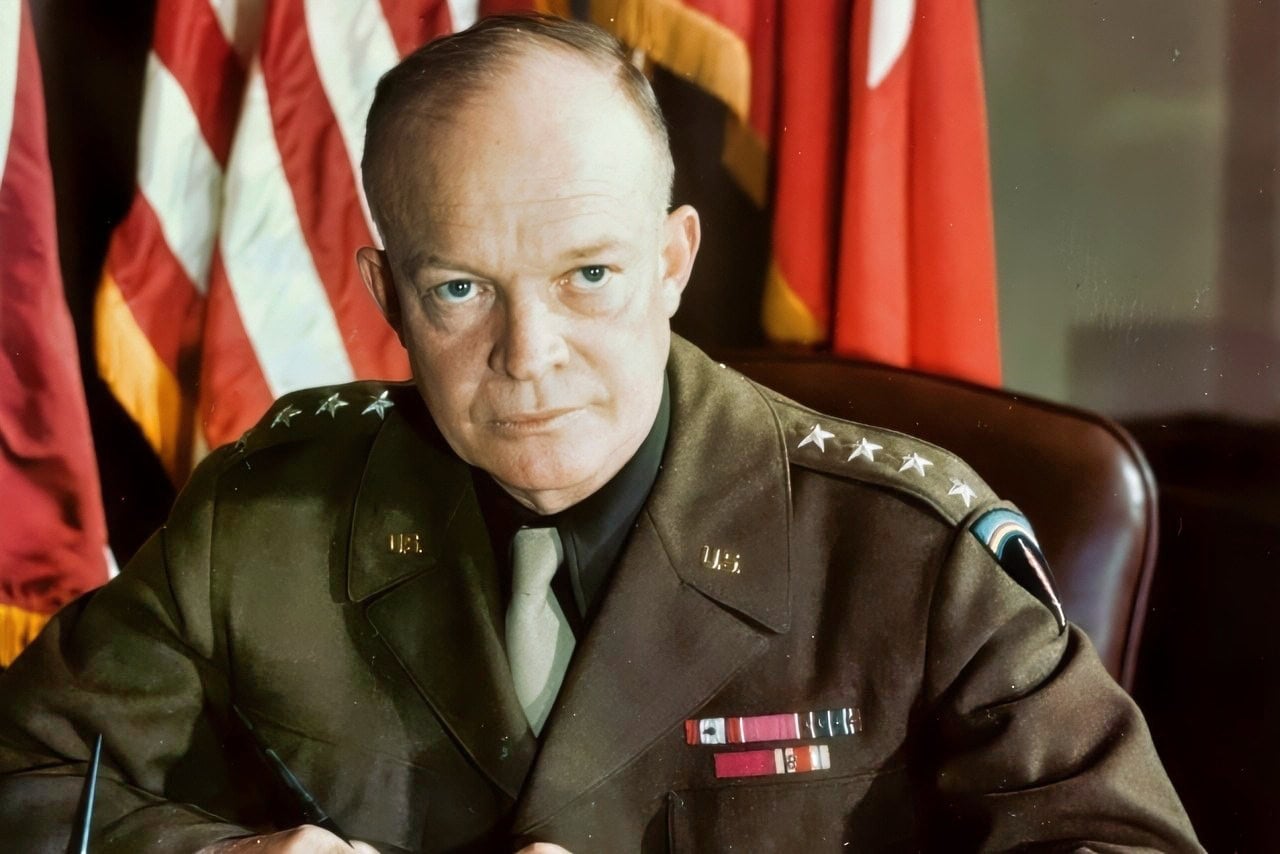
Dwight D. Eisenhower. Image Credit: Creative Commons.
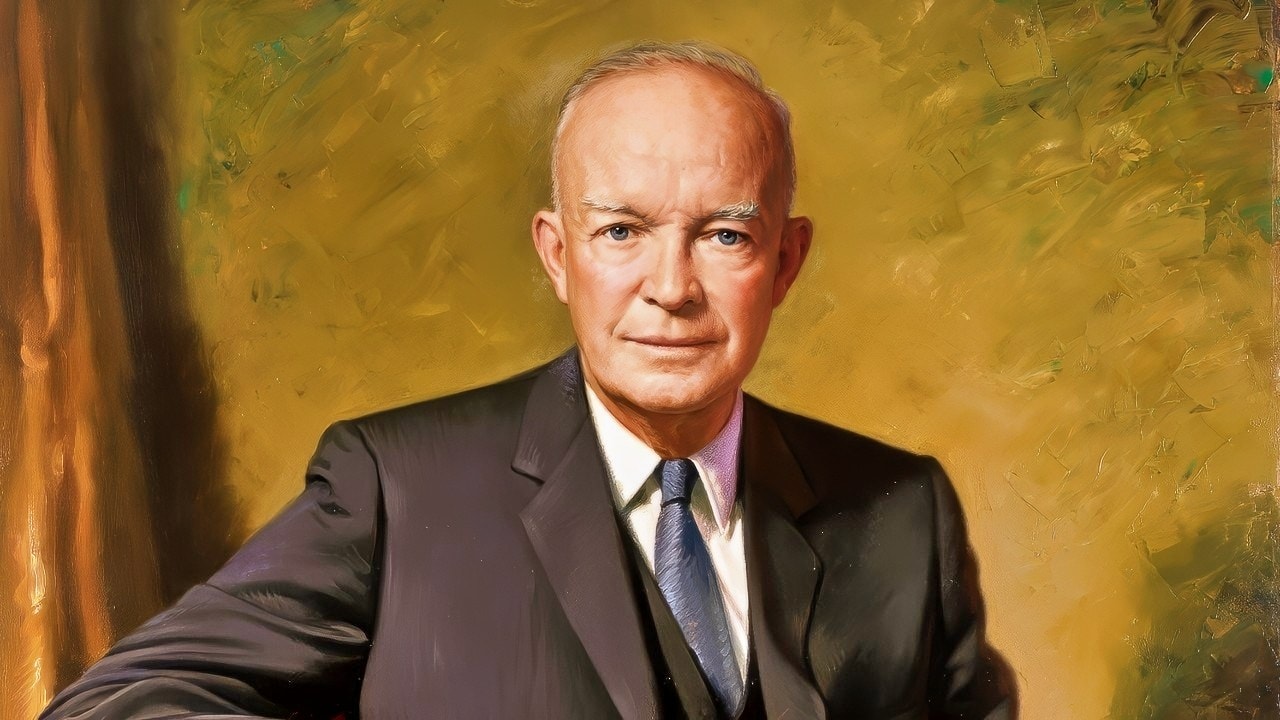
Former General Dwight D. Eisenhower. Image Credit: Creative Commons.
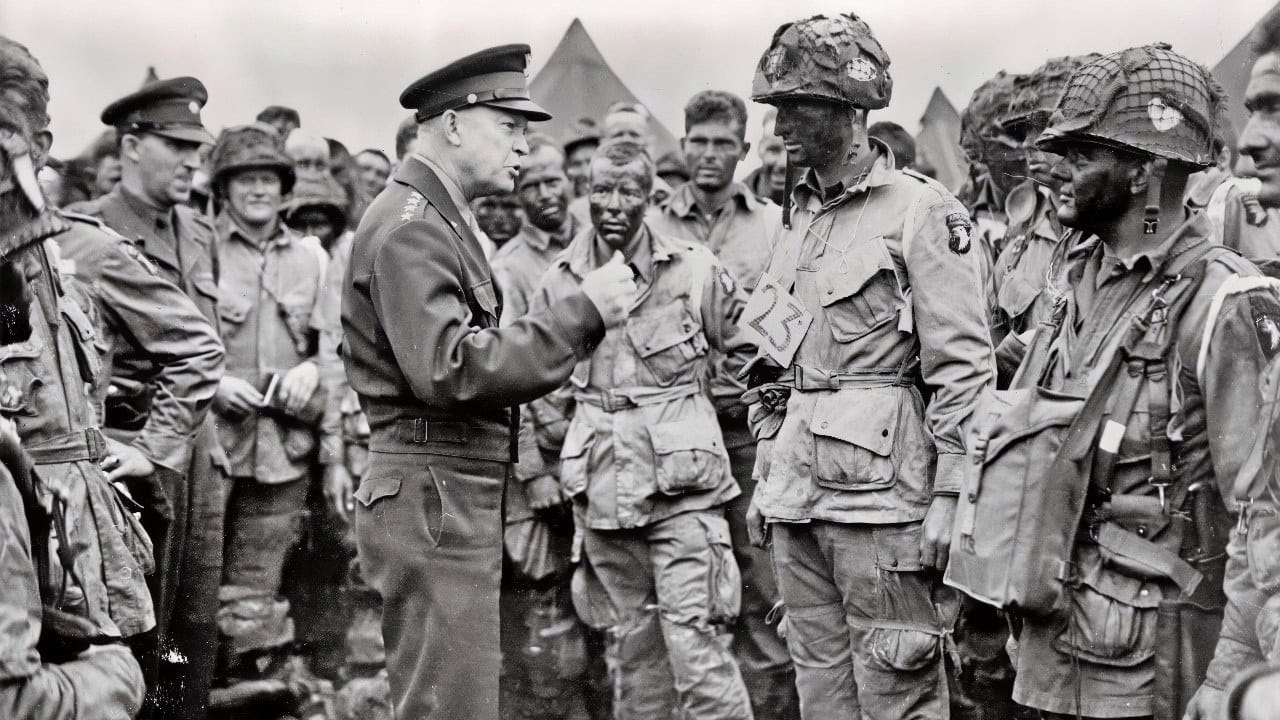
Dwight D. Eisenhower D-Day 1944. Image Credit: Creative Commons.
But before it happened, Eisenhower wrote a message in which he accepted responsibility if the invasion failed.
“Our landings in the Cherbourg-Havre area have failed to gain a satisfactory foothold and I have withdrawn the troops. My decision to attack at this time and place was based upon the best information available. The troops, the air and the Navy did all that Bravery and devotion to duty could do. If any blame or fault attaches to the attempt, it is mine alone,” he wrote.
The note, however, was never released, because the Allies established their foothold successfully and liberated France before entering Germany and accepting Nazi Germany’s surrender in May 1945.
Taking His Methods to Washington
After the war ended, Eisenhower served as Army chief of staff, then as president of Columbia University, and as NATO’s first supreme allied commander. He won the 1952 presidential election as a Republican and he served between January 1953 and January 1961.
His administration was remarkable, helping secure the armistice that ended active fighting in Korea. He is known for his structured policymaking system, in which he would allow advisers to debate competing options before the decisions reached him. In public, he had a relaxed manner that sometimes made him seem detached, but historians have since noted that he closely managed policy matters behind the scenes and deliberately presented a cool, calm, and collected presence to the public.
During the 1956 Suez Crisis, he proved his worth when he opposed the British, French, and Israeli attack on Egypt, and subsequently pressured all three countries to withdraw. He proved in that instance that he was willing to confront even close allies when he believed that their actions threatened international stability.
Eisenhower’s success and legacy prove that leadership, as he said, is not about hitting people over the head but persuading powerful people, all with competing interests, to work toward the same objectives.
About the Author: Jack Buckby
Jack Buckby is a British researcher and analyst specializing in defense and national security, based in New York. His work focuses on military capability, procurement, and strategic competition, and he produces and edits analysis for policy and defense audiences. He brings extensive editorial experience, with a career output spanning over 1,000 articles at 19FortyFive and National Security Journal, and has previously authored books and papers on extremism and deradicalization.