
Saudi Air Defenses Face Dual Threat as Yemen Front Reaches Mecca and Dammam
 Alexandra Reeves
Saudi Air Defenses Face Dual Threat as Yemen Front Reaches Mecca and Dammam
A wider battlespace in one day
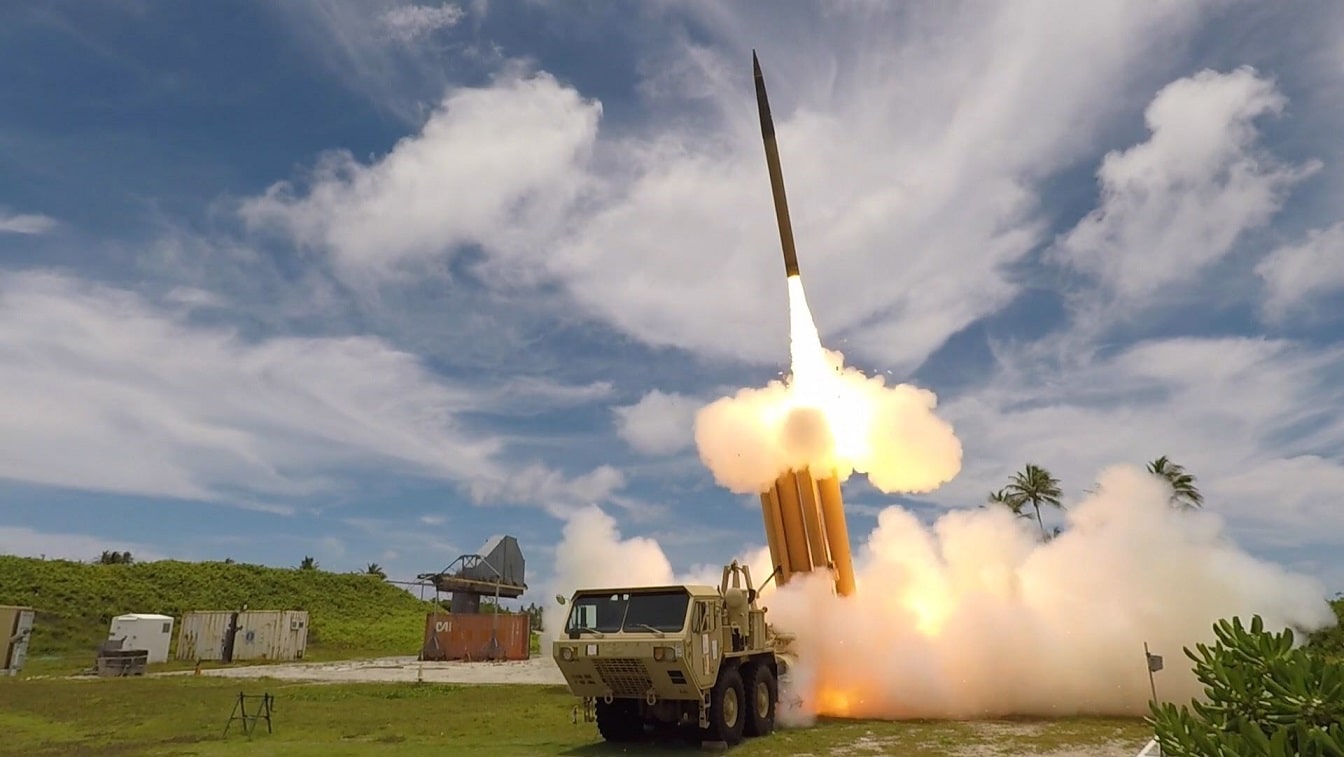
Events reported on Friday, 6 November point to a meaningful widening of the Yemen–Saudi Arabia confrontation. The immediate military picture comprises claims of coalition air strikes in Yemen and claimed Houthi attacks or attempted attacks across Saudi territory. The more important point is geographic and operational: the reported activity spans Taiz in Yemen, Najran on the border, the Mecca region, and Dammam on the Gulf coast. That pattern is not simply another round of border fire. It tests Saudi Arabia’s ability to defend distinct strategic spaces while preserving room for de-escalation with Iran.
Saba News Agency reported, citing Houthi sources, that Saudi-led coalition aircraft struck Al-Hadara market in Yemen’s Taiz governorate three times, causing more than 30 civilian casualties. Houthi military spokesman Yahya Saree said the attack would not go unanswered, while the movement’s Political Bureau described such Saudi “crimes” as forgotten files in United Nations drawers. This is a single-source Houthi account and has not been independently verified; the figure refers to deaths and injuries combined, not deaths alone.
On the Saudi side, coalition spokesman Turki al-Malki said the coalition intercepted and destroyed a drone in the Mecca region on 6 November and intercepted two Houthi ballistic missiles over Najran that morning, following another interception the day before. These are belligerent Saudi-led coalition claims and have not been independently verified. Separately, the Houthis said one of their drones disrupted air traffic at King Fahd International Airport in Dammam. That too is a single-source Houthi claim and has not been independently verified.
Three locations, three messages
The locations matter more than the daily claim-and-counterclaim cycle. An interception in the Mecca region brings the conflict into the security envelope of Saudi Arabia’s holiest city. Even if the target was defeated, the episode has political weight: Riyadh’s legitimacy rests partly on guardianship of Islam’s holy sites, so the perception that the sacred-city region is exposed carries an outsized reputational cost. The Houthi objective need not be physical damage alone; forcing defensive alerts around Mecca can impose political and security costs disproportionate to the weapon involved.
Dammam represents a different form of pressure. King Fahd International Airport sits in the Eastern Province, adjacent to the kingdom’s core energy geography and a major civil-aviation network. A claimed air-traffic disruption, if substantiated, would demonstrate an ability to create economic friction without necessarily striking energy infrastructure directly. It also compels Saudi authorities to make difficult safety decisions: even short precautionary restrictions at an airport can create visible disruption and undermine the sense that the war is contained far from population and commercial centres.
Najran is the clearest operational signal. The coalition described ballistic-missile rather than drone interceptions. No weapon model has been independently confirmed, and none should be inferred from these reports. But the reported use of ballistic missiles, alongside drones elsewhere, presents Saudi air defence with two different problems. Low-flying, slow-moving drones can be hard to detect continuously amid terrain, clutter, and civilian air traffic; they demand persistent, layered surveillance and rapid local engagement. Ballistic missiles follow a far faster, higher, time-compressed threat profile, requiring early warning, command-and-control, and high-confidence intercept decisions. A single reporting cycle featuring both does not prove a breakthrough in Houthi capability, but it does illustrate the cost of maintaining coverage against distinct threat sets at once.
The Taiz narrative is an operational asset
The Al-Hadara market claim serves a political-military function for the Houthis even before independent verification is available. Civilian-harm allegations are their most effective information-war currency: they make the conflict legible to Yemeni audiences as an external assault, reinforce recruitment and mobilisation, and raise the diplomatic cost of coalition air operations. The phrase “forgotten files” is especially deliberate. It frames Yemen not merely as a battlefield but as an abandoned international responsibility, seeking to pull attention back from other regional crises and towards alleged civilian harm.
This does not establish the reported casualty figure or the circumstances of the strikes. It does show why the allegation is strategically useful. The Houthis can pair a grievance narrative inside Yemen with a deterrence narrative across the border: alleged civilian harm is answered by pressure on Saudi infrastructure and airspace. That linkage makes defensive success in Saudi Arabia insufficient on its own to neutralise the movement’s political messaging.
Yemen as a second choke-point lever
Since the July ceasefire collapse, reciprocal attacks have steadily widened, with Houthi strikes targeting Saudi airports, energy facilities, and military sites; October violence reportedly killed at least 20 people on the Saudi side. The escalation now needs to be read through the broader United States–Iran confrontation. The Houthis are a principal Iranian lever around the Bab el-Mandeb and Red Sea. With the Strait of Hormuz effectively closed, the Red Sea–Bab el-Mandeb route becomes a more consequential alternative for regional shipping and energy flows. Pressure from Yemen therefore has strategic value beyond the Saudi–Houthi bilateral fight.
The Houthis have previously claimed attacks on Saudi tankers and announced a maritime blockade of Saudi vessels. Those are single-source Houthi statements and have not been independently verified. Their analytical relevance lies in the concept, not in assuming every claim is realised: if a force can threaten or credibly signal danger across both Saudi airspace and Red Sea approaches, it creates a second choke-point problem. Iran’s distributed pressure is then not confined to one waterway or one proxy theatre. It is spread across routes that insurers, carriers, energy exporters, and governments must assess together.
That makes Yemen a central, rather than peripheral, theatre in the present regional contest. Disruption or even elevated perceived risk at Bab el-Mandeb can gain importance precisely when Hormuz is unavailable. The effect is cumulative: missiles and drones keep Saudi homeland defence under strain while maritime threats increase the premium on a supposedly alternative sea route.
Riyadh’s constrained choices
Saudi Arabia faces a difficult balance. A more forceful campaign against Houthi launch infrastructure could answer domestic demands for deterrence and reduce immediate operational pressure. Yet a widened campaign—particularly strikes around Sanaa—could also complicate Riyadh’s restored diplomatic understanding with Tehran. Iran may not control every Houthi operational decision, but Saudi leaders must weigh whether escalation against the movement will be treated in Tehran as a challenge to the broader détente.
The coalition’s defensive posture is therefore politically rational but cannot be cost-free. Interceptions protect lives and infrastructure, but repeated alerts over Mecca, Najran, or Dammam allow the Houthis to demonstrate reach even without confirmed impact. Conversely, restrained Saudi retaliation may invite further testing if the movement judges that the diplomatic ceiling on Riyadh’s response remains low.
What to watch next
- Bab el-Mandeb traffic and insurance: sustained reductions in commercial transits, rerouting, or rising war-risk premiums would show that the maritime signal is producing economic effects.
- Saudi airport continuity: repeated closures, diversions, or extended restrictions at Dammam or other airports would be more consequential than a one-off disruption claim.
- Maritime escalation language: a new or expanded Houthi blockade declaration, especially naming additional vessel categories or routes, would raise the stakes around the Red Sea.
- Coalition targeting choices: confirmed strikes on Sanaa would indicate that Riyadh has shifted from principally absorbing and intercepting attacks towards a broader coercive response.
The 6 November reports should not be treated as proof that either side has achieved a decisive military change; too much of the immediate detail remains belligerent or single-source reporting. But the geography is a warning. The Yemen front is linking civilian-harm messaging in Taiz, border missile pressure in Najran, symbolic threat around Mecca, and commercial disruption in Dammam to a wider contest over Red Sea access. In a region already pressured at multiple maritime chokepoints, that linkage is the escalation’s real strategic significance.
On 6 November, the Saudi-led coalition conducted airstrikes in Yemen's Taiz, resulting in civilian casualties. Houthi forces claimed to have disrupted air traffic at King Fahd International Airport in Dammam and threatened retaliation. The conflict has expanded geographically, impacting Mecca and Najran, highlighting the operational challenges for Saudi air defenses against both drones and ballistic missiles.
- Saudi-led coalition conducted airstrikes in Yemen's Taiz governorate causing civilian casualties.
- Houthi forces claimed to have disrupted air traffic at King Fahd International Airport in Dammam.
- Saudi coalition intercepted Houthi ballistic missiles over Najran and a drone in the Mecca region.