

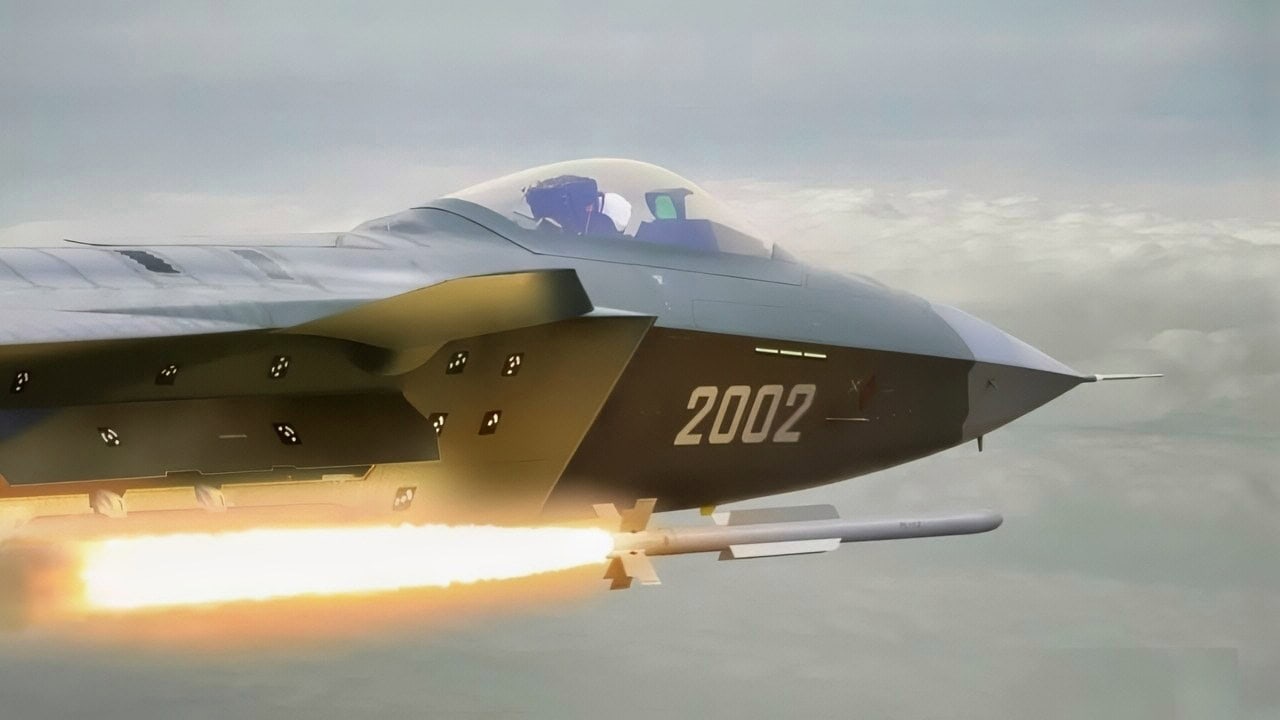
Summary and Key Points: A recently released photograph shows China’s Chengdu J-20 Mighty Dragon flying in ‘Beast Mode,’ with eight PL-15 air-to-air missiles mounted externally.
The J-20 Mighty Dragon Stealth Fighter Comes in Beast Mode
Everyone knows the F-22 Raptor’s potency as a fifth-generation air superiority stealth warplane, and the F-35 Lightning II stealth multirole fighter has become ubiquitous.
Yet, few in Washington are aware of how significant the advances happening with China’s fifth-generation stealth warplanes–notably the Chengdu J-20 Mighty Dragon air superiority warplane–have been.
A recent photograph released to the public highlights this new reality that few in Washington are paying attention to.
In that photograph, the J-20 is shown flying with eight externally mounted PL-15 air-to-air missiles, a configuration that could significantly increase the aircraft’s combat firepower at the expense of its stealth.
Specifically, the J-20 featured was flying in what’s known as “Beast Mode,” that is, when a fifth-generation warplane carries additional weapons externally rather than exclusively inside its internal weapons bays (reducing the plane’s stealth but drastically increasing its firepower).
Upgrading the J-20 Mighty Dragon
The J-20 normally carries four PL-15 beyond-visual-range air-to-air missiles inside that internal weapons bay, along with two PL-10 short-range infrared-guided missiles in separate side bays.
That standard configuration maintains stealth while still letting the pilot dogfight or engage the enemy at long range.
Placing eight PL-15s externally lets the J-20 carry 12 radar-guided missiles and two infrared-guided missiles, for a theoretical total of up to 14 air-to-air weapons.
In fact, The War Zone, an online trade publication, reports that future internal weapons arrangements could accommodate six medium- or long-range missiles instead of four.
Combined with eight externally mounted weapons and two PL-10s, this would increase the theoretical total to 16 missiles. But that 16-missile loadout has not been demonstrated.
Of course, carrying so many missiles externally creates aerodynamic drag and reduces the plane’s stealth. That extra missile capacity offers advantages, however, during prolonged engagements or operations involving multiple targets.
Plus, the J-20 could operate behind other stealth warplanes, integrating electronically with those forces, and launching missiles against enemy aircraft.
Think about this: forward-deployed J-20s can identify targets while aircraft carrying larger missile loads remain farther from hostile defenses.
Plus, by having these heavily armed platforms available, the Chinese can send the J-20 Mighty Dragon to hunt down American midair refuelers and shoot them down.
Those extra missiles will help the J-20s achieve that mission set.
Shooting down the US midair refuelers–enablers–with Chinese anti-access/area-denial (A2/AD) systems threatening American aircraft carriers and targeting US air bases in the region, the ability for the US military to project power into the First Island Chain (the territories from the Kamchatka Peninsula down through Japan and Taiwan to the Philippines) will be greatly eroded.
All because of the J-20 Mighty Dragons in “Beast Mode.”
J-20 Mighty Dragon Stealth Fighter
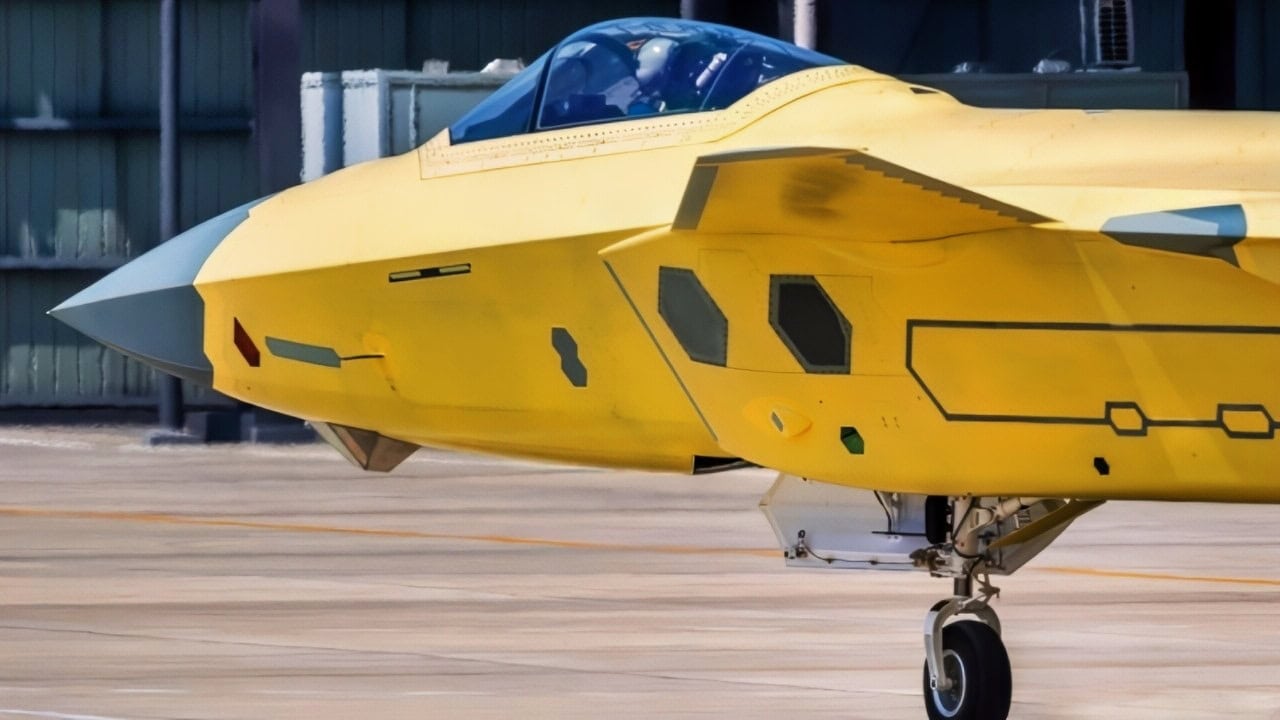
J-20 Fighter in Yellow Paint. Weibo Screenshot.
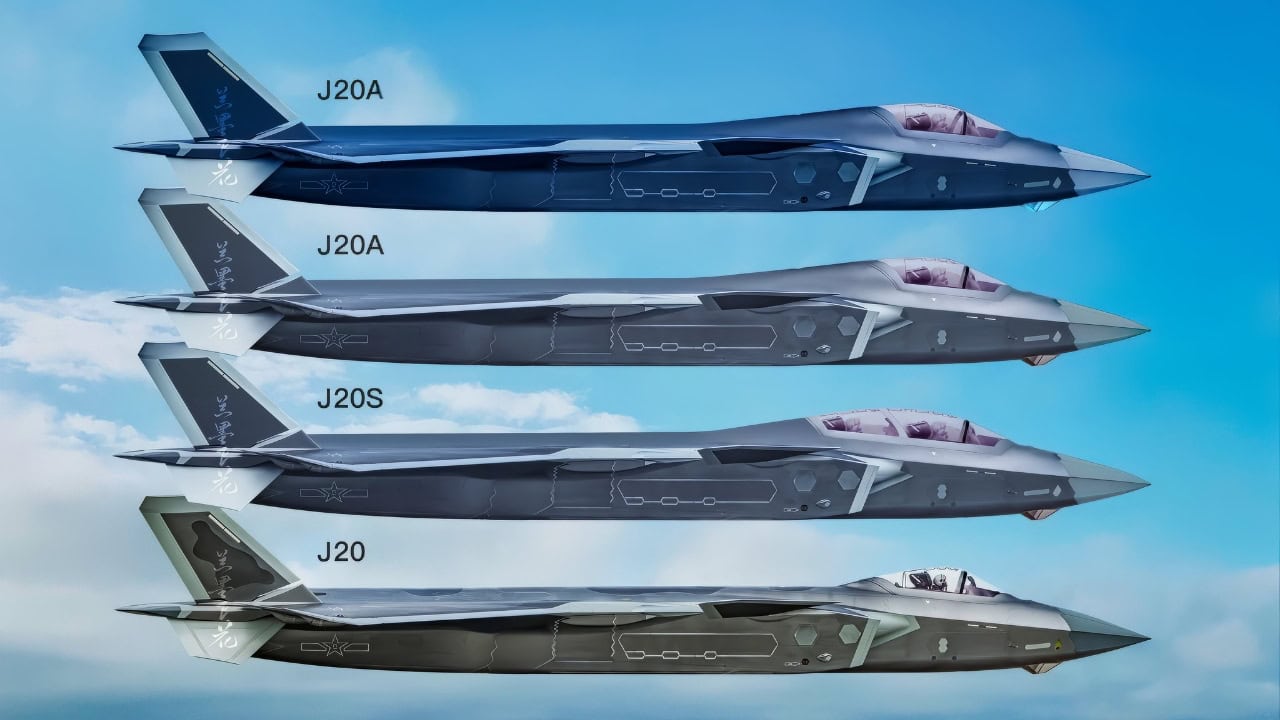
J-20 fighter diagram. Image Credit: Creative Commons.
A heavily armed J-20 could also operate behind other stealth fighters, receiving targeting information through secure communications while carrying those larger missile loads and remaining farther from hostile defenses.
What’s more, China employs J-16 fourth-generation warplanes that can carry substantial weapons loads and have powerful radar, making them valuable for supporting aircraft operating closer to contested airspace.
Expanding the Missile Capacity
Meanwhile, China is also developing and integrating additional long-range air-to-air weapons. The PL-17 is a prime example.
This very-long-range missile is specifically designed to target those enablers mentioned above.
This weapon is too big to carry in the J-20’s internal weapons bays.
Another system is the PL-16, which many analysts believe is part of China’s efforts to expand the carrying capacity of those internal bays in future iterations of the J-20, ensuring these planes pack a punch while maintaining their stealth capabilities.
So far, no example shows the J-20 integrating either the PL-16 or PL-17. However, the plane’s iterative engineering process will likely lead to integrating those capabilities soon.
Military Watch Magazine, an online trade publication, says the recent photo matches two other photos that circulated on social media in 2025.
A J-20 carrying additional missiles could seriously threaten multiple aircraft during a single sortie, particularly when supported by airborne early warning systems and other networked sensors. The J-20 is already on par with the F-22.
Now, China is making the J-20 a unique fifth-generation plane that integrates perfectly with China’s fundamentally different air warfare doctrine.
About the Author: Brandon J. Weichert
Brandon J. Weichert is the Senior National Security Editor at 19FortyFive.com. He also manages The Weichert Brief on Substack. Weichert is the co-host of The Mario Nawfal Show on Twitter/X. He is the author of four bestselling national security books, most recently A Disaster of Our Own Making: How the West Lost Ukraine (Encounter Books). His next book, Fortress Americas: A New Monroe Doctrine (Tucker Carlson Books), is due out December 8. Follow him via Twitter/X @WeTheBrandon.